The survival of animal species across the globe depends heavily on their physiological and behavioral adaptations to shifting environments. Among the most fascinating creatures in the animal kingdom are those capable of thriving in both terrestrial and aquatic ecosystems. These organisms, often broadly categorized as semi-aquatic or amphibious, possess specialized evolutionary traits that allow them to exploit resources from two vastly different realms. From the dense swamplands of South Asia to the temperate rivers of North America, dual-habitat species navigate complex ecological niches to forage, evade predators, and reproduce. Understanding these creatures requires examining not only their physical characteristics but also the broader ecological implications of their dual-existence in an era marked by rapid environmental change and habitat fragmentation.
To fully grasp the mechanics of semi-aquatic life, one must examine the distinct evolutionary pressures that shaped these species over millions of years. Unlike animals strictly confined to terrestrial landscapes or purely marine and freshwater environments, dual-habitat fauna bridge the gap between land and water. This lifestyle demands a unique suite of morphological adaptations, ranging from specialized respiratory systems—such as cutaneous respiration in certain amphibians—to hydrodynamic body structures and webbed appendages that facilitate efficient locomotion in both water and mud.
An Analysis of Major Semi-Aquatic and Amphibious Species
The diversity among animals that inhabit both land and water is vast, encompassing reptiles, mammals, crustaceans, amphibians, and fish. Each group has developed distinct survival strategies tailored to its specific ecological niche.
-
The Mugger Crocodile (Crocodylus palustris)
Native predominantly to the freshwater habitats of the Indian subcontinent, the mugger crocodile is a quintessential apex predator of the wetlands. Characterized by a notably broad snout—the widest of any living crocodilian—this species inhabits marshes, lakes, and artificial reservoirs. Thermoregulation plays a critical role in the mugger’s daily routine; individuals are frequently observed basking on riverbanks to absorb solar heat, thereby elevating their internal metabolic rates. When entering the water, the mugger utilizes its powerful, laterally flattened tail for propulsion, allowing it to navigate aquatic environments with surprising agility. Although sluggish on land over long distances, muggers can execute explosive bursts of speed to capture prey or defend territory. Their opportunistic diet ranges from fish and reptiles to birds and medium-sized mammals, underlining their role in maintaining trophic balance within freshwater ecosystems. -
The American Alligator (Alligator mississippiensis)
Found extensively throughout the southeastern United States, particularly in the slow-moving rivers, swamps, and marshes of Louisiana and Florida, the American alligator exhibits remarkable behavioral flexibility. While predominantly aquatic, alligators frequently venture onto terrestrial terrain for nesting, traveling between water bodies, and basking during cooler morning hours. Morphologically, the alligator features webbed feet and a muscular tail that acts as a primary engine underwater. On land, despite their heavy armor and robust build, adults can attain speeds of up to 10 miles per hour (approximately 16 kilometers per hour) over short distances. This dual-habitat capability enables alligators to engineer their environment; by excavating "gator holes" during dry periods, they create crucial refuges that sustain numerous other aquatic and terrestrial species during seasonal droughts. -
The North American Beaver (Castor canadensis)
As nature’s preeminent ecosystem engineers, beavers are semi-aquatic mammals whose survival is entirely dependent on their mastery of both land and water. Inhabiting the forested river valleys, ponds, and streams of North America, beavers possess dense, oil-coated fur that traps air and provides absolute insulation against freezing water temperatures. Their paddle-shaped tails and webbed hind feet make them exceptional swimmers. Conversely, on land, beavers utilize their powerful incisors to fell large trees, gathering timber and vegetation not only for dietary purposes—primarily feeding on bark, cambium, and aquatic plants—but also for constructing complex dams and lodges. These structural interventions fundamentally alter hydrology, creating expansive wetlands that boost local biodiversity while simultaneously mitigating downstream flood risks. -
The Spotted Turtle (Clemmys guttata)
Distinguished by its smooth black carapace adorned with vibrant yellow or orange spots, the spotted turtle is a small semi-aquatic reptile native to the wetlands, bogs, and shallow woodland streams of eastern North America and southern Canada. This species spends significant portions of its active season moving between aquatic refuges and terrestrial egg-laying sites. The spotted turtle is an adept swimmer, yet it readily basks on fallen logs or hummocks to regulate its body temperature. When environmental conditions become unfavorable—such as during summer droughts or freezing winters—the spotted turtle utilizes its dual-habitat proficiency to aestivate or brumate in mud or terrestrial leaf litter. Due to habitat loss and illegal pet trade collection, populations have faced mounting pressures, prompting conservation biologists to monitor their wetland-terrestrial corridors closely. -
Crustaceans: The Ecological Bridge of Crabs
Crustaceans, particularly semi-aquatic crabs found in tropical and subtropical intertidal zones, represent another vital category of dual-habitat organisms. Species such as mangrove crabs and various land crabs possess gills that must remain moist to function, yet they are fully capable of spending extended periods foraging on land. In aquatic environments, these crabs scavenge the benthos for detritus and organic matter, while on land they utilize their prominent chelae (claws) for defense, communication, and burrow excavation. Their ability to regulate internal ion concentrations allows them to transition smoothly between hypersaline marine environments and damp terrestrial soil, making them essential bioindicators of coastal ecosystem health. -
The Two-Lined Salamander (Eurycea bislineata)
Representing the fascinating world of amphibians, the two-lined salamander is indigenous to the eastern United States, where it inhabits the margins of rocky streams, seepages, and damp forest floors. The life cycle of this species provides a textbook example of developmental metamorphosis tied to dual habitats. During its larval stage, the two-lined salamander resides entirely in aquatic environments, utilizing feathery external gills to extract dissolved oxygen from water. Upon reaching adulthood, the animal undergoes a profound physiological transformation: it absorbs its gills and transitions to a terrestrial-adjacent lifestyle. Adult two-lined salamanders lack lungs entirely; instead, they rely on cutaneous respiration, absorbing oxygen directly through their moist, permeable skin—a process that obligates them to remain in humid, damp microhabitats. -
Anuran Amphibians: The Global Success of Frogs
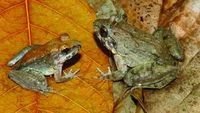
Comprising over 5,000 recognized species distributed across nearly every continent except Antarctica, frogs exemplify the ultimate amphibious adaptation. From the aquatic microhabitats of stagnant ponds to the arboreal canopies of tropical rainforests, anurans demonstrate a remarkable physiological duality. Their life cycle begins as an aquatic egg, hatching into an herbivorous tadpole with a tail and gills, and culminating in an adult frog equipped with lungs, powerful hind limbs for jumping, and specialized skin capable of both respiration and rapid hydration. Their dietary habits—consuming vast quantities of insects, spiders, and small vertebrates—play an indispensable role in regulating invertebrate populations worldwide.
Chronology of Amphibian and Semi-Aquatic Evolution
The existence of animals capable of navigating both land and water is not merely a modern biological curiosity; it represents one of the most pivotal chapters in evolutionary history. The timeline of how vertebrates conquered the terrestrial realm offers profound context for modern semi-aquatic species.
- Devonian Period (approx. 419 to 359 Million Years Ago): The foundational era for dual-habitat life. During this period, ancient lobe-finned fishes (Sarcopterygii), such as Tiktaalik, began developing fleshy, bone-supported fins capable of supporting weight in shallow, oxygen-depleted waters and marshy shorelines.
- Carboniferous Period (approx. 359 to 299 Million Years Ago): Stem tetrapods fully emerged onto land, exploiting abundant terrestrial insect populations while remaining tethered to aquatic environments for reproduction. Early amphibians diversified rapidly in the vast, swampy coal forests.
- Mesozoic Era (approx. 252 to 66 Million Years Ago): Modern lineages of crocodilians, turtles, and early mammalian ancestors began developing specialized semi-aquatic traits to exploit newly formed river basins and coastal ecosystems following major extinction events.
- Cenozoic Era to Present: Contemporary semi-aquatic species, including beavers, modern frogs, and specialized reptiles, refined their behavioral and morphological adaptations in response to fluctuating global climates, glacial advances, and, ultimately, anthropogenic pressures.
Scientific Analysis and Ecological Implications
The presence of animals that inhabit both land and water carries profound ecological and conservation implications. Ecologists frequently refer to these species as ecosystem integrators because their activities physically and chemically link aquatic and terrestrial food webs. For instance, marine-derived or aquatic nutrients brought onto land by semi-aquatic predators—such as fish consumed by crocodilians or aquatic insects consumed by frogs—fertilize terrestrial soils and support diverse plant communities.
Furthermore, because dual-habitat species rely on two distinct environments to complete their life cycles, they serve as highly sensitive barometers of environmental degradation. Changes in water quality, chemical pollution, pesticide runoff, and climate-induced droughts impact these species faster and more severely than animals restricted to a single habitat. When wetlands are drained or riparian zones are fragmented by agricultural and urban expansion, semi-aquatic species lose not only their breeding grounds but also the safe migration corridors required to move between land and water.
Conservation biologists emphasize that protecting dual-habitat wildlife requires a paradigm shift in environmental management. Traditional conservation often focuses strictly on terrestrial protected areas (such as national parks) or purely aquatic reserves (such as marine sanctuaries). However, for species like the American alligator, the spotted turtle, and the two-lined salamander, conservation success is entirely dependent on preserving the contiguous ecotones—the transition zones where land and water meet.
Official Responses and Management Strategies
Environmental protection agencies and wildlife management organizations worldwide have increasingly recognized the vulnerability of semi-aquatic and amphibious fauna. In North America, state and federal wildlife departments have implemented targeted habitat restoration initiatives aimed at safeguarding riparian zones and re-establishing natural hydrological flows.
Recent policy frameworks emphasize the construction of wildlife crossings and underpasses near roadways that intersect known migration routes between wetlands and upland nesting sites. Additionally, international conventions, such as the Ramsar Convention on Wetlands, provide vital legal protections for marshlands, floodplains, and river deltas that serve as global strongholds for dual-habitat species.
Wildlife authorities note that public education campaigns are equally critical. By raising awareness about the ecological importance of wetlands and discouraging the illegal collection of semi-aquatic reptiles and amphibians for the pet trade, regulatory bodies aim to stabilize declining populations. As climate change continues to alter precipitation patterns and accelerate the drying of seasonal wetlands, adaptive management strategies—including artificial water supplementation and strict pollution controls—will remain indispensable tools for ensuring the survival of Earth’s remarkable bridge-builders between land and water.