The modern military is often described as a precision-engineered machine, a complex network of moving parts that must function with absolute synchronicity to ensure national security and global stability. At the heart of this machine lies the officer corps—the leadership tier responsible for directing personnel, managing multi-billion dollar assets, and making life-or-death decisions under extreme pressure. To produce such leaders, nations invest heavily in elite military academies. These institutions are not merely schools; they are crucibles designed to forge the intellectual, physical, and moral character of future commanders. Among the most prestigious of these institutions are the United States Military Academy at West Point, the Royal Air Force College Cranwell in the United Kingdom, and the Special Military School of Saint-Cyr in France. These academies have set a global standard for excellence, producing not only legendary generals but also heads of state, diplomats, and industry leaders.
The Evolution of Military Leadership and Education
The concept of formal military education has evolved significantly over the centuries. In the pre-modern era, leadership was often a matter of hereditary right or battlefield promotion. However, as warfare became increasingly technical—requiring knowledge of ballistics, logistics, and complex maneuvers—the need for a structured educational system became apparent. The late 18th and early 19th centuries saw the birth of the "professional officer," a figure defined by their education as much as their bravery.
The timeline of military education reflects the shifting nature of global conflict. In the 1800s, the focus was on infantry tactics and artillery. By the early 20th century, the advent of flight necessitated specialized aviation academies. Today, the curriculum at top-tier academies has expanded to include cyber warfare, satellite communications, and international law, reflecting the multifaceted nature of 21st-century "hybrid" warfare.
1. United States Military Academy (West Point)
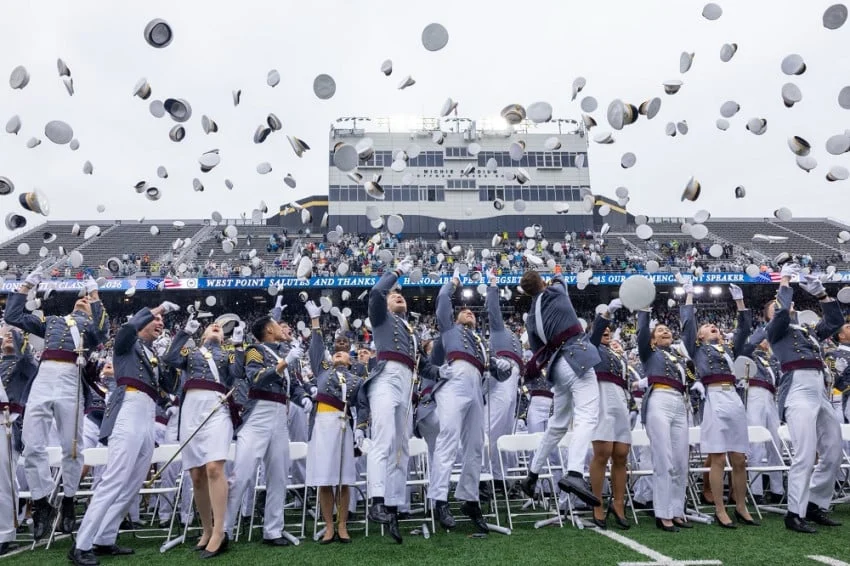
Founded in 1802 by President Thomas Jefferson, West Point is the oldest of the five U.S. service academies. Located on the scenic heights overlooking the Hudson River in New York, its mission is to educate, train, and inspire the Corps of Cadets so that each graduate is a commissioned leader of character. West Point’s influence on American history is unparalleled. It has produced two U.S. Presidents—Ulysses S. Grant and Dwight D. Eisenhower—as well as legendary figures such as Robert E. Lee, Douglas MacArthur, and George S. Patton.
Academic and Tactical Rigor
West Point’s admission process is famously selective, with an acceptance rate that often hovers around 10%. Candidates must not only excel academically but also receive a nomination from a member of Congress and pass a rigorous physical fitness assessment. Once admitted, cadets undergo a four-year program that balances a heavy STEM-focused academic load with intense military training.
Data from the academy indicates that the curriculum is designed to produce "warrior-scholars." Every cadet graduates with a Bachelor of Science degree, regardless of their major, ensuring a baseline of technical literacy. The "Thayer System," named after Sylvanus Thayer, the "Father of the Military Academy," emphasizes daily grading and small class sizes, forcing cadets to take active responsibility for their own learning.
The Long Gray Line
The "Long Gray Line" refers to the assembly of West Point graduates, past and present. This tradition underscores the continuity of leadership and the weight of the "Duty, Honor, Country" motto. In modern times, West Point has adapted its training to include the Modern War Institute, which analyzes contemporary conflicts to ensure that cadets are prepared for the complexities of urban warfare and counter-insurgency.
2. Royal Air Force (RAF) College Cranwell, United Kingdom
While West Point focused on the ground, the Royal Air Force College Cranwell was established to master the skies. Formed in 1919 and officially opened in 1920, Cranwell was the world’s first air military academy. Its creation was a direct response to the lessons of World War I, which proved that air superiority would be the deciding factor in future conflicts.
Pioneers of the Third Dimension
The founding of Cranwell was championed by Sir Hugh Trenchard, known as the "Father of the Royal Air Force." Trenchard believed that the RAF needed its own distinct culture and educational pipeline, separate from the Army and Navy. Today, Cranwell is the entry point for all RAF officers. The selection process is grueling, focusing on cognitive speed, spatial awareness, and leadership potential.
Modern Training Paradigms
Cranwell’s training has evolved from basic biplane flight to the management of fifth-generation stealth fighters and unmanned aerial vehicles (UAVs). The college handles the initial officer training (IOT), which lasts approximately 24 weeks and focuses on leadership, fitness, and military skills. Following IOT, officers move into specialist professional training. Analysts note that Cranwell’s emphasis on "air power thinking" helps the UK maintain a strategic edge despite having a smaller numerical force than some of its global peers.
3. Special Military School of Saint-Cyr, France
The École Spéciale Militaire de Saint-Cyr (ESM) carries a legacy that is inextricably linked to the history of France. Founded in 1802 by Napoleon Bonaparte, the school was intended to provide a steady stream of highly trained officers for the Grande Armée. Napoleon famously referred to the school as the "First School of the World."
The Napoleonic Legacy
Originally located near Paris, the academy moved to Coëtquidan in Brittany following the destruction of its original facilities during World War II. Its motto, "Ils s’instruisent pour vaincre" ("They study to conquer"), reflects the academy’s aggressive pursuit of excellence. Saint-Cyr graduates have been at the forefront of every French military engagement for over two centuries, from the Napoleonic Wars to modern peacekeeping missions in Africa and the Middle East.
International Influence and Integration
Saint-Cyr is notable for its international outlook. It frequently hosts cadets from allied nations, particularly from Francophone Africa and Europe, fostering a network of international military cooperation. The training at Saint-Cyr is divided into three pillars: academic education (including international relations and engineering), military training, and physical development.
Comparative Analysis: What Makes an Academy "Best"?
When evaluating the world’s top military academies, several metrics are considered by defense analysts:
- Selectivity and Attrition: The difficulty of entry and the rigor required to stay. High-tier academies like West Point and Saint-Cyr have high "wash-out" rates, ensuring only the most resilient graduate.
- Resource Allocation: The quality of facilities, from state-of-the-art cyber labs to tactical training ranges.
- Alumni Impact: The success of graduates in both military and civilian sectors.
- Global Integration: The ability to operate within international frameworks like NATO or the UN.
Supporting data suggests that the United States spends significantly more per cadet than any other nation, reflecting its global military footprint. However, European academies like Cranwell and Saint-Cyr are often praised for their ability to produce highly specialized leaders with a deep understanding of historical and geopolitical nuances.
The Role of Other Global Contenders
While West Point, Cranwell, and Saint-Cyr are the most frequently cited, other institutions play a critical role in global security:
- The Royal Military Academy Sandhurst (UK): Unlike Cranwell, which is for the Air Force, Sandhurst is the premier Army officer training center for the British Army. It is famous for its international alumni, including many monarchs and leaders from the Middle East.
- The National Defence Academy (India): Unique for being the world’s first tri-service academy, where cadets from the Army, Navy, and Air Force train together before moving to their respective service schools. This fosters inter-service cooperation from the very beginning of an officer’s career.
- The PLA National Defense University (China): As China seeks to modernize its military, this institution has become the central hub for developing "intelligentized" warfare strategies, focusing heavily on technology and electronic warfare.
Official Responses and Strategic Implications
Defense ministries across the globe have reacted to the changing nature of warfare by updating the mandates of these academies. For instance, recent statements from the U.S. Department of Defense emphasize that West Point must now prioritize "digital literacy" as much as physical combat skills. Similarly, the UK Ministry of Defence has highlighted Cranwell’s role in the "Global Britain" strategy, using the academy to train international partners and build soft power.
Expert analysis suggests that the prestige of these academies serves as a form of deterrence. A nation that can consistently produce elite leaders is seen as a more formidable opponent. Furthermore, the alumni networks of these schools often facilitate "mil-to-mil" (military-to-military) diplomacy, which can prevent conflicts from escalating when political channels fail.
Conclusion: The Future of Military Leadership
As we move further into the 21st century, the role of elite military academies will only become more vital. The challenges of the future—artificial intelligence in decision-making, the militarization of space, and the persistent threat of non-state actors—require leaders who are not just brave, but intellectually agile.
The prestige of West Point, the pioneering spirit of Cranwell, and the historical depth of Saint-Cyr provide the blueprint for this new generation of leadership. These institutions remain the ultimate guardians of military professionalism, ensuring that the "moving gears" of the world’s defense machines are guided by steady, capable hands. The investment in these academies is, at its core, an investment in the stability of the international order, proving that while technology changes the face of war, it is the quality of leadership that ultimately determines the outcome.