
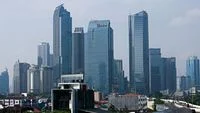
The global standing of Indonesia as a premier destination for international travelers has received a significant boost as six of its cities successfully secured positions within the top 50 of the prestigious Worldworthy 100 list for the Most Loved Cities in Asia-Pacific 2026. This comprehensive international ranking highlights the enduring appeal, cultural richness, and infrastructural appeal of urban and cultural hubs across the region, with Indonesian destinations making a remarkably strong showing.
In total, eight destinations across the archipelago earned recognition in the broader 100-city index for the Asia-Pacific region. Among them, Jakarta, Ubud, Denpasar, Surabaya, Magelang, and Medan carved out dominant positions in the upper echelons of the list, underscoring the diverse range of experiences the country offers—from hyper-modern metropolitan development and historical preservation to world-renowned spiritual and natural sanctuaries.
Methodology and Evaluation Framework of the Worldworthy 100
The Worldworthy 100 is not merely a popularity poll, but a meticulously curated editorial index compiled through a rigorous evaluation process led by the research team at Worldworthy, an independent global publishing and benchmarking platform. The 2026 edition spans 100 selected cities distributed across 23 countries throughout the vast Asia-Pacific region.
To determine which urban centers hold a special place in the hearts of global travelers and the wider public, the research team employed a comprehensive, multi-layered assessment framework. The evaluation methodology synthesized several qualitative and quantitative indicators. These included direct, on-the-ground interviews and sentiment tracking with visitors and residents, deep-dive reviews of international travel guidebooks, comprehensive analysis of global media coverage, and the cross-referencing of economic, tourism, and professional public records.
Through this stringent analytical lens, cities were evaluated on a myriad of factors, including hospitality, cultural authenticity, ease of navigation, safety, cleanliness, emotional resonance, and overall visitor satisfaction.
Indonesia’s Stellar Performance: From the Capital to Cultural Sanctuaries
Leading the Indonesian charge with exceptional distinction was the nation’s capital, Jakarta. Demonstrating rapid modernization paired with rich historical roots, Jakarta captured the 7th position globally with an impressive score of 8.48 out of 10. This high placement reflects the city’s ongoing transformation into a modern mega-hub characterized by thriving culinary scenes, extensive public transit developments, and vibrant arts and business districts.
Following closely behind the capital is the cultural and spiritual heart of Bali, Ubud, which secured the 15th spot with a score of 8.01. Renowned globally as a haven for wellness, traditional arts, and lush landscapes, Ubud continues to captivate international audiences seeking tranquility and deep cultural immersion.
The island’s main gateway and administrative center, Denpasar, also performed strongly, landing in the 21st position with a score of 7.66. Denpasar serves as a vital bridge connecting Bali’s ancient heritage with contemporary urban living, coastal accessibility, and robust tourism infrastructure.
East Java’s economic and historical powerhouse, Surabaya, claimed the 23rd spot with a score of 7.63. Known as the "City of Heroes," Surabaya’s blend of colonial-era architecture, bustling commerce, and progressive urban park systems has increasingly drawn the attention of global travelers looking to experience authentic Indonesian metropolitan life.
Magelang, nestled in Central Java, secured the 25th position with a score of 7.58. Home to world-famous architectural marvels such as Borobudur Temple, Magelang offers profound historical significance, set against a dramatic backdrop of volcanic peaks and rural serenity.
Rounding out the Indonesian cities in the top 50 is Medan, the bustling capital of North Sumatra, which captured the 39th position with a score of 7.39. As a melting pot of Malay, Batak, Chinese, and Javanese cultures, Medan offers a distinct culinary and historical identity that resonates deeply with adventurous travelers.
Complete Overview of the Top 50 Most Loved Cities in Asia-Pacific 2026
The official release of the Worldworthy 100: Most Loved Cities in Asia-Pacific 2026 index maps out a diverse geographical tapestry of urban excellence. The absolute pinnacle of the 2026 ranking is claimed by Osaka, Japan, which attained a leading score of 9.11. Osaka’s legendary food culture, hospitality, and seamless blend of historic charm and futuristic design propelled it to the number one spot.
The upper tier of the list features a dynamic mix of Southeast Asian vitality and Oceanian efficiency. Kuala Lumpur, Malaysia, secured second place with an impressive score of 8.78, followed closely by Auckland, New Zealand, in third with 8.67. Bangkok, Thailand, captured fourth place with 8.57, while the historic and cultural capital of Japan, Kyoto, rounded out the top five with a score of 8.56.
Continuing down the top ten, Sydney, Australia, claimed sixth place (8.54), immediately followed by Jakarta, Indonesia, at seventh (8.48). Ho Chi Minh City, Vietnam, tied with Tokyo, Japan, at eighth and ninth positions respectively, both achieving a score of 8.29. Wellington, New Zealand, closed out the top ten with a score of 8.24.
The broader top twenty features Melbourne, Australia (11th, 8.23), Chiang Mai, Thailand (12th, 8.16), Mumbai, India (13th, 8.09), Taipei, Taiwan (14th, 8.05), and Ubud, Indonesia, holding strong at 15th with 8.01.
Positions 16 through 30 showcase an array of cultural heavyweights and emerging favorites. Hanoi, Vietnam, sits at 16th (7.98), followed by George Town, Malaysia (17th, 7.88), Delhi, India (18th, 7.76), Seoul, South Korea (19th, 7.74), and Almaty, Kazakhstan (20th, 7.74). Denpasar, Indonesia, claims the 21st spot (7.66), followed by Christchurch, New Zealand (22nd, 7.65), Surabaya, Indonesia (23rd, 7.63), Hoi An, Vietnam (24th, 7.58), and Magelang, Indonesia (25th, 7.58). The remaining slots in this block are filled by Putrajaya, Malaysia (26th, 7.53), Jaipur, India (27th, 7.53), Johor Bahru, Malaysia (28th, 7.52), Pune, India (29th, 7.52), and Shanghai, China (30th, 7.52).
The 31st to 50th positions illustrate the incredible geographic diversity evaluated by Worldworthy. Yilan, Taiwan, opens this bracket at 31st (7.47), accompanied by historical Silk Road gems such as Bukhara, Uzbekistan (32nd, 7.46) and Samarkand, Uzbekistan (43rd, 7.34). Other regional standouts include Chiang Rai, Thailand (33rd, 7.46), New Delhi, India (34th, 7.45), Lahore, Pakistan (35th, 7.45), Hiroshima, Japan (36th, 7.44), Gyeongju, South Korea (37th, 7.42), and Phnom Penh, Cambodia (38th, 7.39).
Medan, Indonesia, stands proudly at 39th with 7.39, followed immediately by Agra, India (40th, 7.37). The final ten spots of the fifty-city index include Kota Kinabalu, Malaysia (41st, 7.36), Galle, Sri Lanka (42nd, 7.36), Vigan, Philippines (44th, 7.34), Perth, Australia (45th, 7.34), Gold Coast, Australia (46th, 7.32), Guangzhou, China (47th, 7.31), Dunedin, New Zealand (48th, 7.31), Bhaktapur, Nepal (49th, 7.31), and Kanchanaburi, Thailand, closing the top 50 at 7.29.
Economic and Tourism Implications for Indonesia
The inclusion of six Indonesian cities within the top 50—and eight overall in the top 100—carries profound economic and strategic implications for the country’s tourism sector. Analysts note that independent global rankings of this nature serve as powerful barometers for international investment, tourism marketing efficacy, and destination branding.
By placing Jakarta in the global top ten alongside metropolises like Tokyo and Sydney, Indonesia successfully challenges the long-standing international perception that its tourism appeal is limited solely to the shores of Bali. While Bali’s cultural centers like Ubud and Denpasar continue to anchor the nation’s international leisure profile, the high rankings of Jakarta, Surabaya, Magelang, and Medan prove that Indonesia’s urban diversity, historical depth, and regional development are gaining substantial traction on the world stage.
Tourism stakeholders and municipal leaders have previously emphasized the importance of sustainable urban development, cultural preservation, and enhanced digital and physical connectivity. The high scores achieved across diverse administrative and geographical regions suggest that ongoing investments in mass rapid transit, airport expansions, pedestrian-friendly urban renewal initiatives, and heritage conservation are yielding measurable positive sentiment among global travelers.
As international travel patterns continue to evolve in the post-pandemic era, cities that successfully balance modernization with cultural authenticity are uniquely positioned to capture the hearts and loyalty of global citizens. For Indonesia, the 2026 Worldworthy 100 index stands as a testament to the nation’s vibrant urban evolution and its enduring capacity to enchant visitors from every corner of the globe.
