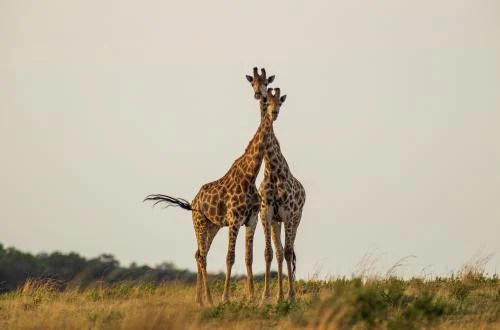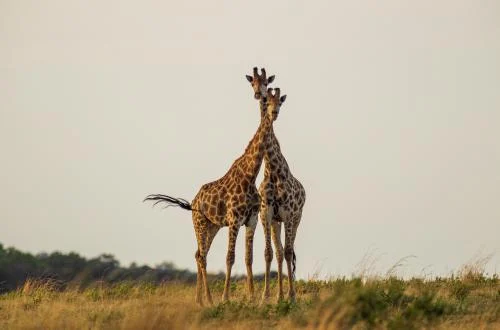
A groundbreaking study has unveiled a fascinating and surprisingly intimate mating ritual employed by giraffes, challenging long-held assumptions about these iconic African mammals. Unlike many species that rely on vocalizations or elaborate displays during breeding seasons, giraffes engage in a complex, urine-based assessment process that underscores the sophisticated sensory world of these gentle giants. The research, conducted by a distinguished husband-and-wife team of professors from the University of California, Davis, provides unprecedented insight into how male giraffes determine a female’s reproductive readiness, a process that can involve as many as 150 attempts for a single successful mating.
The Unexpected Courtship: A Chemical Symphony
The conventional wisdom surrounding animal courtship often conjures images of roaring lions, chirping birds, or strutting peacocks. However, the giraffe’s approach is markedly different and, to some, perhaps even a little startling. The study, published in a leading veterinary science journal, details a procedure initiated by the male giraffe. He begins by nudging a potential female partner, an action that prompts her to urinate. The male then proceeds to sniff the female’s genital area, a critical first step in his evaluation.
This initial olfactory investigation is followed by a remarkable display from the female: she will urinate directly into the male’s mouth. This act, lasting approximately five seconds, is not merely a passive submission but an active contribution to the assessment process. The urine, rich with chemical signals, is then subjected to further analysis by the male.
The Flehmen Response: A Sophisticated Sensory Tool
Following the ingestion of the female’s urine, the male giraffe performs what is known as the "flehmen response." This is a characteristic behavior observed in several mammalian species, including horses, goats, and big cats, where the upper lip is curled back, exposing the teeth and gums. During this phase, the male closes his nostrils and draws air in deeply. This action is not merely an exaggerated grimace; it serves a vital biological purpose.
The flehmen response facilitates the transfer of airborne scents, including those from the ingested urine, to the vomeronasal organ, also known as Jacobson’s organ. This specialized sensory organ, located in the roof of the mouth, is exquisitely sensitive to pheromones and other chemical cues that play a crucial role in social and reproductive behaviors. By curling his lip and drawing air into this organ, the male giraffe is essentially tasting and smelling the urine’s chemical composition with unparalleled precision.
Decoding Fertility: A Pheromonal Detective Story
The primary objective of this elaborate ritual is for the male giraffe to ascertain the female’s fertility and her readiness to mate. The urine contains a complex cocktail of hormones and other biochemical markers that signal her reproductive status. If the chemical profile indicates that she is not ovulating or is not receptive to mating, the male will typically disengage and move on to seek another potential partner. This selective process ensures that the male invests his energy and time in females most likely to result in successful reproduction.
Professor Lynette Hart, a lead researcher on the study and from the University of California, Davis School of Veterinary Medicine, explained the significance of this behavior: "The flehmen response allows the male to gather detailed information about the female’s reproductive cycle. It’s a highly efficient way for them to assess compatibility and avoid wasting resources on infertile or unreceptive individuals."
A Time-Consuming Endeavor: The Odds of Mating
The study highlights that the process of finding a suitable mate is far from instantaneous for giraffes. Male giraffes can approach females up to 150 times before a successful mating occurs. This statistic underscores the challenges they face in identifying a receptive female and the persistence required in their courtship. Each approach likely involves a repetition of the nudging, sniffing, and potential urine exchange, followed by the flehmen response, until the chemical signals align with the male’s criteria for mating.
Beyond Courtship: The Reproductive Journey
Once a male giraffe has successfully identified a receptive female and mating has occurred, the reproductive process proceeds in a manner typical of many mammalian species. The actual act of copulation is relatively brief, often lasting only a few seconds.
If fertilization is successful, the female giraffe embarks on an exceptionally long gestation period, lasting approximately 400 days. This extended pregnancy is a significant investment for the female and contributes to the low reproductive rate of giraffes.
A remarkable aspect of giraffe birth is that it occurs while the mother is standing. This upright delivery ensures that the newborn calf, upon emerging, is immediately positioned to stand and walk within a short period. This precognitive adaptation is crucial for the survival of the young, allowing them to keep pace with the herd and avoid predators. The average birth weight of a giraffe calf is around 100 to 150 pounds (45 to 68 kilograms), and they can stand within an hour of birth.
The Genesis of the Study: A Namibian Encounter
The groundbreaking findings of this study are the result of dedicated observation and research led by Professor Lynette Hart and her husband, Benjamin Hart, an emeritus professor at the same university. The couple had the unique opportunity to conduct their fieldwork in Etosha National Park in Namibia, a location renowned for its abundant wildlife and relatively uninhibited animal behavior.
Etosha National Park provided an ideal environment for close-range observation of numerous giraffe individuals. The researchers were able to monitor their activities from a proximity that allowed for detailed recording of their social interactions and mating behaviors.
"It was truly remarkable to be able to observe them so closely," Professor Hart commented in a statement to LiveScience. This proximity was instrumental in capturing the subtle nuances of the mating ritual that might otherwise have been missed. The study was conducted over a period of time that allowed for the observation of multiple mating cycles and interactions.
Broader Implications: Understanding Primate Sensory Ecology
The insights gained from the giraffe study have broader implications for our understanding of sensory ecology and reproductive strategies in mammals. While giraffes are not primates, their complex chemical communication system offers a parallel to some of the sophisticated pheromonal signaling observed in primate species.
The study reinforces the idea that olfaction plays a far more critical role in animal behavior than is often appreciated by humans, who are primarily visual creatures. The ability to detect and interpret chemical signals allows animals to navigate their social environments, identify mates, avoid danger, and secure resources.
The research also contributes to the growing body of knowledge on the conservation of giraffes. Understanding their reproductive biology and mating behaviors is essential for developing effective conservation strategies, particularly in light of declining giraffe populations in various parts of Africa due to habitat loss and poaching.
Challenges and Future Research
Despite the significant advances made by this study, several questions remain. The precise chemical compounds within the urine that signal fertility are yet to be fully identified. Further research could focus on isolating these key pheromones and understanding their specific effects on the male giraffe’s behavior.
Additionally, while the flehmen response is observed in other species, its specific application and sensitivity in giraffes warrant further investigation. Understanding the genetic and evolutionary basis for this unique courtship ritual could also provide valuable insights into primate and other mammalian reproductive adaptations.
The study by Professors Lynette and Benjamin Hart represents a significant leap forward in our understanding of giraffe behavior. It highlights the intricate and often hidden world of chemical communication that governs the lives of many species, reminding us that nature’s courtship dances can be as complex and fascinating as they are diverse. The giraffe’s urine-based courtship, once revealed, stands as a testament to the extraordinary adaptations that evolution can produce.