The long queues of vehicles that recently paralyzed operations at several fuel distribution stations across South Sulawesi have officially been resolved, according to high-ranking government officials. The situation, which caused widespread disruption for motorists and raised concerns regarding fuel security in the region, drew the immediate attention of the central government, prompting rapid coordination between the Ministry of Energy and Mineral Resources (ESDM), state-owned energy giant PT Pertamina (Persero), and national law enforcement agencies.
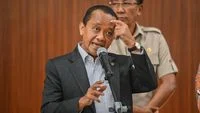
Minister of ESDM Bahlil Lahadalia confirmed that the gridlock at public refueling stations (SPBU) in Makassar and surrounding areas has been successfully dismantled. Speaking to reporters at the Presidential Palace complex in Jakarta, Bahlil stated that he had already delivered a comprehensive report regarding the stabilization of the fuel supply chain to President Prabowo Subianto.
The logistical bottleneck, which saw vehicles stretching for kilometers and waiting for hours, underscored the fragile nature of subsidized fuel distribution in Indonesia’s growing regional economies. While local authorities initially struggled to manage the sudden surge in demand, subsequent investigations revealed a complex web of regulatory migration, consumer behavior shifts, and deliberate systemic exploitation by opportunistic actors aiming to profit from government-subsidized commodities.
Chronology of the South Sulawesi Fuel Crisis
The crisis began to unfold incrementally as motorists across South Sulawesi reported increasingly congested gas stations, particularly those dispensing subsidized variants such as Pertalite and Solar. By mid-September, the situation had escalated into a severe logistical hurdle. Motorists faced unprecedented delays, with lines frequently spilling out onto major thoroughfares, causing traffic disruptions and sparking frustration among daily commuters and commercial transport operators alike.
Local media and social platforms were quickly flooded with images and videos of serpentine queues outside SPBU units in Makassar and adjacent regencies. PT Pertamina Patra Niaga, the commercial and trading arm of the state oil company, initially attributed the congestion to a temporary surge in demand coupled with logistical distribution adjustments. However, as the lines persisted despite increased daily deliveries, federal regulators stepped in to conduct on-the-ground audits.
By Wednesday, September 16, Director General of Oil and Gas at the Ministry of ESDM, Laode Sulaeman, alongside Minister Bahlil, began shedding light on the true catalysts behind the backlog. The Ministry identified a dual-pronged issue: a macro-level shift in consumer purchasing patterns moving from non-subsidized fuels to government-backed alternatives due to economic pressures, and a micro-level criminal enterprise involving the deliberate tampering of vehicle fuel systems.
On Thursday, September 17, following emergency coordination meetings in Jakarta, Minister Bahlil formally announced that the bottlenecks had been eliminated. He emphasized that the government, bolstered by police intelligence, had successfully cracked down on the primary drivers of the artificial scarcity.
Root Causes: Subsidy Migration and Modified Fuel Tanks
A meticulous investigation by the Ministry of ESDM, supported by regional police forces, exposed alarming practices designed to siphon off state-subsidized energy resources intended for lower-income households and legitimate public transportation.
According to Minister Bahlil, the congestion was heavily exacerbated by a wave of motorists migrating away from non-subsidized fuels—such as Pertamax—toward subsidized options, driven by tightening household and operational budgets. This organic surge in demand was subsequently hijacked by bad actors engaging in fuel hoarding.
Law enforcement agencies uncovered widespread vehicular tampering, where individuals systematically enlarged the fuel storage capacities of standard automobiles. Rather than relying on traditional commercial transport trucks or industrial drums, perpetrators utilized luxury and high-end vehicles—including modern sport utility vehicles (SUVs) like the Mitsubishi Pajero—to execute organized fuel-skimming operations.
Investigators discovered that vehicles arriving at SPBU stations had their factory-standard fuel tanks structurally modified or replaced with oversized custom reservoirs. While a standard SUV typically accommodates a fuel capacity within a predictable engineering threshold (designated here as capacity X), the modified vehicles were found to feature tanks expanded by 50 to 75 percent, or even engineered to hold up to 700 liters to one metric ton of fuel per trip.
These modified vehicles would repeatedly visit various SPBU locations throughout the day, filling up their oversized tanks at subsidized rates before siphoning the fuel into industrial containers for resale at higher prices to commercial entities, illegal miners, or black-market distributors. This fraudulent practice, commonly known locally as pengetap, artificially depleted station inventories within hours of delivery, leaving genuine consumers stranded in long queues.
Government Response and Presidential Directives
The severity of the South Sulawesi incident prompted a decisive response from the highest levels of the Indonesian government. Minister Bahlil revealed that President Prabowo Subianto issued strict, direct instructions to immediately halt the illicit exploitation of state-subsidized energy resources and restore order to the distribution network.
In alignment with the President’s directives, the Ministry of ESDM has intensified its collaboration with PT Pertamina and the Indonesian National Police (Polri) to enforce rigorous oversight at all retail distribution points. Law enforcement officers have been deployed to monitor dispensing activities, inspect suspicious vehicles, and crack down on stations found complicit in facilitating illegal hoarding.
Furthermore, the Directorate General of Oil and Gas is evaluating technological enhancements at SPBU terminals, including the mandatory integration of digital tracking systems such as the Subsidi Tepat MyPertamina platform. This digital infrastructure aims to cap daily allocation limits per verified vehicle, ensuring that state subsidies are disbursed exclusively to eligible recipients whose vehicle specifications match national database records.
"We will continue to coordinate intensively with Pertamina to ensure that implementation on the ground remains disciplined," Bahlil stated, emphasizing that zero tolerance will be applied to individuals or syndicates attempting to manipulate the energy supply chain for private gain.
Broader Economic Implications and Systemic Vulnerabilities
The South Sulawesi fuel queue crisis serves as a stark microcosm of the structural vulnerabilities plaguing Indonesia’s energy subsidy framework. Energy subsidies represent a significant portion of the national budget, designed to cushion the populace from global crude oil price volatility and maintain purchasing power. However, the open-distribution nature of certain subsidized fuels frequently creates economic arbitrage opportunities, incentivizing criminal syndicates to divert cheap fuel toward industrial or commercial sectors where market-rate energy is considerably more expensive.
Economists and energy analysts point out that incidents like the one in Makassar highlight the urgent need for a transition toward targeted subsidy mechanisms. While sweeping crackdowns and increased policing provide immediate short-term relief—as demonstrated by the swift dissolution of the recent queues—long-term sustainability requires ensuring that financial aid is transferred directly to targeted households rather than tied to specific commodities that remain vulnerable to exploitation.
For PT Pertamina, the episode underscores the critical importance of predictive supply chain logistics and real-time inventory monitoring. The state-owned enterprise must balance the imperative of maintaining uninterrupted energy availability across Indonesia’s vast archipelago with the rigorous enforcement of compliance protocols at the thousands of independent and company-owned SPBU units operating nationwide.
As normalcy returns to the roads of South Sulawesi, the Ministry of ESDM maintains that fuel stocks across the region are currently at secure and stable levels. Nevertheless, the events in Makassar remain a cautionary tale regarding the delicate balance between public welfare, regulatory enforcement, and the ongoing challenge of safeguarding state resources from systemic abuse.