PT Pertamina Patra Niaga, the trading and distribution arm of Indonesia’s state-owned energy company Pertamina, has formally addressed the growing controversy surrounding the restriction of Suzuki Thunder motorcycles from refueling at various Public Fuel Filling Stations (SPBU) across the Greater Jakarta area and beyond. The clarification comes after a series of viral images and reports surfaced showing specific prohibitions against this particular motorcycle model, which has long been a staple of the Indonesian automotive landscape. According to Roberth M.V. Dumatubun, the Corporate Secretary of Pertamina Patra Niaga, the decision to restrict or closely monitor Suzuki Thunder motorcycles is not a centralized mandate from the national headquarters but rather a discretionary policy implemented by individual gas station operators in response to field-level irregularities.
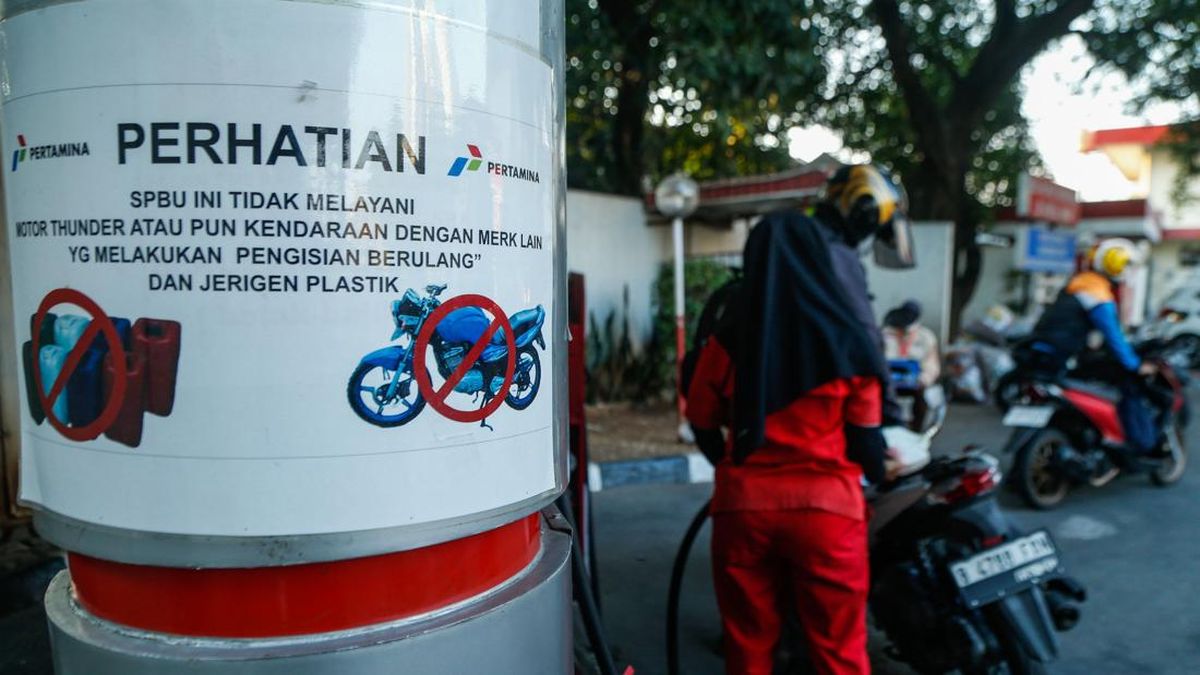
The primary objective of these localized policies, as stated by Pertamina, is to ensure that subsidized fuel—specifically Pertalite—is distributed fairly and reaches its intended targets. In recent months, Pertamina has intensified its efforts to encourage both two-wheeled and four-wheeled vehicle owners to consume fuel in "reasonable" quantities that align with standard daily commuting needs. The emergence of banners and leaflets at gas stations in Jakarta and Bekasi specifically naming the Suzuki Thunder has sparked a debate regarding brand discrimination, which Pertamina was quick to dismiss.
The Context of the Suzuki Thunder Controversy
The Suzuki Thunder, particularly the 125cc and 250cc variants, occupies a unique position in Indonesian motorcycling history. Introduced in 1999, the Thunder 250 was a premium offering until its discontinuation in 2005, followed by the highly popular Thunder 125, which remained in production until 2015. Designed as a "sport touring" motorcycle, the Thunder was engineered for long-distance travel, necessitating a significantly larger fuel tank than the standard "bebek" (underbone) or automatic scooters common in Indonesia. Both models boast a fuel capacity of approximately 15 liters, which is nearly triple the capacity of a typical modern scooter.
While this large capacity was originally a selling point for enthusiasts, it has inadvertently made the Suzuki Thunder the vehicle of choice for "pelangsir"—individuals who purchase subsidized fuel in bulk to resell it at a higher price in retail "Pertamini" kiosks or roadside stalls. Pertamina officials noted that while the motorcycle’s factory specifications are legal, a significant number of "pelangsir" have taken to modifying these tanks surreptitiously. By expanding the internal volume of the tank or installing hidden auxiliary reservoirs, some modified Suzuki Thunders can carry upwards of 20 to 30 liters of fuel in a single trip.
Official Response and Clarification of Brand Policy
In a written statement released on Friday, June 17, 2022, Roberth M.V. Dumatubun emphasized that the brand "Suzuki Thunder" itself is not being blacklisted by the corporation. He noted that the policy is a preventative measure against the misuse of subsidized fuel rather than an indictment of Suzuki’s engineering. To support this, Roberth highlighted that the Chairman of the Suzuki Thunder motorcycle club had reported no issues when refueling for legitimate daily use.
"Regarding specific brands, this is not a limitation or a special exclusion. Even the statement from the Chairman of the Motor Club in question indicated that they faced no obstacles in refueling at SPBUs because the vehicles were used for daily activities in a reasonable manner," Roberth explained. He further clarified that the field teams at SPBUs are trained to identify "oknum" (bad actors) who utilize modified tanks to refill their vehicles multiple times a day. This practice not only depletes the daily quota of subsidized fuel meant for the general public but also creates significant safety hazards and logistical bottlenecks at gas stations.
The Economic Drivers of Fuel Scalping
To understand why the Suzuki Thunder has become a focal point of this regulatory friction, one must look at the economic landscape of fuel subsidies in Indonesia. The price gap between subsidized Pertalite (RON 90) and non-subsidized Pertamax (RON 92) provides a lucrative margin for informal resellers. When the government maintains high subsidies to protect the purchasing power of lower-income citizens, it creates an unintended incentive for arbitrage.
A "pelangsir" using a modified Suzuki Thunder can potentially earn a significant daily profit by making multiple trips to different gas stations, accumulating hundreds of liters of fuel, and reselling it in remote areas or neighborhoods where official SPBUs are scarce. This practice is a direct violation of Law No. 22 of 2001 regarding Oil and Natural Gas, which prohibits the unauthorized resale of subsidized fuel. By implementing localized bans, SPBU operators are attempting to mitigate the risk of being penalized by BPH Migas (the Downstream Oil and Gas Regulatory Agency) for failing to control the distribution of subsidized commodities.
Chronology of Field Reports and Public Reaction
The issue gained mainstream attention when motorists in Bekasi and East Jakarta began sharing photos of stickers and banners at gas station dispensers. These signs explicitly stated: "We do not serve the purchase of Pertalite for Suzuki Thunder or modified tanks." The reports, initially highlighted by detik and later confirmed by other outlets, showed that the enforcement was inconsistent. While some stations were strict, others allowed Suzuki Thunder riders to refuel as long as they did not appear to be "looping" (returning repeatedly) or using jerry cans.
Public reaction was mixed. Legitimate Suzuki Thunder owners expressed frustration at being stigmatized due to the actions of a few. On social media, members of the motorcycling community argued that the focus should be on the behavior of the individual and the state of the vehicle rather than the brand. Conversely, other motorists welcomed the move, citing the "queue-jumping" and long wait times caused by "pelangsir" who spend several minutes filling up massive, often leaking, modified tanks.
Technical Risks and Safety Concerns
Beyond the economic implications, the use of Suzuki Thunders for fuel hoarding presents a severe fire safety risk. Modified tanks often lack the structural integrity of factory-sealed units. Welding auxiliary tanks onto a motorcycle frame near the engine block is a common but dangerous practice. Furthermore, the sheer weight of 30 liters of fuel (approximately 22 kilograms) significantly alters the center of gravity of a 125cc motorcycle, making it unstable and prone to accidents.
Pertamina’s field supervisors have reported instances where fuel vapor leaks from modified Suzuki Thunder tanks have led to small fires or "flash points" at the dispenser. "The spirit behind these localized policies is positive—it is about the equitable distribution of supply and the safety of all customers at the station," Roberth added. By limiting the refueling of vehicles that show signs of modification, SPBUs are exercising their right to maintain a safe environment for the public.
Broader Implications for National Fuel Distribution
The Suzuki Thunder controversy is a microcosm of the larger challenge Indonesia faces in managing its energy subsidies. As the government moves toward more digitized and targeted subsidy schemes—such as the MyPertamina application—the era of "open" subsidies where anyone can buy unlimited quantities of Pertalite is gradually coming to an end.
The restriction on certain vehicle types at the station level is a precursor to more sophisticated monitoring. If a vehicle is flagged for "unreasonable consumption," it could eventually be barred from the subsidy system entirely. For now, Pertamina Patra Niaga maintains that as long as a vehicle is used for its intended purpose and its fuel tank remains within factory specifications, owners should not fear being turned away from the pump.
Conclusion and Future Outlook
The current situation serves as a reminder of the complexities involved in the "last mile" distribution of subsidized goods in a country as large as Indonesia. While the Suzuki Thunder has been unfairly cast as the "villain" in this narrative, the root cause lies in the systemic abuse of subsidies by informal actors.
Moving forward, Pertamina is expected to continue its collaboration with local law enforcement and BPH Migas to crack down on fuel hoarding. For the thousands of legitimate Suzuki Thunder enthusiasts across the archipelago, the advice from Pertamina remains clear: maintain your vehicle in its original condition, avoid repeated refueling at the same station within a short window, and support the fair distribution of fuel for all. As the transition to more regulated fuel consumption continues, the sight of "No Suzuki Thunder" signs may eventually fade, replaced by digital systems that can distinguish between a touring enthusiast and a fuel speculator with precision.