
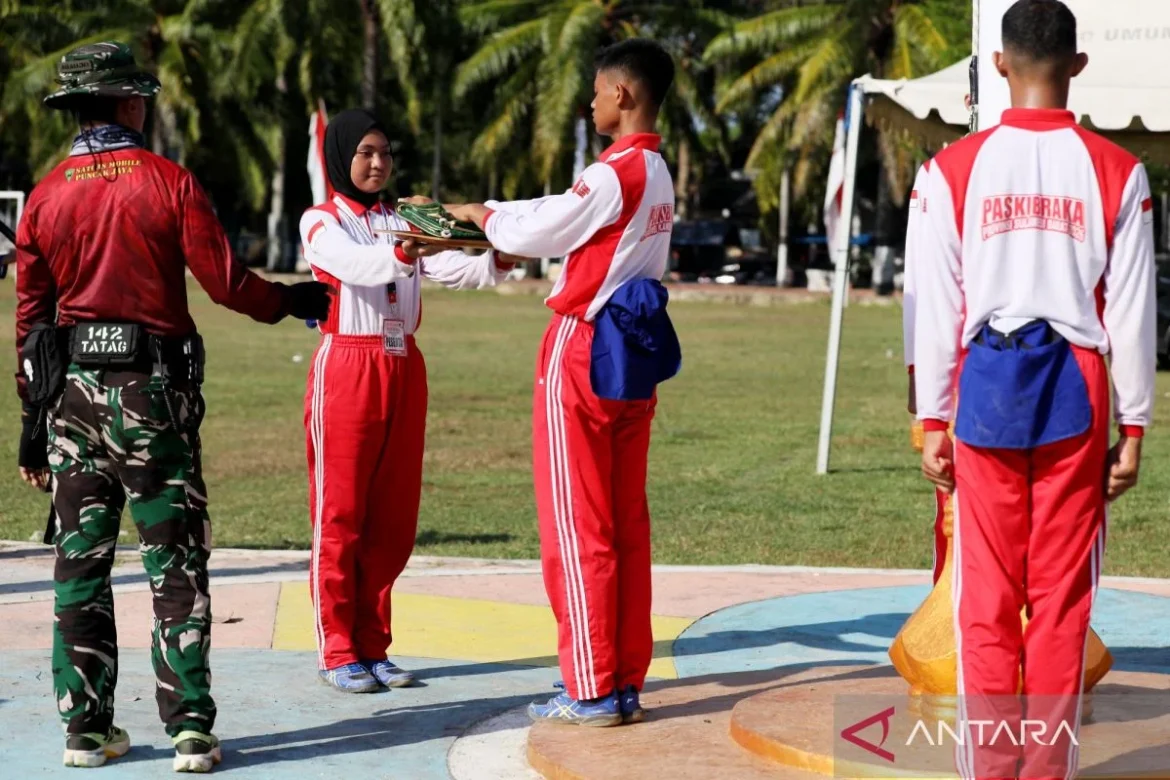
As Indonesia approaches its momentous Independence Day celebrations every 17th of August, the iconic imagery of disciplined young men and women marching in synchronized harmony to hoist the national flag captivates the public. Amidst the patriotic fervor, two distinct terms frequently emerge in public discourse: Paskibra and Paskibraka. While they are often used interchangeably by the general public and media outlets alike, these two acronyms represent fundamentally different entities in terms of institutional status, scope of duties, selection mechanisms, and historical evolution. Understanding these nuances is not merely an exercise in semantics, but a recognition of how youth leadership and state ceremonial duties are structured in the world’s third-largest democracy.
Defining Paskibra: The Grassroots Backbone of Flag Ceremonies
To comprehend the spectrum of ceremonial flag-raising in Indonesia, one must first examine Paskibra, an abbreviation for Pasukan Pengibar Bendera, or the Flag-Raising Troop. Paskibra operates primarily at the grassroots level, serving as the foundational training ground for students across thousands of educational institutions, government offices, private organizations, and community groups throughout the archipelago.
Within the school environment, Paskibra functions as an extracurricular activity designed to instill core values of discipline, precision marching, teamwork, leadership, and personal responsibility. The scope of Paskibra is inherently broad and decentralized. Its existence is not legally bound to national proclamations or state-level protocol; rather, it adapts to the scheduling and needs of individual institutions. Whether it is a routine Monday morning assembly at a remote high school, a local community commemoration, or an institutional milestone event, Paskibra units are mobilized to ensure the solemnity and precision of the flag-raising process. Through rigorous drills, members develop a profound sense of national pride and civic duty long before they ever step onto a regional or national stage.
Defining Paskibraka: The State-Sanctioned Cadre of Youth Leaders
In stark contrast, Paskibraka—standing for Pasukan Pengibar Bendera Pusaka, or the Heritage Flag-Raising Troop—represents an elite, highly structured state program with formal institutional backing. Paskibraka is not merely a collection of students who pull ropes on a flagpole; it is an officially mandated government initiative designed as a leadership incubator for Indonesian youth grounded in Pancasila, the nation’s philosophical foundation.
The legal framework governing Paskibraka is robustly established through Presidential Regulation (Perpres) Number 51 of 2022 concerning the Pasukan Pengibar Bendera Pusaka Program. Under this regulation, Paskibraka is tasked with executing sacred state ceremonies, most notably the commemoration of the Anniversary of the Proclamation of Independence of the Republic of Indonesia on August 17th, as well as the Pancasila Sanctity Day ceremonies.
The recruitment process for Paskibraka is a grueling, multi-tiered meritocracy. Candidates undergo rigorous physical, psychological, and intellectual screenings that progress systematically from the district and municipal levels, through provincial arenas, culminating in the highly coveted selection of national representatives who perform at the Merdeka Palace in Jakarta. Once their active duties conclude, these individuals transition into the esteemed alumni network known as Purna Paskibraka, where ongoing ideological stewardship and nation-building initiatives continue to shape their trajectory as future leaders of the country.
Comparative Analysis: Four Pillars of Distinction
To fully appreciate the divergence between the two entities, policy analysts and educational experts categorize the differences into four core pillars: scope of assignment, selection process, institutional status, and primary duties.
First, the scope of assignment highlights a stark geographical and operational variance. Paskibra remains localized, operating within schools, corporate offices, and local community organizations. Paskibraka, conversely, operates on hierarchical state tiers ranging from regencies and provinces up to the national capital.
Second, the selection process underscores the competitive nature of state service. Paskibra units are formed through internal, autonomous mechanisms established by individual schools or organizations without standardized national interference. In contrast, Paskibraka candidates must navigate a standardized, highly regulated, and fiercely competitive pipeline overseen by specialized government bodies.
Third, institutional status and legal grounding separate the two profoundly. Paskibra is a generalized descriptor and common practice without specific statutory backing. Paskibraka is enshrined in national law via Presidential Regulation Number 51 of 2022, complete with a designated budgetary allocation, institutional oversight, and structured post-service programming.
Fourth, the primary duties differ in gravity and exclusivity. While Paskibra units handle general flag-raising duties for a multitude of everyday institutional events, Paskibraka is legally and historically reserved for supreme national commemorations involving the flag heritage.
The Historical Evolution of Paskibraka: From Yogyakarta to the National Stage
The genesis of Paskibraka is deeply intertwined with the tumultuous and heroic early history of the Indonesian Republic. The concept was born in 1946, during a period when the nation’s capital was temporarily relocated to Yogyakarta due to Dutch military aggression. Facing the first anniversary of Indonesian independence, President Sukarno entrusted Major (Navy) Husein Mutahar with the solemn duty of orchestrating the flag-raising ceremony for the Proclamation commemoration at the Gedung Agung presidential residence in Yogyakarta.
Major Mutahar conceived a visionary idea: the sacred Heritage Flag (Bendera Pusaka) should be raised not by professional soldiers, but by young citizens representing the diverse regions of the fledgling republic. However, the logistical chaos and security perils of the Indonesian National Revolution made transporting youths from across the archipelago impossible. Undeterred, Mutahar selected five exemplary young individuals—three girls and two boys—representing the local youth of Yogyakarta to execute the historic task.
This initial spark evolved significantly over the ensuing decades. In 1967, as the nation entered the New Order era, President Suharto once again called upon Husein Mutahar to manage the ceremonial flag-raising. Mutahar refined his initial concept, expanding the troop formation into a sophisticated three-tiered structure that endures to this day. He established the Pasukan 17 (the 17-member escort troop), the Pasukan 8 (the 8-member core flag-raising troop), and the Pasukan 45 (the 45-member security guard troop). This numerical configuration—17, 8, and 45—was purposefully chosen to symbolize the sacred date of Indonesia’s independence: August 17, 1945.
The nomenclature itself was officially codified in 1973. Dr. H. Idik Sulaeman, a prominent figure in youth development, coined the term "Paskibraka" as a portmanteau blending the words Pasukan (Troop), Kibar (to wave), Bendera (Flag), and Pusaka (Heritage).
Broader Implications for Youth Development and National Identity
In contemporary Indonesia, the evolution of Paskibraka transcends mere pageantry. Sociological and political analysts note that the program has transformed into a vital instrument for national integration and ideological resilience. In an era marked by globalization, digital disruption, and socio-cultural polarization, the rigorous ideological training embedded within the Paskibraka curriculum serves as a bulwark for Pancasila values.
Government officials and educational policymakers frequently emphasize that the values instilled during months of grueling Paskibraka training—resilience, cross-cultural camaraderie, blind devotion to national unity, and ethical leadership—prepare participants to navigate the complex socio-political landscape of the 21st century. The structured transition from active duty to the Purna Paskibraka organization ensures that these young leaders remain connected, mobilizing their networks for civic engagement, disaster relief, and community development across the country.
Ultimately, while Paskibra and Paskibraka share a noble lineage rooted in the reverence of the red-and-white banner, they fulfill distinct roles within Indonesian society. Paskibra remains the ubiquitous heartbeat of daily institutional discipline, while Paskibraka stands as the crown jewel of state youth development—a living testament to a historical legacy forged in Yogyakarta in 1946 and perpetuated by generations of dedicated young patriots.
