
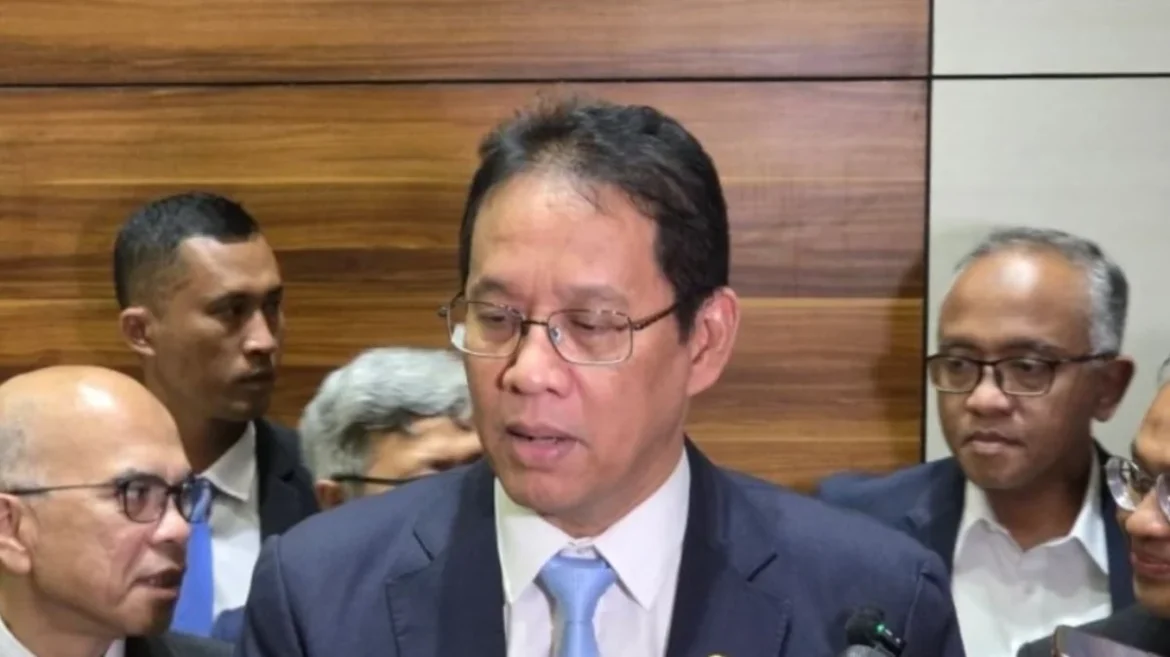
Jakarta, VIVA – The Ministry of Finance, under the leadership of Minister Purbaya Yudhi Sadewa, is poised to initiate critical discussions with the National Nutrition Agency (BGN) to scrutinize and enhance the budgetary efficiency of the nation’s flagship Free Nutritious Meal (MBG) program. This move, announced by Minister Sadewa on Thursday, July 23, 2026, signals a proactive approach to fiscal management, aiming to optimize the program’s impact while ensuring its long-term sustainability. The primary agenda for these upcoming talks will revolve around a proposed measure by BGN to refine the program’s reach by potentially excluding students from more affluent households, specifically those falling within the 8th to 10th deciles of the socio-economic spectrum.
The Genesis and Broad Scope of the Free Nutritious Meal Program
The Free Nutritious Meal (MBG) program was conceptualized as a cornerstone initiative by the current administration, launched in early 2026, with the ambitious goal of addressing pervasive issues of childhood malnutrition, stunting, and food insecurity across the archipelago. Recognizing the profound impact of nutrition on cognitive development, educational attainment, and overall public health, the program was initially designed with a broad mandate to provide daily nutritious meals to a vast cohort of students nationwide. This universal approach aimed to ensure that no child was left behind, fostering a healthier, more educated future generation. The program’s rollout saw significant initial investment, quickly becoming one of the largest social welfare initiatives in recent history, reflecting the government’s strong commitment to human capital development. Estimates at the program’s inception suggested an annual budget allocation potentially reaching into the tens of trillions of rupiah, covering millions of students from kindergarten through high school. While lauded for its noble objectives, the sheer scale of the program also brought with it inherent challenges concerning logistical complexities, supply chain management, quality control, and, crucially, fiscal sustainability.
Mounting Fiscal Pressures and the Imperative for Efficiency
The discussions between the Ministry of Finance and the BGN are not occurring in a vacuum. They are set against a backdrop of evolving national and global economic conditions that necessitate prudent fiscal management. As of mid-2026, Indonesia, like many nations, continues to navigate a complex economic landscape characterized by global supply chain volatilities, fluctuating commodity prices, and the need to maintain robust economic growth targets. The national budget, while robust, faces competing demands from critical sectors such as infrastructure development, defense, healthcare, and other social safety nets. Minister Sadewa’s emphasis on "efficiency" rather than outright "cuts" underscores the government’s delicate balancing act: upholding its commitment to social welfare programs while ensuring fiscal discipline and responsible allocation of public funds. The Ministry of Finance’s mandate is to maintain a healthy budget deficit and manage national debt levels, which requires constant evaluation of spending programs to identify areas where resources can be optimized for maximum impact. This proactive review is a standard practice for large-scale government programs, especially those with significant budgetary implications, ensuring that public funds are utilized effectively and transparently.
Proposed Targeting: Deciles 8-10 and the Rationale for Refinement
The core of BGN’s proposed efficiency measure involves a strategic refinement of the MBG program’s beneficiary list, specifically by discontinuing meal provisions for students from households classified within the 8th to 10th socio-economic deciles. To clarify, these deciles typically represent the top 20-30% of income earners in Indonesia, generally considered to be families with a higher disposable income and greater capacity to provide nutritious meals for their children independently. The rationale behind this targeted approach is multifaceted. Firstly, by reallocating resources from families who are socio-economically stable, the program can concentrate its efforts and budget on the most vulnerable populations – those in the lower deciles who are genuinely at risk of malnutrition and food insecurity. This ensures that the limited public funds are directed where they are most needed and can yield the greatest nutritional and educational benefits. Secondly, it addresses concerns about potential "leakage" or inefficient spending, where benefits are inadvertently extended to those who do not critically require them.
The implementation of such a refined targeting system would rely heavily on robust data infrastructure. BGN would likely leverage existing national social welfare databases, such as the Integrated Social Welfare Data (DTKS) or similar poverty mapping tools, which classify households based on various socio-economic indicators. This data-driven approach aims to ensure fairness and accuracy in identifying eligible beneficiaries. While the exact number of students falling within these higher deciles receiving MBG is yet to be fully ascertained by the Ministry of Finance, early internal assessments by BGN suggest that their exclusion could lead to substantial savings. These savings could then be reinvested into improving the quality and nutritional content of meals for the remaining beneficiaries, expanding the program’s reach to more remote or underserved communities within the target deciles, or bolstering other critical nutritional interventions.
Minister Purbaya’s Stance: Efficiency, Not Cuts

Minister Purbaya Yudhi Sadewa has been careful to frame the upcoming discussions not as an exercise in budget cutting, but rather as a strategic pursuit of "penghematan" or savings through enhanced efficiency. Speaking at the Coordinating Ministry for Economic Affairs office in Jakarta, he emphasized, "Penghematan lah. Tapi tergantung mereka gimana teknisnya nanti," indicating that the potential savings are contingent on BGN’s detailed technical implementation plan. This distinction is crucial for public messaging and political optics. A "cut" implies a reduction in commitment or a withdrawal of support, while "efficiency" suggests a smarter, more impactful deployment of existing resources.
The Minister acknowledged that he currently lacks the intricate details of BGN’s proposed plan, including the precise number of beneficiaries who might be affected or the exact magnitude of potential budget savings. "Saya enggak tahu detilnya seperti apa. Jadi saya mesti tanya dulu ke Kepala MBG, gimana prosedurnya," he stated, highlighting his intention to delve into the operational specifics during his meeting with Sudaryono, the newly appointed Head of BGN. This highlights the collaborative nature of the government’s approach, where fiscal oversight from the Ministry of Finance works in tandem with the programmatic expertise of agencies like BGN. His commitment to meeting Sudaryono next week underscores the urgency and importance placed on these discussions. Purbaya reiterated his support for the program’s objectives, stressing, "Jadi saya enggak motong (anggaran), makanya kita dukung supaya efektif. Nanti mungkin minggu depan saya ke sana (BGN)," reinforcing the idea that the goal is to make the program more effective and sustainable, rather than to diminish its overall impact.
The Role of the National Nutrition Agency (BGN) and its New Leadership
The National Nutrition Agency (BGN) plays a pivotal role in the design, implementation, and evaluation of nutrition-related policies and programs across Indonesia, including the MBG. Its mandate extends beyond mere distribution, encompassing aspects of nutritional standards, food safety, and public health education. The recent appointment of Sudaryono as the new Head of BGN places him at the forefront of this critical efficiency drive. His leadership will be instrumental in navigating the technical complexities of refining the MBG program while upholding its fundamental goals.
BGN’s expertise will be crucial in developing a robust and equitable system for identifying students from deciles 8-10. This involves not only accessing and analyzing socio-economic data but also potentially engaging with local authorities, schools, and community leaders to ensure accurate targeting and minimize unintended consequences. The agency will be tasked with presenting a comprehensive plan to the Ministry of Finance, detailing the methodology for beneficiary identification, the projected savings, and the strategies for communicating these changes to the public and affected families. This collaborative effort between the Ministry of Finance, as the budget authority, and BGN, as the implementing and policy-designing body, is essential for the successful recalibration of such a large-scale social program.
Operationalizing the Savings: Challenges and Data Integrity
The proposed exclusion of students from deciles 8-10, while fiscally sound in principle, presents several operational challenges. The accuracy and currency of socio-economic data are paramount. Outdated or inaccurate data could lead to deserving students being excluded or ineligible students continuing to receive benefits. BGN will need to demonstrate a rigorous and transparent methodology for data verification and appeal processes for families who believe they have been wrongly classified. Furthermore, the communication strategy will be vital. Clear, empathetic communication with schools, parents, and the broader public will be necessary to explain the rationale behind the targeted approach and prevent misunderstandings or backlash.
The potential savings generated from this efficiency measure could be substantial. While specific figures are pending BGN’s detailed proposal, a conservative estimate might suggest that if 20-30% of the initial beneficiaries fall within these deciles, the program could see a significant portion of its budget freed up for other uses or for enhancing the quality of meals for the remaining, more vulnerable recipients. For instance, if the program’s initial budget was IDR 20 trillion annually, a 20-30% reduction in beneficiary numbers could translate to savings of IDR 4-6 trillion, which could be reallocated to improve meal quality, introduce more diverse nutritional components, or expand supplementary nutrition education programs.
Projected Financial Impact and Broader Economic Context
The Ministry of Finance’s engagement in this efficiency review aligns with its broader strategy for managing the national budget amidst global economic uncertainties. In 2026, the Indonesian government is committed to maintaining fiscal prudence, aiming for a sustainable budget deficit while ensuring adequate funding for priority programs. The potential savings from the MBG program, though a fraction of the total national budget, contribute to this overarching goal. These savings can bolster the government’s fiscal space, allowing for greater flexibility in responding to unforeseen economic shocks or investing in other critical sectors that drive long-term growth and poverty reduction.

Moreover, a more efficient MBG program can enhance investor confidence, signaling the government’s commitment to responsible fiscal management. International rating agencies and financial markets often look at a country’s ability to manage its public finances, including the efficiency of its social spending. By optimizing programs like MBG, Indonesia can reinforce its image as a stable and well-managed economy, which can attract foreign direct investment and support the stability of the rupiah. The related news from VIVA.co.id on the same day, July 23, 2026, highlighted Minister Purbaya’s confidence in the application of rules regarding Export Duty on Natural Resources (DHE SDA) to strengthen the rupiah, further underscoring the government’s multifaceted approach to economic stability.
Stakeholder Reactions and Public Perception
The announcement of potential changes to the MBG program is likely to elicit varied reactions from different stakeholders. Economic analysts are generally expected to welcome the move towards greater fiscal efficiency, viewing it as a responsible approach to public spending. They might emphasize the importance of targeted subsidies to maximize social return on investment. The education sector, including school administrators and teachers, will likely focus on the practical implications for schools and the welfare of their students. Their primary concern would be ensuring that the quality of meals for the remaining beneficiaries is maintained or improved and that the transition process is smooth and equitable.
Parent and community groups may have mixed reactions. Families whose children are no longer eligible for the MBG program might express disappointment, even if they fall into the higher deciles, as any perceived loss of benefits can be sensitive. It will be crucial for the government to clearly articulate the long-term benefits of this targeting, emphasizing that the freed-up resources will ultimately benefit the most vulnerable and enhance the program’s overall effectiveness. For families in the lower deciles, the prospect of improved meal quality or expanded program reach could be seen as a positive development. Public communication will therefore be paramount, requiring transparency, empathy, and a clear explanation of the program’s evolution.
Implications for Social Equity and Program Sustainability
The proposed refinement of the MBG program carries significant implications for social equity and the long-term sustainability of government social welfare initiatives. By focusing resources on the most vulnerable, the program reinforces the principle of progressive social policy, ensuring that public funds disproportionately benefit those who need them most. This approach is fundamental to reducing socio-economic disparities and fostering a more equitable society.
Furthermore, by ensuring the MBG program is fiscally sustainable, the government guarantees its continuity for future generations. An inefficient program, regardless of its noble intentions, risks becoming a burden on the national budget, potentially leading to its premature curtailment or a significant reduction in quality. This efficiency drive sets a precedent for other social programs, advocating for a data-driven, evidence-based approach to policy design and implementation. It encourages a continuous cycle of review, evaluation, and adaptation to ensure that public resources are always deployed for maximum impact. The dialogue between the Ministry of Finance and BGN represents a crucial step towards a more refined, impactful, and sustainable Free Nutritious Meal program, aligning social welfare goals with responsible fiscal governance.
The Path Forward: Collaborative Strategy and Data-Driven Governance
The upcoming meeting between Minister Purbaya Yudhi Sadewa and BGN Head Sudaryono marks the beginning of a crucial phase for the Free Nutritious Meal program. This collaborative engagement underscores the government’s commitment to robust governance, where fiscal oversight and programmatic expertise converge to craft effective public policies. The outcome of these discussions will not only shape the future trajectory of the MBG program but also serve as a model for how large-scale social interventions can be continuously optimized for efficiency and equity. The emphasis on data, transparent communication, and a clear distinction between efficiency and cuts will be vital in navigating this transition, ultimately aiming to deliver a stronger, more targeted, and enduring program for the benefit of Indonesia’s children.
