
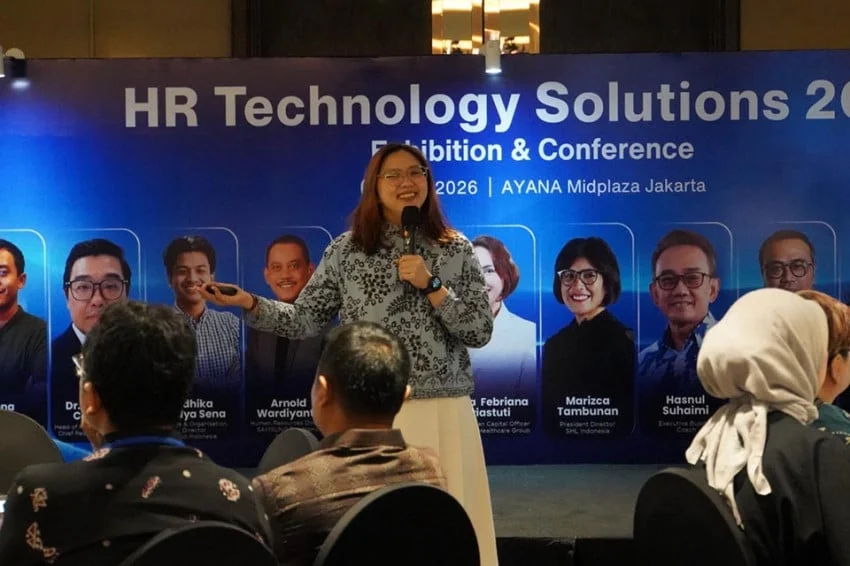
The modern corporate landscape is undergoing a profound transformation, driven by rapid technological advancements, evolving workforce expectations, and the decentralization of economic hubs—exemplified by Indonesia’s shifting administrative focus toward the archipelago’s new capital, Nusantara (IKN). Amidst these sweeping changes, corporate leaders and Human Resources (HR) professionals face a critical challenge: bridging the gap between individual employee potential and overarching organizational objectives. This friction point took center stage at the recent HR Tech Solutions Indonesia 2026 conference in Jakarta, where industry experts gathered to debate the future of workforce management.
At the heart of the discourse was a fundamental realization that has eluded many traditional management structures: the success of corporate talent is no longer determined solely by individual competence, drive, or skill sets. Instead, sustainable high performance is inextricably linked to the robustness, adaptability, and design of the supporting organizational system. KTM Solutions, a prominent player in workforce optimization, utilized the high-profile platform to advocate for a paradigm shift, championing the integration of structural ecosystem enhancements alongside standard talent development frameworks.
The Missing Half of Talent Success: Systems Over Skills
During a keynote and interactive sharing session titled "The Missing Half of Talent Success: Why Talent Growth Needs System Growth," Sheeren Yolanda, Innovation and Talent Science Director at KTM Solutions, addressed an audience of C-suite executives, HR practitioners, and technology developers. Yolanda articulated a compelling argument that resonated deeply within the professional community: cultivating a high-performing workforce requires more than continuous training programs and technical upskilling.
"Developing individual competencies alone is not enough," Yolanda stated in Jakarta. "Organizations must also build systems that allow talent to optimize their potential and contribute meaningfully to business performance."
This philosophy underpins KTM Solutions’ strategic push for Success Profiling—a sophisticated methodology designed to help organizations precisely identify the specific behavioral characteristics, technical proficiencies, and environmental success factors required for optimal performance within specific roles. By mapping these profiles against the realities of day-to-day business operations, companies can better align their human capital strategies with corporate goals.
The urgency of this systemic alignment was visually and conceptually underscored at the KTM Solutions exhibition booth, where attendees explored cutting-edge assessment tools and advanced HR technology integrations. These technologies are increasingly viewed as indispensable instruments for navigating the complexities of modern workforce management, particularly as organizations expand into new geographic frontiers such as IKN, where greenfield operations demand agile, highly synchronized management structures.
Unpacking the Disconnect: Engagement Versus Contribution
To illustrate the critical flaw in treating talent development in isolation, industry presentations at the event drew upon recent empirical research, including insights derived from Employee Engagement Surveys (EES) conducted across various expanding enterprises. The data revealed a troubling paradox that has perplexed human resources analysts: while employees are reporting higher levels of individual output, their emotional and structural attachment to their employers is steadily eroding.
According to survey metrics highlighted during the conference, reported employee contributions within a monitored corporate organization surged by an impressive 12.45 points. On the surface, this metric suggests a highly productive, thriving workforce. However, a deeper examination of the survey data uncovered a stark counter-trend: organizational commitment—measuring loyalty, alignment with corporate values, and long-term intent to stay—plummeted by 19.72 points over the same operational cycle.
This widening chasm between heightened individual output and diminished organizational commitment highlights a core systemic failure. When employees are pushed to increase their output without commensurate structural support, cultural integration, or operational streamlining, the inevitable result is professional burnout, alienation, and eventual attrition. The findings suggest that organizations are currently relying on the sheer individual effort of their personnel to drive business results, rather than fostering an environment where sustainable productivity is supported by well-designed workflows, clear communication channels, and empathetic leadership structures.
The Broader Economic Context: Navigating Decentralization and IKN
The discussions at HR Tech Solutions Indonesia 2026 do not exist in a vacuum; they reflect broader macroeconomic shifts occurring across the Indonesian archipelago. As the government accelerates the development of the new capital city, Nusantara (IKN), businesses of all scales are grappling with the logistical and strategic realities of workforce relocation, regional expansion, and hybrid operational models.
Establishing enterprise operations in a developing economic hub requires more than physical infrastructure; it demands resilient human capital strategies capable of functioning smoothly across geographically dispersed teams. In this context, the alignment between talent potential and business needs becomes an existential corporate priority. Companies attempting to establish a footprint in IKN cannot rely on legacy human resources paradigms that view employee management as a purely administrative function. Instead, they must adopt data-driven, technology-enabled systems that can scale rapidly while maintaining organizational cohesion.
Experts at the conference noted that businesses venturing into new regional markets often make the critical mistake of prioritizing immediate output over cultural integration and systemic support. When employees are deployed to new operational theaters without clear role definitions, robust technological infrastructure, and supportive leadership, the initial burst of productivity quickly gives way to disillusionment—a dynamic directly reflected in the EES data showing plummeting organizational commitment.
Technological Solutions to Human Complexities
Addressing these multifaceted human resource challenges requires moving beyond qualitative guesswork and embracing sophisticated HR technologies. Modern assessment platforms, predictive analytics tools, and automated workflow solutions are increasingly serving as the connective tissue between individual talent and corporate strategy.
Success Profiling, as advocated by KTM Solutions, relies heavily on data analytics to remove bias from talent acquisition and career progression pathways. By analyzing historical performance data, behavioral markers, and environmental variables, organizations can construct accurate profiles of what success looks like in specific roles. This data-centric approach enables HR professionals to pinpoint exact systemic bottlenecks—whether those bottlenecks stem from inadequate managerial training, outdated software systems, or misaligned key performance indicators (KPIs)—and rectify them before they negatively impact employee morale.
Furthermore, the integration of artificial intelligence and machine learning into HR tech stacks allows organizations to monitor employee engagement and sentiment in real-time. Rather than waiting for annual or bi-annual engagement surveys to capture plunging commitment levels, contemporary analytics platforms can flag early indicators of disengagement, enabling proactive intervention by human resources teams and departmental leaders.
Strategic Implications for Corporate Leadership
The insights shared by Sheeren Yolanda and other industry leaders at the Jakarta conference carry significant implications for executive boards and management teams navigating the remainder of the decade. As the corporate world grows increasingly complex, the traditional division between business strategy and human resource management is rapidly dissolving.
First, leadership teams must recognize that talent retention is a systemic issue, not merely a compensation concern. While competitive salaries and benefits packages remain important, they are insufficient to secure long-term loyalty in an environment where employees feel unsupported by organizational structures. Building a resilient corporate culture requires investing in the "invisible infrastructure" of the workplace—transparent communication, streamlined processes, psychological safety, and continuous managerial development.
Second, organizations must embrace agile human capital planning that adapts to regional expansions, such as the ongoing economic shifts toward IKN. This entails designing organizational systems that are flexible enough to accommodate remote, hybrid, and decentralized workforces without sacrificing operational efficiency or corporate identity.
Finally, the dialogue at HR Tech Solutions Indonesia 2026 serves as a timely reminder that technology should serve to humanize, rather than mechanize, the workplace. By deploying HR technologies thoughtfully—to reduce administrative burdens, provide actionable insights, and ensure equitable talent placement—organizations can create an environment where individual growth and business success reinforce one another.
As the Indonesian business community continues to evolve amidst regional transformation and technological disruption, the ability to harmonize employee potential with enterprise systems will ultimately separate market leaders from legacy laggards. The path forward demands a holistic commitment to organizational development, ensuring that as businesses grow, the systems supporting their people grow right along with them.
