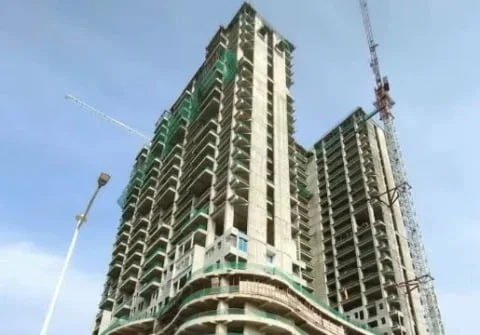
The Badan Pengaturan BUMN (BP BUMN), the regulatory body overseeing state-owned enterprises in Indonesia, has officially established a firm deadline of October 15, 2026, to finalize the resolution framework surrounding the troubled LRT City apartment developments. These transit-oriented residential projects are spearheaded by PT Adhi Commuter Properti Tbk (ADCP), a prominent subsidiary of state-owned construction giant PT Adhi Karya (Persero) Tbk. This decisive action by the government comes in the wake of widespread delays, financial distress, and mounting frustration among approximately 2,000 consumer-investors who have experienced prolonged uncertainty regarding the delivery of their purchased properties.
The announcement was formally made following a high-level coordination meeting at the BP BUMN office in Jakarta, led by senior government officials and representatives of the affected homeowners. By setting a definitive timeline, the state aims to bring structural closure to a crisis that has severely tested public trust in state-backed property developments, particularly those integrated with strategic national mass rapid transit infrastructure.
Comprehensive Inventory of Consumer Grievances and Demands
To ensure that the ultimate solution is equitable and addresses the core pain points of the purchasers, the government has mandated a thorough fact-finding and data-collection phase. According to Aminuddin Ma’ruf, Vice Head I of BP BUMN, a dedicated team under the coordination of consumer representative Rian has been tasked with compiling a comprehensive inventory of all grievances, financial claims, and specific demands from the approximately 2,000 impacted buyers.
This exhaustive data-gathering initiative is scheduled to run through October 1, 2026. During this window, consumers are encouraged to submit their formal documentation, payment histories, and preferred resolutions—ranging from unit completion and handover to financial compensation or structural restructuring.
"The team under the coordination of Mr. Rian is currently working to inventory all aspirations, questions, and claims from approximately 2,000 affected consumers for us to accommodate," Aminuddin stated during a press briefing in Jakarta.
Once the finalized inventory is formally handed over to BP BUMN on October 1, government technocrats and financial analysts will review the data. This will pave the way for a series of high-level tripartite meetings involving government regulators, corporate management from ADCP and Adhi Karya, and designated consumer representatives. These collaborative sessions are designed to harmonize stakeholder expectations before the final resolution roadmap is officially decreed by October 15, 2026.
Financial Lifeline: Danantara Injection and Project Scope
The root cause of the LRT City stagnation has primarily been tied to acute liquidity constraints within the developer, exacerbated by broader macroeconomic pressures, rising material costs, and capital allocation challenges in the post-pandemic property market. To break this operational deadlock, the government has orchestrated a substantial financial intervention.
Earlier, the state investment management body, Danantara, stepped in to provide a strategic financial injection totaling IDR 456 billion to the parent company, PT Adhi Karya (Persero) Tbk. This capital infusion is earmarked specifically to revitalize and accelerate construction across the stalled LRT City portfolio, which spans 12 distinct locations strategically integrated with Light Rail Transit (LRT) corridors in the Greater Jakarta area.
The IDR 456 billion funding mechanism is designed to tackle the projects in a phased, prioritized manner. Funds will be channeled directly toward completing nearly finished residential towers where buyers have endured years of waiting, as well as initiating and advancing construction on foundational phases where development has barely broken ground. By injecting fresh capital through Danantara, the state aims to insulate the broader mass transit-oriented development ecosystem from complete commercial failure, thereby protecting the intrinsic value of transit-adjacent urban planning.
Background and Chronology of the LRT City Crisis
The conception of LRT City was initially hailed as a milestone in modern Indonesian urban planning. Launched to support transit-oriented development (TOD), the concept sought to merge high-density vertical residential living with mass rapid transit stations, reducing commuter congestion and promoting sustainable urban mobility. PT Adhi Commuter Properti Tbk (ADCP) was established as a dedicated vehicle to capitalize on these lucrative land banks surrounding LRT stations.
However, the ambitious rollout encountered severe headwinds.
- Phase 1: Initial Launch and High Optimism (2018–2019): ADCP launched multiple towers across various strategic nodes along the Jabodebek LRT lines, attracting thousands of middle-class buyers and real estate investors drawn by the promise of seamless connectivity.
- Phase 2: Pandemic Disruptions and Liquidity Strain (2020–2022): The global COVID-19 pandemic severely disrupted supply chains, depressed property demand, and impaired cash flows. Construction timelines began to slip significantly across several project sites.
- Phase 3: Escalating Delays and Consumer Protests (2023–2025): As deadlines for apartment handovers lapsed by months and, in some cases, years without substantial construction progress, consumer anxiety turned into organized protest. Homebuyers formed advocacy coalitions, demanding clarity, compensation, or immediate physical resumption of work.
- Phase 4: Government Intervention and State Bailout (Late 2025–September 2026): Recognizing the systemic risk to state-owned enterprise (SOE) credibility and consumer rights, BP BUMN stepped in to mediate. The involvement of Danantara with the IDR 456 billion capital injection marked a turning point, shifting the paradigm from corporate insolvency management to state-backed rescue operations.
- Phase 5: The Road to Finalization (Current Phase – September to October 2026): With the recent announcement by BP BUMN, the crisis has entered its final administrative and operational closure phase, culminating in the October 15 deadline.
Broader Economic and Market Implications
The resolution of the LRT City debacle holds far-reaching implications for Indonesia’s property sector, the credibility of state-owned enterprises, and the future of transit-oriented developments.
First and foremost, the crisis has highlighted the vulnerability of large-scale property projects undertaken by SOE subsidiaries when faced with systemic liquidity shocks. Real estate analysts note that while the TOD concept remains fundamentally sound, developers must maintain robust risk-mitigation reserves and transparent communication channels with buyers. The failure to deliver units on time not only harms individual investors emotionally and financially but also tarnishes the corporate governance reputation of the broader SOE ecosystem.
Second, the direct intervention of Danantara signals a new era in state asset management. By deploying state-backed capital to rescue distressed commercial projects that carry high social and public interest value, the government is signaling that it will not leave retail investors entirely unprotected against corporate default in strategic infrastructure-adjacent sectors. However, this also raises questions about moral hazard and the need for stringent accountability measures to ensure that financial bailouts are utilized strictly for physical completion rather than debt masking.
For the 2000 affected consumers, the upcoming weeks are crucial. The success of the October 1 inventory submission and the subsequent October 15 finalization meeting will determine whether they finally receive the keys to their long-awaited homes or structured compensation packages. As the deadline approaches, all eyes remain fixed on BP BUMN, ADCP, and Danantara to deliver a transparent, binding, and executable resolution that restores confidence in Indonesia’s urban residential market.