
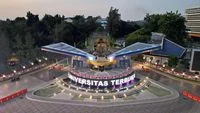
Choosing the right academic major is widely recognized as one of the most pivotal decisions in a student’s educational journey. For individuals seeking flexibility without compromising on academic rigor, Universitas Terbuka (UT)—Indonesia’s premier state university renowned for its open and distance learning system—presents a comprehensive array of higher education options tailored to diverse career aspirations, professional backgrounds, and personal schedules. Established with the foundational mission of widening access to higher education for all Indonesian citizens regardless of geographical constraints, UT has continually evolved its curriculum to meet the dynamic demands of the modern workforce. Whether a high school graduate is embarking on tertiary education for the first time or a working professional is looking to upskill through postgraduate studies, understanding the institutional framework, available faculties, program offerings, and financial investment structures is essential for making an informed choice.
As prospective students navigate the complex landscape of university admissions, careful evaluation of curriculum alignment, career pathways, and financial obligations remains paramount. Universitas Terbuka operates across multiple faculties and schools, spanning foundational disciplines such as economics, education, exact sciences, technology, jurisprudence, social sciences, and political science. Furthermore, the institution offers a flexible continuum of study paths ranging from vocational diplomas to doctoral degrees. To assist future scholars in charting their academic trajectories, this report provides an in-depth examination of the degree programs offered at Universitas Terbuka, accompanied by an extensive breakdown of the financial frameworks, tuition fee schemes, and structural mechanisms that govern learning at Indonesia’s largest distance-education institution.
Background and Evolution of Distance Higher Education in Indonesia
The genesis of Universitas Terbuka traces back to the early 1980s, a period marked by a surging demand for higher education that far exceeded the physical capacities of Indonesia’s conventional brick-and-mortar universities. Recognizing the limitations of traditional classroom infrastructure in reaching populations spread across an expansive archipelago of thousands of islands, the Indonesian government envisioned an institution capable of transcending geographical barriers. Formally established on September 4, 1984, through Presidential Decree No. 41/1984, Universitas Terbuka was designed to leverage mass media, postal correspondence, and eventually digital internet infrastructure to deliver modular, self-directed learning materials.
Over the past four decades, UT has undergone significant technological transformations. Moving away from traditional printed modules and postal submissions, the university has pioneered digital transformation in Indonesian higher education by integrating robust e-learning portals, virtual tutorials, digital libraries, and online examination systems. This evolution has not only democratized access to higher education for remote populations and migrant workers abroad but has also appealed to career professionals seeking to balance full-time employment with continuing education. Consequently, enrollment numbers have scaled dramatically, positioning UT as a cornerstone of the national strategy to elevate the gross enrollment ratio in higher education while fostering lifelong learning.
Faculty Structures and Comprehensive Academic Offerings
Universitas Terbuka structures its extensive catalog of academic programs under distinct faculties and specialized schools. Each faculty houses targeted undergraduate and graduate degrees designed to cultivate specialized knowledge and practical competencies.
Faculty of Economics and Business (FEB)
The Faculty of Economics and Business (FEB) at Universitas Terbuka addresses the critical market demand for skilled professionals in financial management, corporate administration, economic analysis, and entrepreneurial ventures. FEB offers robust undergraduate programs tailored to equip students with analytical tools necessary for navigating complex global and domestic markets. The curriculum integrates theoretical economic principles with practical business case studies, ensuring graduates possess the financial literacy and strategic acumen required in banking, corporate governance, public administration, and small-to-medium enterprise development. Core undergraduate options within FEB typically cover disciplines such as management, accounting, and economics, each structured to foster ethical decision-making and operational efficiency in diverse commercial environments.
Faculty of Teacher Training and Education (FKIP)
As one of the largest faculties within the university, the Faculty of Teacher Training and Education (FKIP) plays a foundational role in shaping the pedagogical landscape of Indonesia. FKIP is dedicated to producing qualified, innovative, and ethically grounded educators capable of addressing the evolving needs of the national education system. The faculty offers a wide range of undergraduate programs focusing on subject-specific teaching methodologies, early childhood education, primary school education, and specialized educational sciences. In addition to initial teacher preparation degrees, FKIP oversees the crucial Teacher Professional Education (Pendidikan Profesi Guru – PPG) program. This professional certification pathway is designed for in-service and prospective teachers to meet national competency standards, thereby enhancing the overall quality of instruction across Indonesian classrooms.
Faculty of Science and Technology (FST)
In an era defined by rapid technological disruption and scientific advancement, the Faculty of Science and Technology (FST) provides rigorous academic pathways focused on exact sciences, quantitative analysis, computational systems, and regional spatial planning. FST programs are meticulously designed to bridge theoretical scientific concepts with practical, industry-relevant applications. The curriculum encompasses disciplines such as mathematics, statistics, biology, food science and technology, civil engineering, environmental engineering, and information systems. By fostering analytical problem-solving and technical proficiency, FST prepares graduates to tackle contemporary challenges in infrastructure development, environmental sustainability, data-driven decision-making, and technological innovation.
Faculty of Law, Social Sciences, and Political Sciences (FHISIP)
Understanding the sociopolitical and legal frameworks that govern modern society is essential for fostering democratic participation and institutional accountability. The Faculty of Law, Social Sciences, and Political Sciences (FHISIP) offers a diverse array of undergraduate programs that examine human behavior, statecraft, legal systems, and public administration. Academic offerings within FHISIP include public administration, business administration, communication studies, sociology, governance science, international relations, library science, archival science, and jurisprudence. Through these programs, students engage critically with issues of public policy, social justice, diplomatic relations, and legal interpretation, preparing them for careers in public service, non-governmental organizations, legal advocacy, and corporate communications.
Graduate School (Sekolah Pascasarjana – SPs)
For professionals seeking advanced specialization and leadership credentials, the Graduate School (SPs) of Universitas Terbuka offers structured master’s (S2) and doctoral (S3) degree programs. These advanced programs are specifically structured to accommodate the schedules of working professionals, researchers, and public sector leaders who require high-level academic engagement without sacrificing their professional responsibilities. Master’s programs cover specialized advanced fields such as public administration, management, environmental studies, and educational administration, while doctoral programs provide rigorous research training designed to produce leading scholars, policy formulators, and institutional innovators capable of contributing original research to their respective fields.
Vocational School (Sekolah Vokasi – SV)
Recognizing the acute industrial demand for highly trained, practice-oriented technicians and professionals, the Universitas Terbuka Vocational School offers diploma and applied undergraduate programs. These vocational tracks emphasize applied technical skills, hands-on internships, and industry-aligned competencies. The curriculum is crafted in close consultation with industry stakeholders to ensure that graduates possess immediate operational readiness, minimizing the transition gap between higher education and employment in sectors requiring specialized technical execution.
Tuition Fee Schemes and Financial Architecture at Universitas Terbuka
A defining characteristic of Universitas Terbuka is its commitment to providing affordable, transparent, and flexible higher education. Unlike conventional universities that often impose rigid, uniform semester fees alongside substantial campus facility overheads, UT employs modular financial structures designed to give students control over their educational expenditure. The institution primarily implements two overarching tuition payment schemes: the Academic Package System (SIPAS) and the Non-SIPAS scheme.
Understanding the Academic Package System (SIPAS)
The SIPAS framework is an all-inclusive tuition scheme designed to simplify the financial planning of students throughout their academic journey. Under SIPAS, students pay a fixed package fee per semester that covers multiple academic components, including tuition, learning materials (such as digital or printed modules), registration administration, and specific tutorial services. SIPAS is further categorized into various service levels—such as SIPAS Non-Tatap Muka (Non-Face-to-Face), SIPAS Semi, and SIPAS Tatap Muka—allowing students to choose the intensity of academic support they require. For instance, basic package fees for programs without Face-to-Face Tutorials (TTM) are structured to offer the most economical route, while enhanced packages incorporating intensive tutoring or academic counseling adjust incrementally to reflect the additional instructional resources utilized.
The Non-SIPAS Credit-Based Scheme
For students who prefer greater autonomy in managing their course loads and semester-by-semester expenses, the Non-SIPAS scheme operates on a modular, per-credit basis. Under this arrangement, students pay tuition fees calculated strictly according to the number of Semester Credit Units (SKS) they take in a given semester. Generally, the cost per SKS under the Non-SIPAS scheme ranges between Rp35,000 and Rp80,000, depending heavily on the specific faculty, practical laboratory requirements, and program level. This flexibility allows working adults or students facing fluctuating financial circumstances to scale their course enrollments up or down, registering for fewer credits during demanding work periods and accelerating their studies when time and resources permit.
Payment Services and Administrative Flexibility
To ensure seamless financial transactions, Universitas Terbuka collaborates with numerous major national banking institutions and digital payment gateways. Students can execute tuition payments through designated bank tellers, automated teller machines (ATMs), internet banking, mobile banking applications, and authorized retail networks. This robust administrative infrastructure minimizes friction during registration periods, ensuring that students across Indonesia’s remote regions can complete their academic administration without encountering bureaucratic or logistical bottlenecks.
Broader Impact, Institutional Analysis, and Future Implications
The operational model of Universitas Terbuka carries profound implications for the broader landscape of national education and workforce development in Indonesia. By effectively eliminating geographical barriers and offering highly flexible tuition structures, UT democratizes access to credentials that were historically restricted to urban elites attending residential universities. This open-access paradigm directly supports national policy goals aimed at increasing the proportion of the workforce holding tertiary qualifications, a vital metric for enhancing economic competitiveness in the global arena.
From an economic perspective, the scalability of distance learning allows UT to absorb large cohorts of students without the linear capital expenditures required to build physical lecture halls, dormitories, and campus laboratories. This cost-efficiency is directly transferred to students through lower tuition rates, making higher education attainable for middle-to-low-income households. However, this model also presents unique institutional challenges. Maintaining academic rigor, ensuring assessment integrity in remote examinations, and combating student attrition—a common hurdle in self-directed distance education—require continuous technological investment and pedagogical innovation.
Looking forward, Universitas Terbuka is well-positioned to expand its footprint as digitalization deepens across the archipelago. The integration of artificial intelligence in personalized learning analytics, the expansion of interactive virtual reality simulations for scientific and technical disciplines, and the strengthening of partnerships with corporate and governmental entities will likely define the next phase of the university’s institutional evolution. For prospective students, navigating UT’s diverse faculties, specialized majors, and flexible fee structures is the first step toward unlocking upward social mobility and professional mastery through lifelong learning.
