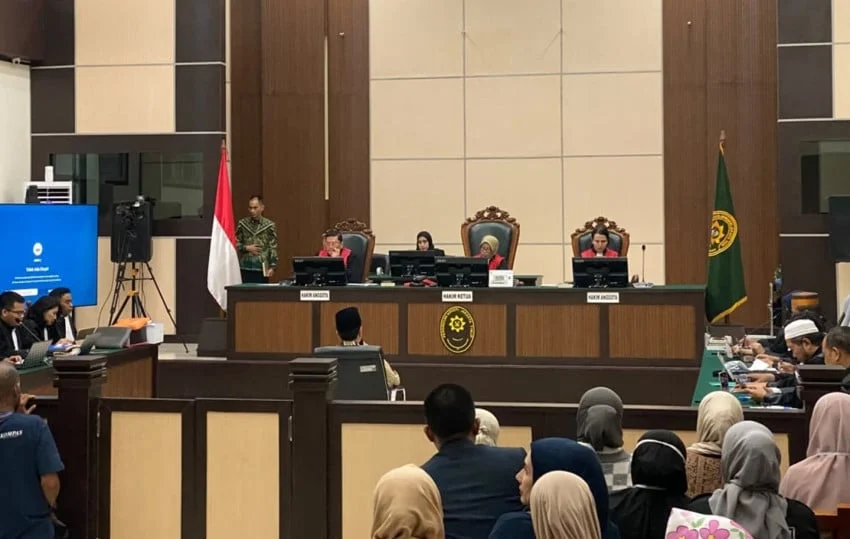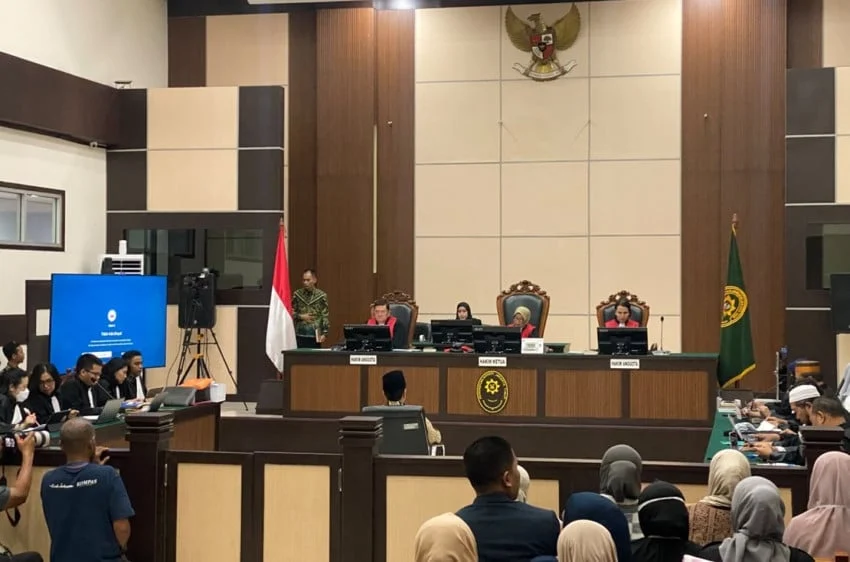
The courtroom proceedings on Thursday, November 5, 2026, in Jakarta, took a surreal turn as the legal defense team for Tifauzia Tyassuma, commonly known as Doctor Tifa, engaged in an unusual line of questioning directed at the seventh President of the Republic of Indonesia, Joko Widodo. During the hearing, the defense team shifted the focus of their examination from legal documentation to the physical appearance of the former president, specifically questioning the presence and maintenance of his facial hair, notably his iconic mustache.
This line of inquiry stems from long-standing, disputed claims regarding the authenticity of Joko Widodo’s educational records. The defense team’s focus on the mustache is purportedly linked to visual comparisons between historical photographs found in academic records and the current appearance of the former head of state. By challenging the witness to grow his mustache back to match the appearance in his graduation photos, the defense is attempting to cast doubt on the consistency of the evidence presented.
Chronology of the Controversy
The controversy surrounding President Jokowi’s educational credentials has been a recurring theme in Indonesian political discourse for years. The debate originally gained significant traction during the 2019 presidential election cycle and resurfaced with intensity in the years following his second term.
- Initial Allegations (2019): Various anonymous online platforms began circulating claims that the graduation photographs attached to Jokowi’s university records were not his own, but rather belonged to another individual, often cited as "Dumatno."
- Formal Challenges (2022): The narrative gained legal momentum when specific individuals, including Doctor Tifa, began promoting these theories, alleging that the university records from Gadjah Mada University (UGM) were falsified or misattributed.
- Legal Proceedings (2026): The current trial, involving charges against Doctor Tifa, centers on the dissemination of these claims, which authorities have categorized as the spread of misinformation and defamation.
- The November 2026 Hearing: During the cross-examination, the defense team demanded that the former President prove his identity by recreating the physical state he was in during his collegiate years, specifically referencing his mustache and eyewear.
The Defense’s Argument and Judicial Intervention
During the November 5 hearing, the defense counsel formally requested that the court order the witness to grow his mustache within a two-week period. The defense argued that the presence or absence of a mustache in archival photos compared to the present-day witness is a "critical discrepancy" that requires verification.
"Today, the witness is present without a mustache," the defense counsel stated in court. "Given the photographic evidence in the academic records, we challenge the witness to regrow it within two weeks to verify the physical similarities."
The presiding judge immediately intervened, noting that the witness had already addressed the matter of his identity and the authenticity of his documents multiple times during the session. The Public Prosecutor (JPU) also expressed immediate objection, characterizing the request as a delay tactic intended to distract from the core legal issues of the trial. The judge sustained the objection, maintaining that the physical appearance of the witness at the time of the trial is not a valid metric for evaluating the authenticity of a diploma issued decades prior.
Fact-Based Analysis of the Identity Claims
To understand the gravity of these proceedings, it is necessary to examine the official response from the institutions involved. Gadjah Mada University (UGM), the alma mater of Joko Widodo, has repeatedly issued formal statements clarifying that the academic records are genuine.
In response to the persistent rumors, university officials have pointed to the internal registration numbers and the official verification processes that were conducted long before Jokowi entered national politics. The claim that the photo belongs to an individual named "Dumatno" has been repeatedly debunked by historical data. Records indicate that at the time the graduation photographs were taken, the individual in question—Dumatno—was merely eight years old, making it chronologically impossible for him to be the subject of a university-level graduation photo.
The persistence of these theories, despite overwhelming documentary evidence to the contrary, highlights the modern challenge of "post-truth" political environments in Indonesia. Even when institutions provide digitized and physical proofs, the visual narrative—such as the shape of a mustache or the frame of a pair of glasses—often holds more psychological weight among proponents of misinformation than official academic registries.
The Broader Impact on Political Discourse
The courtroom incident on November 5 is symptomatic of a broader trend where legal systems are utilized as platforms for political theater. By focusing on trivial physical characteristics rather than the substantive legal arguments, the defense team has turned a serious judicial inquiry into a media-heavy event.
From a legal standpoint, the implications are twofold:
- Judicial Efficiency: The court is tasked with balancing the right of the defense to cross-examine witnesses with the duty to maintain order and relevance. Allowing the proceedings to devolve into discussions about facial hair risks undermining the authority of the court.
- The Weaponization of Misinformation: The case against Doctor Tifa represents a test for the Indonesian judiciary regarding how it handles the intersection of free speech and the proliferation of demonstrably false information. The legal team’s focus on the mustache, while seemingly absurd, serves a strategic purpose in keeping the "fake diploma" narrative alive in the public consciousness, regardless of the court’s eventual ruling.
Expert Perspectives on Digital Forensic Verification
Digital forensics experts have noted that comparing historical photographs—often low-resolution, scanned from film, and subject to the degradation of time—against high-definition modern video feeds is a flawed methodology. Lighting, angles, and facial aging naturally alter the appearance of any individual.
When applied to the case of the former president, these forensic principles confirm that there is no scientific basis for the claims that the photographs are mismatched. The insistence by the defense on a physical "re-enactment" ignores the reality of human aging and the specific conditions under which the original photographs were taken in the early 1980s.
The Role of the Witness in the 2026 Trial
As a witness, Joko Widodo has consistently maintained a composed demeanor, often deferring to the court’s authority when faced with what he perceives as repetitive or irrelevant questioning. His legal representatives have argued that the former president’s time is being unnecessarily consumed by claims that have been investigated by the police and deemed baseless by the university.
The court’s decision to deny the request for the "mustache challenge" underscores a boundary in the judicial process: while the defense has the right to challenge the credibility of a witness, they do not have the right to force a witness to perform physical tasks that have no bearing on the legal validity of the evidence being contested.
Conclusion and Future Outlook
As the trial of Tifauzia Tyassuma continues, the focus will likely return to the digital footprint of the claims made against the former president. The incident regarding the mustache serves as a cautionary tale about the intersection of social media-driven conspiracy theories and formal judicial proceedings.
Observers from civil society groups and legal watchdog organizations have noted that this trial will likely set a precedent for how future defamation and misinformation cases are handled in Indonesia. Should the court lean too heavily into the defense’s unorthodox requests, it may embolden other litigants to turn courtrooms into stages for political performance. Conversely, by maintaining a strict adherence to factual evidence and judicial protocol, the court reinforces the integrity of the nation’s legal institutions against the encroachment of unsubstantiated digital narratives.
For now, the trial remains ongoing, with the public and media outlets keeping a close watch on whether the defense team will attempt further unconventional challenges or if the court will expedite the remaining phases of the trial to reach a definitive verdict. The broader question remains: in an era of rapid information dissemination, can the legal system sufficiently protect the truth from being obscured by the visual and subjective distortions of online misinformation? The answer to this question may define the trajectory of public discourse in Indonesia for the foreseeable future.