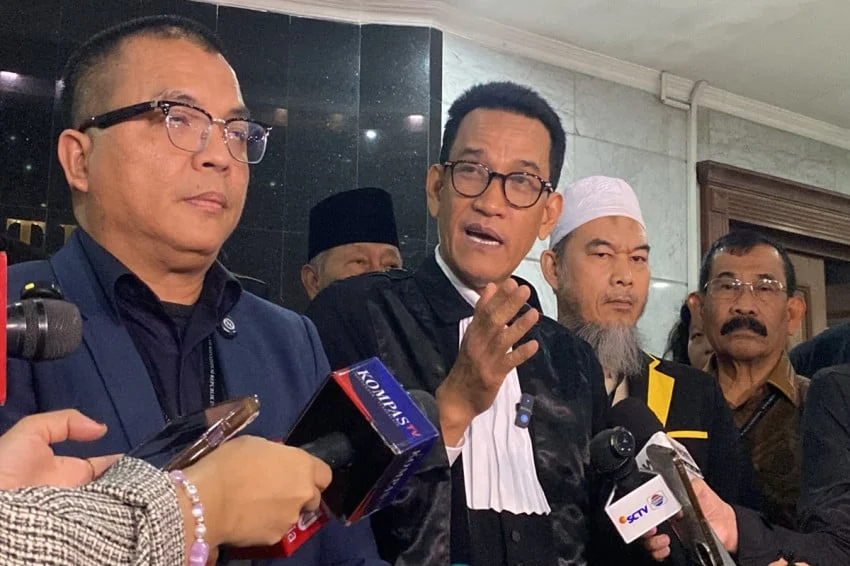
The legal landscape surrounding the validity of high-ranking state officials’ credentials in Indonesia experienced a notable development as the Constitutional Court of Indonesia (Mahkamah Konstitusi) formally addressed a petition concerning the educational background of Vice President Gibran Rakabuming Raka. Refly Harun, serving as the lead counsel for the petitioners of the General Election Results Dispute (Perselisihan Hasil Pemilihan Umum or PHPU), voiced sharp criticism regarding the court’s acceptance of a volunteer organization known as Militan Gibran 08 Nusantara as an official related party (pihak terkait) in the ongoing legal proceedings. Speaking outside the Constitutional Court building in Central Jakarta on Monday, September 21, 2026, Harun argued that the inclusion of grassroots volunteer entities lacked clear procedural necessity, maintaining that the only logical and legally sound related party in a challenge specifically targeting an individual official’s credentials should be Gibran Rakabuming Raka himself. Despite his legal reservations, Harun indicated that his team would proceed with the litigation regardless of the court’s administrative admission of the third-party volunteer group, reflecting the ongoing complexities and high political stakes characterizing Indonesia’s post-election judicial reviews.
The legal challenge at the center of the controversy involves a concerted effort by a coalition of legal experts and civic petitioners, prominently represented by constitutional law expert Denny Indrayana alongside Refly Harun, challenging various aspects of the 2025–2026 electoral outcomes and qualification parameters. The core of the current PHPU petition centers on the authenticity and legal compliance of the academic credentials and educational requirements fulfilled by Gibran Rakabuming Raka prior to and during his candidacy in the national elections. The petitioners contend that discrepancies or constitutional oversights regarding educational prerequisites warrant judicial scrutiny by the nation’s highest constitutional arbiter. As these arguments unfolded in the preliminary hearings, the legal battleground expanded when pro-government and pro-administration volunteer networks sought formal intervention to defend the legitimacy of the Vice President’s office and credentials against what they characterize as politically motivated attempts to undermine the democratic mandate.
Chronology of the Constitutional Court Proceedings
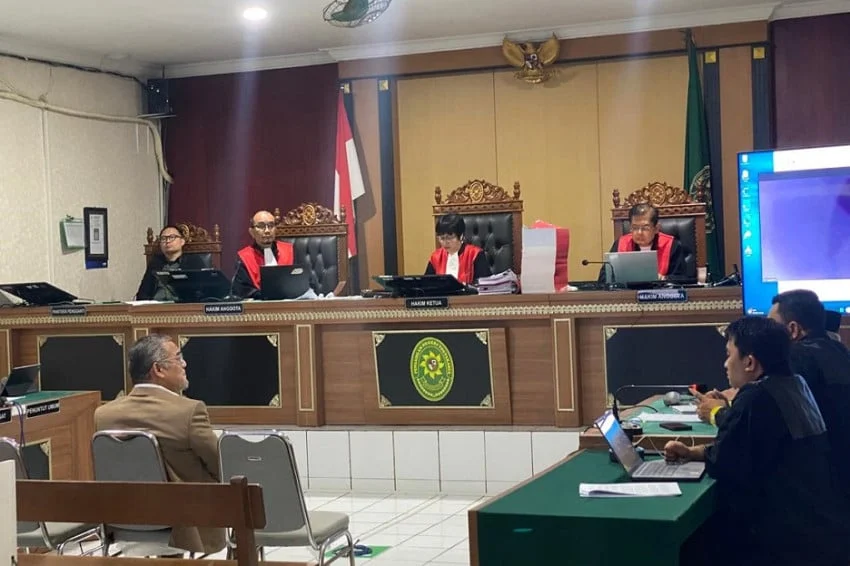
The procedural trajectory leading up to the September 2026 hearings began immediately following the official certification and inauguration phases of the national leadership. Petitioners led by Denny Indrayana and supported by legal practitioners such as Refly Harun lodged comprehensive dossiers with the Constitutional Court, alleging structural and eligibility flaws pertaining to the Vice President’s registration documentation. Under the procedural rules governing the Constitutional Court of Indonesia, petitions related to election results and post-election eligibility disputes are subjected to stringent administrative screening, preliminary panel reviews, and formal evidentiary sessions.
In the weeks preceding the late September hearings, various groups filed formal applications to join the litigation as related parties. Among them, Militan Gibran 08 Nusantara submitted its legal standing claims to the court registry, arguing that as a core constituent organization that championed Gibran Rakabuming Raka throughout the electoral cycle, its members possess a direct and protectable interest in defending the validity of the administration. The Constitutional Court registry subsequently accepted their request, granting them the legal right to present arguments, submit written briefs, and provide testimony during the scheduled judicial review sessions. This administrative decision prompted immediate commentary from the petitioners’ legal team, culminating in Refly Harun’s public critique on September 21, 2026, wherein he questioned the jurisprudential soundness of admitting external campaign groups into what he views as a direct legal dispute between citizens, regulatory frameworks, and state officeholders.
Legal Arguments and the Debate Over Related Parties
The central tension highlighted by Refly Harun touches upon a fundamental debate in Indonesian civil and constitutional litigation: the definition and boundaries of legal standing (legal standing) for third-party intervenors. In standard civil and constitutional jurisprudence, a related party is generally defined as an entity or individual whose legal rights, obligations, or direct interests are immediately and materially affected by the outcome of a judicial decision.
Harun’s critique asserts that in disputes directly challenging the qualifications or personal administrative documents of an individual official—such as a vice president’s diploma—the real party in interest is exclusively the official whose credentials are under review, alongside the state institutions responsible for verifying election candidates, namely the General Elections Commission (KPU). By allowing mass volunteer groups or political fan clubs to enter the courtroom as official litigants, Harun suggests that the proceedings risk becoming encumbered by political advocacy rather than remaining strictly focused on constitutional and statutory interpretation.
Conversely, legal representatives for Militan Gibran 08 Nusantara and supportive constitutional analysts argue that volunteer networks played an instrumental, legally recognized role in the electoral ecosystem. They maintain that attacks on the legitimacy of elected officials directly impact the collective political rights and civic standing of the millions of citizens who voted for the ticket, thereby justifying their participation as defensive intervenors in the constitutional review process.
Background Context of the Diploma and Eligibility Controversies
The scrutiny surrounding Indonesian political figures’ educational documentation is not an isolated phenomenon, but rather part of a broader historical pattern in the nation’s democratic transitions. Over the past decade, various political actors, civil society organizations, and disgruntled candidates have frequently utilized administrative credential checks as a mechanism to challenge electoral outcomes. The specific focus on Gibran Rakabuming Raka’s educational background dates back to the preliminary stages of the presidential nomination process, where critics questioned aspects of his secondary and tertiary studies completed domestically and abroad.
During the pre-election phase, regulatory bodies such as the KPU evaluated these credentials and declared all candidates fully compliant with statutory eligibility criteria outlined in the Election Law. However, post-election legal frameworks permit aggrieved parties to file constitutional challenges if new evidence or profound legal interpretations suggest that fraudulent documentation or regulatory bypass occurred during the vetting stages. The invocation of PHPU mechanisms for this purpose represents an evolving interpretation of the Constitutional Court’s jurisdiction, pushing the court to adjudicate not merely vote counts and procedural electoral fraud, but also the substantive qualifications of seating executives.
Broader Implications for Indonesia’s Constitutional Landscape
The acceptance of grassroots volunteer organizations into high-stakes constitutional litigation carries significant implications for the future of public interest law and election dispute resolution in Indonesia. As legal battles increasingly intersect with mass mobilization and polarized public opinion, the courtroom is frequently transformed into an extension of the political arena.
If the Constitutional Court routinely permits mass-based volunteer groups to act as formal related parties in individualized eligibility disputes, it may establish a permissive precedent that encourages partisan stacking of judicial proceedings. Such a trend could alter the dynamics of constitutional hearings, shifting them from rigorous legal debates between petitioners and state respondents toward emotionally charged political confrontations involving organized civil factions.
Furthermore, the outcome of this specific petition regarding the Vice President’s educational credentials holds profound institutional ramifications. A ruling that substantively addresses and dismisses the challenges would reinforce the finality and administrative integrity of the initial KPU vetting process, providing legal closure to ongoing rumors and partisan attacks. Conversely, any judicial acknowledgment of procedural lapses in credential verification could trigger sweeping administrative reviews across multiple levels of government, potentially prompting legislative revisions to how candidate documentation is authenticated and insulated from post-election litigation.
As the court schedules subsequent evidentiary hearings—with proceedings featuring Denny Indrayana and the broader legal teams slated to continue in the days following the September 21 announcements—legal observers, political analysts, and the Indonesian public remain focused on the judiciary. The ability of the Constitutional Court to navigate these highly charged political waters while strictly adhering to objective constitutional principles will serve as a critical test of institutional resilience and judicial independence in the contemporary democratic era.