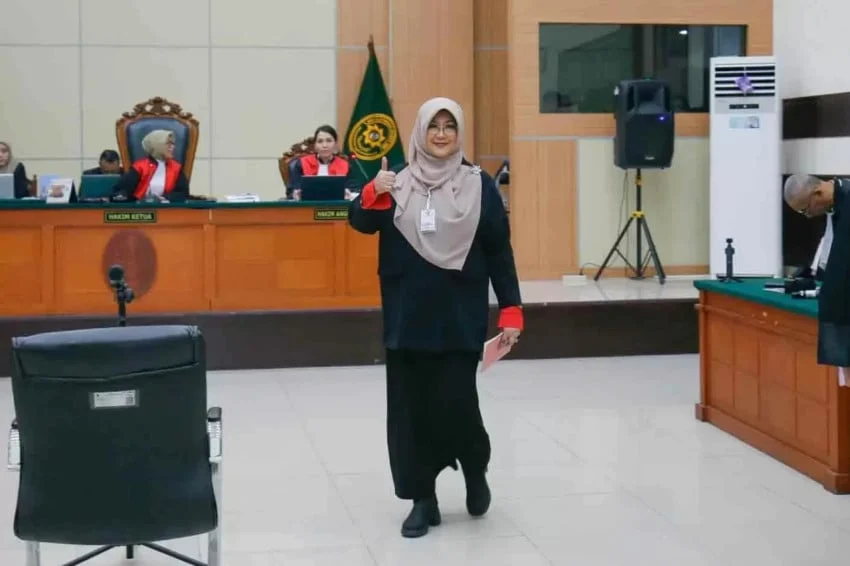
Tifauzia Tyassuma, widely known as Dokter Tifa, has unequivocally rejected any notion of settling her ongoing legal dispute with President Joko Widodo through restorative justice (RJ) mechanisms. Speaking on the iNews program "Interupsi" on Thursday, July 23, 2026, Tifa asserted her preparedness to face a full trial, revealing she has meticulously compiled a staggering 2,000 questions specifically for President Widodo should the proceedings continue. Her resolute stance comes despite the court’s recent decision to grant her preliminary objection (eksepsi), a procedural victory that nonetheless has not swayed her from pursuing a confrontational legal strategy. She maintains that her position has been unwavering since her initial designation as a suspect, emphasizing that she sees no basis for an apology given the extensive evidence she claims to possess.
Dokter Tifa’s legal battle, which has garnered significant public attention, pits a prominent figure known for her often controversial public statements against the highest office in the land. The case underscores the delicate balance between freedom of expression, defamation laws, and the legal recourse available to public officials in Indonesia. Her rejection of restorative justice, a pathway often encouraged in Indonesian legal proceedings to foster reconciliation and avoid lengthy trials, signals her intent to use the courtroom as a platform to scrutinize the President’s actions and policies.
The Unwavering Stance Against Restorative Justice
Restorative justice in Indonesia is a concept enshrined in various legal frameworks, aiming to resolve conflicts outside of formal litigation, focusing on reconciliation, restitution, and community involvement rather than punitive measures alone. It is frequently offered in cases involving minor crimes, defamation, or disputes where the primary goal is to heal divisions and restore relationships between parties. Law enforcement agencies, including the police and the prosecutor’s office, are empowered to facilitate RJ, and judges often encourage it, particularly in cases where public figures are involved, to mitigate prolonged public spectacle and potential political ramifications.
According to Tifa, the option for restorative justice has been extended to her on multiple occasions, originating from the prosecutor’s office and subsequently reiterated by judicial authorities. However, she has consistently declined these offers. Her core argument for this refusal is her conviction that she has nothing to apologize for. "Berkali-kali juga kami sampaikan menolak RJ, sebab apa, tidak ada yang perlu saya mintakan maaf. Karena apa? Bukti-bukti ini, 700 dokumen ini sudah kami pelajari," Tifa stated, articulating her unwavering belief in the strength and veracity of her claims. This assertion of having studied "700 documents" implies a deep dive into public records, governmental policies, or other official correspondences that she believes substantiate her allegations against President Widodo. This accumulation of evidence, in her view, precludes any need for an apology or reconciliation, instead positioning her as an accuser prepared to present her findings in open court.
Her legal team has echoed this sentiment, arguing that accepting restorative justice would imply an admission of guilt or wrongdoing, a position fundamentally at odds with their client’s conviction that her criticisms are fact-based and legitimate. They emphasize that Tifa is not seeking to evade legal scrutiny but rather welcomes the opportunity for a public airing of the issues she has raised.
The Significance of the Granted Eksepsi
The recent decision by the presiding judge to grant Dokter Tifa’s eksepsi (preliminary objection) marks a procedural victory for her defense. An eksepsi is a legal mechanism in Indonesian criminal procedure where the defendant’s legal team argues that the indictment (dakwaan) filed by the prosecutor is flawed, incomplete, or does not meet legal requirements. Such flaws could include vagueness, lack of clarity regarding the alleged offense, incorrect legal categorization, or issues of jurisdiction.
The granting of an eksepsi does not signify an acquittal or a judgment on the merits of the case. Instead, it typically means that the court finds the prosecution’s indictment unacceptable in its current form. This can lead to several outcomes: the indictment might be declared null and void, requiring the prosecution to revise and refile a new indictment, or in some cases, the case could be dismissed altogether if the flaws are deemed fundamental and incurable. In Dokter Tifa’s situation, while it offers a temporary reprieve and forces the prosecution to re-evaluate its approach, it does not necessarily conclude the legal battle. It is a tactical advantage, providing the defense more time and potentially weakening the prosecution’s initial position.
This procedural win might have been interpreted by some as an opportune moment for both parties to consider a less confrontational resolution, such as restorative justice. However, Dokter Tifa’s immediate and firm rejection of this pathway demonstrates her commitment to pursuing the case through a full trial, regardless of the procedural setbacks or opportunities for reconciliation.
President Jokowi as "Saksi Pelapor": A Unique Consequence
A particularly intriguing aspect of Dokter Tifa’s strategy is her assertion that if the case proceeds to trial, President Joko Widodo, as the saksi pelapor (complainant witness), would be legally obligated to appear in court. "Menurut Tifa, apabila perkara ini berlanjut ke persidangan, justru Jokowi yang akan menghadapi konsekuensinya. Sebab, kata dia, Jokowi berstatus sebagai saksi pelapor sehingga wajib hadir dalam setiap agenda persidangan," the article quotes her.
The implication of a sitting President being compelled to appear as a witness in a criminal trial is profound and rare in Indonesia’s legal history. While public officials, including presidents, are not above the law, their direct involvement in court proceedings, especially as a complainant witness in a potentially protracted defamation case, carries significant weight. Such an event would undoubtedly draw immense national and international attention, potentially disrupting the President’s official duties and creating an unprecedented spectacle.
The legal framework typically mandates a complainant witness to provide testimony to substantiate the allegations. For a president, this would involve answering questions under oath, not only from the prosecution but also from the defense team, including Dokter Tifa’s legal counsel. This scenario is precisely what Tifa seems to be anticipating and, perhaps, even orchestrating, given her claim of preparing "2,000 questions" for him. The sheer volume of questions suggests an intent to delve into various aspects of his administration, policies, and personal conduct during his tenure, potentially transforming a defamation trial into a broader inquiry into governance.
Background Context: Dokter Tifa’s Public Persona and Prior Engagements
Dokter Tifa, whose full name is Tifauzia Tyassuma, has established a public profile characterized by her outspoken nature and often critical commentary on social, health, and political issues in Indonesia. A medical doctor by profession, she gained significant public attention through her active presence on social media and various public forums, where she frequently shares her perspectives, sometimes challenging mainstream narratives or government policies.
Her previous public engagements and statements have often sparked debate and, at times, controversy. While her supporters view her as a courageous voice holding power accountable, critics have accused her of spreading misinformation or making unsubstantiated claims. This current legal battle is not her first encounter with public scrutiny or legal challenges stemming from her commentary. Her history suggests a consistent willingness to engage in public discourse, even when it leads to confrontation with powerful entities.
The specific nature of the allegations that led to her being designated as a suspect in the current case is understood to relate to alleged defamation or the spread of false information concerning President Joko Widodo. While the precise details of the original complaint are not fully elaborated in the provided context, the pattern of such cases in Indonesia often involves individuals criticizing public officials, leading to reports under defamation laws, particularly those related to the Electronic Information and Transactions (ITE) Law. This law has been a subject of ongoing debate in Indonesia, with critics arguing it is often used to stifle legitimate criticism and freedom of expression.
Chronology of the Legal Dispute (Inferred)
While the provided article focuses on the current stage of the case, a plausible timeline leading to this point can be inferred:
- Initial Complaint (Early 202X): President Joko Widodo, or his legal representatives acting on his behalf, likely filed a complaint against Dokter Tifa, alleging defamation, dissemination of false information, or other related offenses. This complaint would typically be lodged with the police.
- Police Investigation (Mid-202X): The police would initiate an investigation, gathering evidence, interviewing witnesses, and examining Dokter Tifa’s statements or publications.
- Suspect Designation (Late 202X): Based on their findings, the police would officially designate Dokter Tifa as a suspect. This is a critical legal juncture, signifying that sufficient evidence exists to suspect her involvement in a criminal act.
- Transfer to Prosecutor’s Office (Early 202Y): The case file, along with the suspect, would be handed over to the public prosecutor’s office. It is at this stage that the first offers of restorative justice might have been made, as prosecutors often explore alternative dispute resolution.
- Indictment and Court Submission (Mid-202Y): The prosecutor’s office, after reviewing the evidence, would draft and submit an indictment (dakwaan) to the court, officially initiating the trial process.
- Court Hearings Begin (Late 202Y): Preliminary court sessions would commence, during which the indictment is read, and the defense is given the opportunity to present its eksepsi.
- Offers of Restorative Justice by Court (Late 202Y – Early 202Z): The court, in line with legal practices, might have reiterated the option of restorative justice, encouraging both parties to seek an amicable resolution. Dokter Tifa consistently rejected these offers.
- Ruling on Eksepsi (Recently, prior to July 23, 2026): The judge issues a ruling on Dokter Tifa’s preliminary objection, granting it. This means the initial indictment was found to be flawed.
- Current Juncture (July 23, 2026): Dokter Tifa publicly reaffirms her rejection of restorative justice and her readiness for a full trial, including her intention to question President Jokowi extensively, following the successful eksepsi ruling. President Jokowi’s legal team reportedly continues to offer restorative justice despite the eksepsi being granted.
Statements and Reactions from Related Parties
Beyond Dokter Tifa’s firm stance, the case elicits anticipated reactions from other stakeholders:
- President Jokowi’s Legal Team: While the source states they offered restorative justice, their motivation is likely multifaceted. It could be a genuine attempt to de-escalate a potentially politically charged situation, to avoid a lengthy and distracting public trial, or to demonstrate a willingness for amicable resolution. Their continued offer of RJ even after the eksepsi was granted suggests a preference for avoiding the courtroom spectacle. They would likely emphasize the importance of maintaining decorum and respecting legal processes while protecting the President’s reputation from what they perceive as unfounded allegations. Their next step, following the granted eksepsi, would likely be to either revise and resubmit a new indictment or to continue pressing for an RJ settlement.
- Public Prosecutors: The prosecution’s role is to represent the state’s interest and uphold justice. Their initial decision to file an indictment and their subsequent offers of RJ are part of their mandate. Following the granting of the eksepsi, they would be tasked with reviewing the court’s decision, identifying the flaws in their original indictment, and deciding whether to revise and resubmit it. This process ensures the legal standards for prosecution are met.
- Legal Experts and Analysts: The case is likely to be a subject of intense scrutiny by legal scholars and political analysts. They would likely comment on:
- Freedom of Expression vs. Defamation: The perennial debate surrounding the balance between an individual’s right to criticize public officials and the legal protections against defamation, particularly under the ITE Law.
- Presidential Involvement: The unprecedented nature of a sitting president potentially testifying as a complainant witness in a criminal trial, and the implications for the separation of powers and the office of the presidency.
- Restorative Justice Application: The efficacy and appropriateness of offering RJ in high-profile cases involving political figures and serious allegations.
- Judicial Independence: The court’s handling of the eksepsi and its future decisions will be seen as a test of the judiciary’s independence and impartiality in a politically sensitive case.
Broader Impact and Implications
The Dokter Tifa case, irrespective of its final outcome, carries several significant implications:
- For President Joko Widodo’s Legacy: A public trial involving the President as a complainant witness could be a substantial distraction from his remaining term’s agenda and could potentially impact public perception of his administration. The necessity for him to directly defend his actions or character in a criminal court, while demonstrating adherence to the rule of law, also presents a unique challenge to the dignity and authority of the presidential office.
- For Dokter Tifa and Activism: Her resolute stance, if successful in forcing a public trial and presidential testimony, could embolden other activists and critics to challenge public officials more directly. Conversely, if she faces severe legal consequences, it could have a chilling effect on freedom of expression in Indonesia. Her decision to reject RJ and confront the state head-on positions her as a symbol of resistance for many.
- For Indonesian Legal System: The case will test the procedural limits and applications of defamation laws, the ITE Law, and restorative justice mechanisms in high-stakes political contexts. It will also highlight the challenges of managing cases where the highest political office is directly involved, potentially setting precedents for future interactions between citizens and government officials in the courtroom. The court’s decisions will be closely watched as indicators of judicial independence and fairness.
- For Public Discourse and Accountability: The public airing of "2,000 questions" and "700 documents," if it materializes, could bring to light issues that might otherwise remain in the shadows, potentially fostering greater transparency and accountability from public officials. It could also intensify political polarization and public debate, especially concerning the nature of criticism against government figures.
In conclusion, Dokter Tifa’s unwavering rejection of restorative justice and her readiness to challenge President Joko Widodo in a full trial, backed by an asserted mountain of evidence, transforms this legal dispute into a significant political and societal event. The granting of her eksepsi provides a momentary pause but does little to deter her intent to pursue a public confrontation. The potential requirement for a sitting president to testify as a complainant witness underscores the profound implications of this case, setting the stage for a legal battle that promises to captivate the nation and significantly shape discourse on freedom of expression, governmental accountability, and the rule of law in Indonesia.