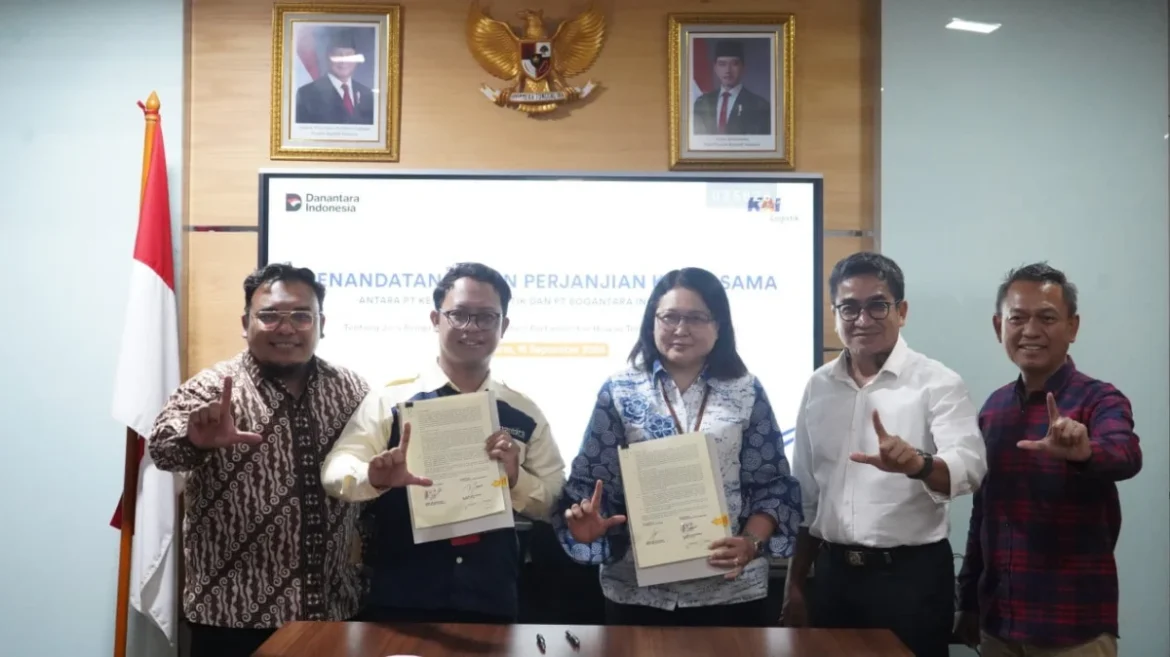
In a landmark development for Indonesia’s national logistics infrastructure, KAI Logistik, a subsidiary of the state-owned railway operator PT Kereta Api Indonesia (Persero), has officially entered into a long-term strategic partnership with PT Bogantara Indo Transport. The agreement, signed on Saturday, September 19, 2026, marks a pivotal shift in the nation’s supply chain management, focusing specifically on the large-scale distribution of agricultural commodities, food supplies, and live livestock via the national rail network. This initiative aims to bridge the logistical gap between production centers in East Java and the high-demand consumer markets in the capital city of Jakarta, setting a new precedent for multimodal transportation efficiency.
A New Era for National Food Security and Logistics
The collaboration is not merely a commercial agreement but a strategic response to the increasing demand for secure, reliable, and cost-effective food distribution. Under the terms of the agreement, the two companies will utilize the Banyuwangi–Jakarta rail corridor as a primary artery for goods transport. The partnership is scheduled to span over four years, commencing in November 2026 and extending through December 2030. During this period, the companies have set an ambitious target to transport approximately 84,200 flatbed rail wagons, representing a massive infusion of cargo into the railway ecosystem.
Yuskal Setiawan, President Director of KAI Logistik, emphasized that the decision to integrate food and livestock into rail freight is driven by the need for consistency and safety. "We view food commodities as a vital component of national stability. By moving these goods from road to rail, we are implementing a system that is not only safer and more punctual but also significantly more capable of maintaining the integrity of the supply chain from farm to market," Setiawan stated during the signing ceremony.
Technical Innovation: Specialized Containment and Animal Welfare
A defining feature of this partnership is the deployment of specialized container technology. Unlike standard logistics operations that rely on generic freight containers, the KAI-Bogantara initiative mandates the use of customized units tailored to the specific biological and physiological requirements of the cargo.
For perishable goods such as vegetables and fruits, the containers are designed to maintain optimal environmental conditions to minimize post-harvest losses. More importantly, the transport of live livestock—specifically cattle—requires a higher tier of engineering. The containers are built to comply with strict animal welfare standards, ensuring proper ventilation, space, and safety protocols during the transit between Banyuwangi and Jakarta.
Aniek Dwi Deviyanti, Director of Business Development at KAI Logistik, highlighted that this project is a pioneer for the company. "This is an innovative leap for us. It is the first time KAI Logistik has implemented a specialized, end-to-end rail freight solution for live animals and fresh produce on this scale. Every unit used must pass rigorous technical inspections, safety certifications, and comply with national regulations, ensuring that we uphold the highest standards of logistical and ethical compliance," Deviyanti explained.
Strategic Rationale: The Banyuwangi–Jakarta Corridor
The selection of the Banyuwangi–Jakarta route is rooted in sound economic geography. Banyuwangi, located at the eastern tip of Java, serves as a primary hub for agricultural products and livestock sourced from East Java and parts of Bali. Conversely, Jakarta and the surrounding Greater Jakarta area represent the largest consumer market in Indonesia.
Historically, this route has been heavily dependent on road freight via the Trans-Java Toll Road. While road transport offers flexibility, it is prone to traffic congestion, higher fuel consumption, and increased carbon emissions. By shifting a significant volume of this freight to rail, the partnership aims to alleviate pressure on the national highway network and reduce the logistics costs that currently inflate food prices in urban centers. The transition to rail is expected to offer a more stable price point for consumers by reducing the unpredictability associated with road-based logistical bottlenecks.
Official Perspectives and Industry Implications
M. Farid Nor Rohman, President Director of PT Bogantara Indo Transport, welcomed the collaboration as a necessary evolution for the Indonesian logistics sector. "Our partnership with KAI Logistik is a breakthrough in how we approach the distribution of essential goods. By leveraging the existing rail network, we are ensuring that high-quality produce from our farmers reaches the city without the traditional delays or quality degradation caused by long-haul trucking," said Nor Rohman.
From an industry perspective, this initiative aligns with the Indonesian government’s broader goals of optimizing state-owned infrastructure to bolster food sovereignty. The move also signals a growing trend toward "green logistics," where rail is increasingly favored over road transport to meet national sustainability targets. Rail transport is statistically more energy-efficient per ton-kilometer, making this partnership a significant contributor to the reduction of the national carbon footprint in the logistics sector.
Economic and Logistical Challenges
While the initiative is promising, industry analysts note that the success of the project will depend on the seamless integration of "first-mile" and "last-mile" logistics. Moving goods from farms to the railheads in Banyuwangi and from the rail terminals to distribution centers in Jakarta requires highly coordinated timing.
Furthermore, the scale of 84,200 wagons over four years suggests an average of roughly 21,000 wagons per year, or approximately 1,750 per month. This requires a high degree of operational discipline. KAI Logistik and PT Bogantara Indo Transport will need to ensure that the infrastructure at both ends—loading docks, cooling facilities, and livestock handling pens—is capable of handling such volume without compromising the freshness of the produce or the health of the animals.
Looking Ahead: A Model for Future Expansion
The agreement between KAI Logistik and Bogantara Indo Transport is being viewed as a pilot program that could be replicated across other regions. If the Banyuwangi–Jakarta operation proves successful in maintaining product quality and operational efficiency, it is highly likely that similar rail-based livestock and fresh produce corridors will be established to connect other major agricultural hubs, such as Central Java or Lampung, to the urban centers of the archipelago.
As the nation moves toward 2030, the integration of technology, rail infrastructure, and private-sector expertise will be essential in modernizing the Indonesian supply chain. This partnership stands as a testament to the potential of public-private cooperation in addressing some of the most pressing challenges in food distribution. By transforming the way agricultural goods move across the country, KAI Logistik and PT Bogantara Indo Transport are not only optimizing their own operations but are also playing a critical role in the broader economic stability of Indonesia.
In summary, the next four years will be a definitive period for this project. With the scheduled commencement in November 2026, all eyes will be on the operational performance of the first shipments. The ability to maintain schedules, ensure the safety of live cargo, and provide a cost-effective alternative to road transport will determine whether this partnership serves as the blueprint for the future of national food logistics. The commitment demonstrated by both parties suggests a robust foundation, and if successful, this initiative could fundamentally reshape the logistics landscape for Indonesia’s essential commodities.