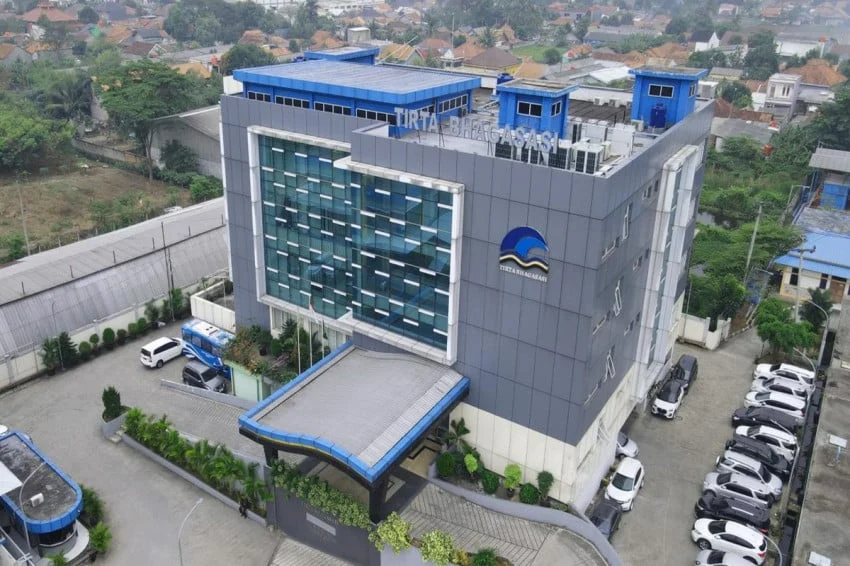
Perumda Tirta Bhagasasi Kabupaten Bekasi has officially initiated the formal drafting process for its 2027 Corporate Work Plan and Budget (RKAP), marking a critical juncture in the regional water utility’s strategic roadmap. As the entity responsible for providing clean water access to one of Indonesia’s most densely populated industrial hubs, the firm is working under a strict timeline to finalize its financial and operational blueprints by November 2026. This process serves as the backbone for the company’s fiscal governance, ensuring that capital expenditure, service expansion, and operational efficiency are aligned with long-term regional development goals.
The Strategic Importance of the 2027 RKAP
The RKAP is not merely an internal administrative document; it is a legally binding strategic framework that dictates how a regional publicly-owned enterprise (BUMD) allocates its resources. For Perumda Tirta Bhagasasi, the 2027 cycle is particularly significant as it follows a series of aggressive infrastructure expansion efforts. The document will act as the primary instrument for the board of directors to secure approval from the local government—acting as the owner—regarding investment priorities for the coming year.
According to internal reports, the current drafting sessions, held over a three-day period at the utility’s headquarters in Bekasi, involve cross-departmental collaboration. The focus is to harmonize technical operational requirements with the financial realities of the current economic climate, including inflationary pressures on infrastructure materials and the rising cost of water treatment chemicals.
Leadership Perspective on Long-Term Vision
Reza Luthfi Hasan, the President Director of Perumda Tirta Bhagasasi, emphasized that the 2027 RKAP serves as a bridge between the company’s ambitious long-term strategic plan and the daily realities of service delivery. "The RKAP is meticulously crafted by a specialized internal team to define our operational targets, performance benchmarks, and budget allocations for the upcoming year. This ensures that every rupiah spent is directly aligned with our broader, multi-year mission to enhance water security for the people of Bekasi," Reza stated during the recent planning sessions.
The leadership’s emphasis on "measurable performance" suggests a shift toward more rigorous Key Performance Indicators (KPIs). In previous years, the company has faced the dual challenge of balancing service coverage expansion in rapidly growing suburban areas while simultaneously rehabilitating aging pipe networks in the older sections of the regency.
Contextualizing the Expansion Strategy
To understand the weight of the 2027 planning, one must examine the utility’s recent trajectory. Perumda Tirta Bhagasasi has been actively pursuing a target of 7,400 new subscriber connections in recent phases. This goal is reflective of the rapid urbanization of Kabupaten Bekasi, where demand for piped water is constantly outpacing existing capacity.
The expansion is not just about quantity but quality and accessibility. The Regency of Bekasi is a unique operational environment; it combines high-density residential zones, massive industrial estates, and rural agricultural belts. Providing water to such a diverse demographic requires a tiered approach to infrastructure investment, which the 2027 RKAP is expected to codify.
Operational Challenges and Resource Allocation
The drafting of the 2027 budget comes at a time when the water utility sector in Indonesia faces significant headwinds. Factors influencing the upcoming budget include:

- Energy Costs and Efficiency: As a power-intensive industry, the cost of electricity to run water pumps is a major line item. The 2027 plan will likely focus on energy-efficient pumping technology and potentially integrating renewable energy sources to mitigate operational overhead.
- Infrastructure Maintenance: With a distribution network spanning hundreds of kilometers, non-revenue water (NRW)—water lost due to leaks or illegal connections—remains a persistent challenge. Budgeting for leak detection technology and pipeline replacement is expected to be a top priority in the 2027 fiscal outlook.
- Water Source Scarcity: Increasing competition for raw water from surface sources requires the utility to invest in more sophisticated treatment facilities and potentially explore new raw water reservoirs.
The Role of the Regency Government
As a Perumda (Regional Public Company), the firm operates under the guidance of the Bekasi Regency Government. The RKAP is subject to review by the supervisory board and the regional legislative body. By finalizing the document in November, the company provides the local government with enough lead time to integrate these figures into the regional budget (APBD) discussions. This synchronization is vital for securing grants or government-backed loan guarantees for major capital projects.
Implications for Public Service Delivery
For the residents of Bekasi, the finalization of the RKAP represents the difference between sustained service and potential disruption. A well-funded and strategically sound RKAP ensures that service disruptions caused by pipe bursts are minimized through proactive maintenance schedules. Furthermore, it determines the pace at which new residential developments can be integrated into the city’s water grid.
Economic analysts observe that for industrial-heavy regions like Bekasi, water utility reliability is a key metric for investor confidence. If the utility can demonstrate a clear, well-funded path to maintaining 99% uptime in industrial zones, it bolsters the region’s overall attractiveness for foreign and domestic direct investment.
Chronology of Planning and Execution
The current timeline suggests a methodical approach to corporate governance:
- Late October 2026: Initial drafting and intensive internal workshops at the head office to consolidate departmental needs.
- Early November 2026: Finalization of the draft and submission to the supervisory board for initial review.
- Late November 2026: Formal submission to the regent or local government authorities for final approval and ratification.
- January 2027: Implementation phase begins, with quarterly performance reviews scheduled throughout the fiscal year.
Fact-Based Analysis of Future Trends
Looking toward 2027, the focus of Perumda Tirta Bhagasasi is expected to pivot further toward digital transformation. The integration of smart meters, which allow for real-time monitoring of water usage and immediate detection of leaks, is likely to feature prominently in the new budget. This move would not only improve customer billing accuracy but also significantly reduce the operational costs associated with manual meter reading and field investigations.
Furthermore, the company is under increasing pressure to meet ESG (Environmental, Social, and Governance) standards. Future investments will likely favor projects that prioritize water conservation, waste reduction, and the protection of raw water catchments, moving beyond the traditional mandate of merely increasing the number of pipe connections.
Concluding Outlook
The process of drafting the 2027 RKAP for Perumda Tirta Bhagasasi is a testament to the complex balancing act required of modern Indonesian water utilities. By setting a deadline in November, the company is positioning itself to hit the ground running at the start of the new year, ensuring that administrative delays do not impede service delivery.
As the company navigates the challenges of a growing population and aging infrastructure, the success of the 2027 budget will ultimately be judged by the tangible improvement in water quality and service continuity for the people of Bekasi. For stakeholders, investors, and the public, the final approved document will be the primary indicator of the company’s resilience and its capacity to meet the demands of an evolving urban landscape in the years to come. The upcoming weeks will be crucial as the final figures are reconciled, setting the course for one of the most critical public service providers in the West Java region.