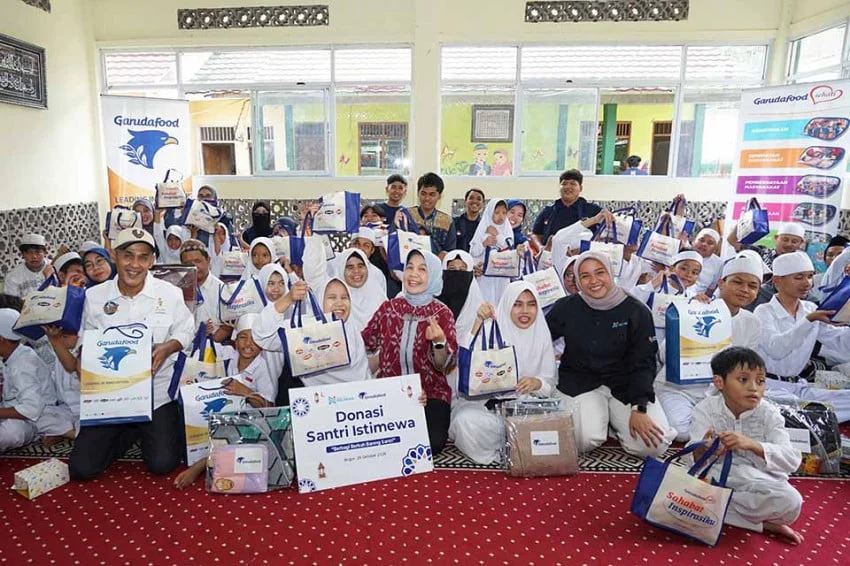
In a significant display of corporate social responsibility and community solidarity, PT Garudafood Putra Putri Jaya Tbk, commonly known as Garudafood, has partnered with the humanitarian organization Sekolah Relawan to execute a widespread philanthropic initiative. Marking the annual observance of National Santri Day, the collaborative effort successfully channeled vital donations to approximately 1,000 students, known locally as santris, and their respective caregivers. This humanitarian outreach spanned ten distinct Islamic boarding schools, or pondok pesantren, strategically located across the provinces of West Java and Banten.
The initiative is designed not only to provide material relief to underprivileged religious educational institutions but also to foster inclusivity within Indonesia’s robust Islamic education sector. Among the primary beneficiaries of this year’s program was the Cahaya Qur’an Islamic Boarding School, situated in the regency of Bogor. This specific institution holds a unique and vital position within the community, functioning simultaneously as an educational facility and a residential home for children with special needs. The majority of the students residing and studying at Cahaya Qur’an are visually impaired, hailing predominantly from low-income, underprivileged families who face severe economic constraints in supporting their children’s specialized living and educational requirements.
Comprehensive Distribution and Targeted Aid
The execution of the aid distribution was carefully tailored to meet the specific needs of the respective boarding schools, with a primary focus on the vulnerable and marginalized segments of the santri population. At the Cahaya Qur’an Islamic Boarding School in Bogor, the delegation from Garudafood and Sekolah Relawan delivered a comprehensive package of essential goods. These contributions included staple food supplies, commonly referred to in Indonesia as sembako, to ensure nutritional stability for the residents. Additionally, the institution received a substantial supply of prayer equipment, consisting of traditional garments such as mukena for female students, sarungs for male students, and prayer mats or sajadah, alongside a variety of popular consumer products manufactured by Garudafood.
Beyond the specialized facility in Bogor, the distribution network extended to nine other Islamic boarding schools dispersed across multiple regions, including Sukabumi, Depok, and Lebak. While the scope of aid varied slightly depending on logistical frameworks and immediate institutional requirements, students at these additional locations were provided with assortments of Garudafood products. This widespread distribution ensured that the commemorative spirit of National Santri Day translated into tangible support for hundreds of youths pursuing religious education away from their families.
The formal handover of the donations was marked by a symbolic ceremony held at the Cahaya Qur’an Islamic Boarding School. Dian Astriana, serving as the Head of Corporate Communication and External Relations for Garudafood, personally presented the aid packages to Firman Sukmawirya, the head administrator of the Bogor-based institution. This symbolic gesture underscored the direct engagement of corporate leadership in grassroots social initiatives, reinforcing the company’s long-term commitment to community development and social welfare.
Background Context of National Santri Day and Corporate Involvement
National Santri Day, celebrated annually on October 22nd, holds profound historical and cultural significance in the Republic of Indonesia. Officially established by presidential decree, the commemorative day honors the monumental contributions of Islamic scholars, ulama, and santris to the nation’s independence and ongoing development. Historically, the date commemorates the "Resolution of Jihad" issued in 1945 by prominent religious leaders, which mobilized santris to defend Indonesian sovereignty against colonial forces. In contemporary times, the observance has evolved into a broader national celebration of the intellectual, moral, and social contributions made by millions of students enrolled in traditional boarding schools across the archipelago.
In recent years, the role of Islamic boarding schools has expanded beyond traditional theological education to encompass vocational training, life skills development, and specialized education for disadvantaged populations. However, many rural and independent pondok pesantren continue to operate under severe financial constraints, relying heavily on community donations, philanthropic foundations, and corporate partnerships to sustain their daily operations. Recognizing these systemic financial challenges, major corporate entities such as Garudafood have increasingly integrated institutional support for Islamic boarding schools into their broader sustainability and social impact frameworks.
By aligning philanthropic interventions with national historical observances, corporations can maximize the public resonance of their social programs. The collaboration between Garudafood and Sekolah Relawan represents a structured approach to corporate philanthropy, leveraging the distribution expertise and community networks of a specialized humanitarian NGO to ensure that corporate resources reach the most deserving recipients efficiently and transparently.
Official Statements and Perspectives from Leadership
During the symbolic handover ceremony at the Cahaya Qur’an Islamic Boarding School, corporate representatives emphasized the philosophical motivations behind the aid initiative. Dian Astriana articulated the company’s vision of fostering an inclusive society where marginalized groups are afforded equal opportunities for personal and educational advancement.
"National Santri Day serves as an essential momentum to deeply appreciate the spirit, unwavering diligence, and ongoing contributions of santris in building our nation," stated Dian Astriana during her address. She placed particular emphasis on the inclusion of students with disabilities within the broader narrative of national development. "This includes our special santri—our friends with disabilities who continuously study and create despite their challenges. Through this direct action, Garudafood aims to foster an inclusive environment, open up equal opportunities, and encourage all santris to continue developing and achieving their highest potential."
The emphasis on inclusivity reflects a growing recognition within the Indonesian corporate sector that social responsibility initiatives must deliberately target intersectional vulnerabilities, such as the convergence of poverty and physical disability within educational settings. By directing resources to institutions like Cahaya Qur’an, the initiative addresses the compounded difficulties faced by visually impaired students from economically disadvantaged backgrounds.
The leadership of the recipient institutions expressed profound gratitude for the external support. Firman Sukmawirya, representing the administration of the Cahaya Qur’an Islamic Boarding School, welcomed the intervention, highlighting the daily operational realities faced by the facility. He noted that the majority of the students originate from economically vulnerable households, meaning that securing consistent provisions for daily sustenance, specialized learning tools, and basic living commodities represents a persistent logistical and financial challenge for the school’s management.
"We deeply welcome this invaluable care and support from Garudafood and Sekolah Relawan," Firman remarked. "Given that the vast majority of our santris come from underprivileged families, fulfilling basic daily needs is a continuous challenge for our institution. Contributions of this nature not only alleviate our immediate operational burdens but also provide profound psychological encouragement to our students, demonstrating that society recognizes and values their right to education and dignity."
Chronology and Implementation Methodology of the Outreach Program
The execution of the multi-region donation drive followed a carefully planned operational timeline designed to ensure timely delivery ahead of and during the National Santri Day observances. The planning phase began weeks prior to the official holiday, involving coordination between Garudafood’s corporate relations division and the field teams of Sekolah Relawan.
Phase one involved a comprehensive needs assessment across potential recipient institutions in West Java and Banten. Sekolah Relawan utilized its established community networks to identify Islamic boarding schools that exhibited high operational need, particularly those catering to marginalized demographics such as orphans, impoverished youths, and students with special needs. This assessment phase culminated in the selection of ten specific pondok pesantren, with the Cahaya Qur’an facility in Bogor designated as the primary flagship location due to its specialized focus on visually impaired students.
Phase two comprised the logistical mobilization of goods, which included the procurement of staple food items, religious apparel, and manufactured consumer products. Warehousing and transport logistics were coordinated to ensure that supplies could be dispatched simultaneously to multiple regional points in Bogor, Sukabumi, Depok, and Lebak.
Phase three involved the physical distribution and ceremonial handover events. The culmination of this timeline occurred on National Santri Day itself, during which delegations deployed across the targeted districts to distribute the aid packages directly to the administrative heads and student representatives of the respective boarding schools. This structured rollout ensured accountability, transparency, and minimal disruption to the academic schedules of the participating institutions.
Broader Socio-Economic Implications and Corporate Responsibility Trends
The partnership between Garudafood and Sekolah Relawan highlights broader trends within Indonesia’s corporate sustainability landscape. As regulatory frameworks increasingly encourage corporate transparency and social accountability, major consumer goods companies are moving beyond ad-hoc charitable giving toward sustained, strategic community investments.
Islamic boarding schools represent a critical social infrastructure in Indonesia, housing millions of students and serving as centers of moral and intellectual education, particularly in rural and semi-urban areas. By supporting these institutions, corporations contribute indirectly to national human capital development. Furthermore, targeted interventions that focus on marginalized segments within these institutions—such as students with visual impairments—help address structural inequalities in access to educational resources and basic welfare.
The integration of disability inclusivity into religious educational philanthropy sets a progressive precedent for other corporate actors. Historically, specialized disability services and general religious education have often operated within separate administrative and philanthropic silos. Initiatives that bridge these sectors demonstrate that mainstream educational environments can be adapted to accommodate diverse learning needs, provided that adequate material and financial support is made available by community stakeholders.
Moreover, the collaboration underscores the increasing importance of strategic alliances between corporate entities and non-governmental organizations. While corporations possess the financial resources and product manufacturing capabilities necessary to supply large-scale material aid, humanitarian NGOs like Sekolah Relawan provide essential localized intelligence, community trust, and logistical execution capacity. This symbiotic relationship ensures that philanthropic interventions are both targeted and effective, maximizing the tangible impact on the ground.
Future Outlook and Ongoing Commitments
Following the successful conclusion of the National Santri Day donation drive, representatives from Garudafood indicated that community empowerment and educational support will remain core pillars of their ongoing corporate social responsibility strategy. While special commemorative events provide high-visibility platforms for philanthropic outreach, sustainable institutional development requires long-term engagement and consistent monitoring of community needs.
The positive reception of the aid program by both institutional administrators and student beneficiaries suggests that future collaborations between the corporate sector and Islamic boarding schools could expand to encompass broader developmental objectives. Potential areas for future expansion identified by educational observers include vocational skills training programs, digital literacy initiatives for santris, infrastructure improvements for residential facilities, and enhanced accessibility resources for students with special needs.
As Indonesia continues its trajectory toward inclusive economic and social development, the role of multi-stakeholder partnerships involving private enterprises, humanitarian organizations, and educational institutions will remain paramount. Through targeted initiatives such as the recent distribution across West Java and Banten, the private sector can play a constructive role in reinforcing the social safety net, supporting foundational educational institutions, and ensuring that marginalized groups—including students with disabilities in traditional boarding schools—are fully integrated into the broader narrative of national progress.