
The Special Committee for the Right of Inquiry (Pansus Hak Angket) of the Gowa Regency Regional House of Representatives (DPRD) in South Sulawesi has officially concluded its investigative duties, submitting an eight-point recommendation report to the DPRD leadership for further processing. This pivotal development sets the stage for a potential "right to express an opinion" (Hak Menyatakan Pendapat) by the full DPRD body, a parliamentary mechanism that could ultimately lead to a proposal for the dismissal or impeachment of Gowa Regent Sitti Husniah Talenrang. The conclusion of the Pansus’s work marks a significant juncture in local governance, highlighting the DPRD’s oversight function and its capacity to hold regional executives accountable.
Conclusion of the Inquiry and Submission of Recommendations
On Thursday, July 23, Kasim Sila, the Chairman of the Gowa DPRD’s Pansus Hak Angket, announced the completion of the committee’s exhaustive investigation. "Our duties and responsibilities in the Pansus concluded yesterday," Sila stated, confirming the delivery of the comprehensive report to the DPRD leadership. This report includes not only the findings of their inquiry but also eight distinct recommendations targeting various entities: law enforcement officials (APH), the Gowa Regency Government, and the DPRD leadership itself. The immediate next step involves the DPRD leadership distributing this report to all 45 members of the legislative body for thorough review and study. This distribution is critical as it will inform the subsequent decision-making process by individual members regarding the future trajectory of the inquiry’s findings.
The Path to "Hak Menyatakan Pendapat" and Potential Impeachment
Following the internal review by all DPRD members, a crucial decision awaits: whether to proceed with the "Hak Menyatakan Pendapat" (Right to Express an Opinion). Kasim Sila explained that this is a critical political stage. If a majority of the members deem the Pansus’s findings sufficiently compelling, they will formally propose to the DPRD leadership that the process be continued. "If colleagues believe our report merits advancement to the Right to Express an Opinion, they will propose its utilization to the leadership," Sila clarified.
The "Hak Menyatakan Pendapat" is a significant legislative power enshrined in Indonesian regional governance law. It represents a formal declaration by the DPRD, expressing its views on matters of public policy, regional administration, or the conduct of the regional head. Critically, Sila underscored the potential gravity of this stage, stating, "The Right to Express an Opinion is not far from impeachment or dismissal." This mechanism is a precursor to a potential proposal for the regional head’s removal, signaling a high level of legislative scrutiny and a serious challenge to the executive’s authority. While Sila acknowledged that the final decision rests with the entire DPRD, he indicated a strong likelihood, based on initial responses, that members would support advancing to this stage. "It’s almost certain that colleagues will proceed to the Right to Express an Opinion, but I do not wish to preempt their decision," he remarked, emphasizing the democratic process within the legislative body.
Background of the Right of Inquiry (Hak Angket)
The formation of a Special Committee for the Right of Inquiry (Pansus Hak Angket) by a regional legislative body like the Gowa DPRD is a testament to the robust oversight mechanisms embedded within Indonesia’s decentralized governance framework. Rooted in Law No. 23 of 2014 concerning Regional Government, the "Hak Angket" empowers regional legislative bodies to investigate specific policies, programs, or alleged actions of the regional head and/or regional government that are suspected of violating laws or regulations. The purpose is to determine whether the regional head has indeed committed legal or administrative infractions, abused authority, or engaged in corruption that could warrant further political and legal consequences.
Typically, a Hak Angket is initiated when there are strong indications of irregularities, misconduct, or policy failures that significantly impact public interest and cannot be resolved through regular legislative oversight. While the specific initial grounds for the Gowa DPRD’s Hak Angket against Regent Sitti Husniah Talenrang are not explicitly detailed in the provided information, the scope of the inquiry, as evidenced by the recommendations, clearly encompasses policy implementation and allegations of financial misconduct. This legislative tool serves as a critical check and balance, ensuring accountability of regional executives to the elected representatives and, by extension, to the public they serve. The process is designed to be thorough, involving hearings, collection of evidence, and analysis of relevant documents, culminating in a report and recommendations, as has been seen in Gowa.
Key Events and Chronology Leading to the Report
The Pansus’s investigation was not without its notable moments, particularly concerning the participation of Regent Sitti Husniah Talenrang. A significant event occurred on Tuesday, July 14, when Regent Talenrang attended a Pansus hearing at the Gowa DPRD. However, her appearance was brief and concluded with her walking out of the session. According to her legal counsel, this action was prompted by the Pansus’s alleged failure to fulfill her rights as a party being questioned.
Amirullah Mappaero, one of the Regent’s legal representatives, explained that the Regent had prepared thoroughly for the questions but requested that inquiries be presented collectively, with her responses to be provided in writing and focused solely on policy matters. "From the outset, the Ibu (Regent) was prepared and had made all necessary arrangements regarding the Pansus’s questions. However, the Ibu requested her rights be fulfilled, specifically that questions be submitted collectively and discussions remain within the realm of policy. These requests were not met," Mappaero stated following the walkout. Another legal counsel, Arie Dumais, further elaborated, citing Article 128 of Law No. 1 of 2024 (presumably an updated or relevant legal framework, as the primary regional government law is UU 23/2014, suggesting a specific procedural law or a typo in the original article which might refer to UU 1/2014 regarding Regional Elections or a specific regulation within the broader legal framework), which he argued allows for answers to be given either orally or in writing. "The Ibu requested that questions be posed collectively and answered in writing. We base this on Article 128, which stipulates that answers can be delivered verbally or in writing," Arie asserted, emphasizing the Regent’s good faith in attending the session.
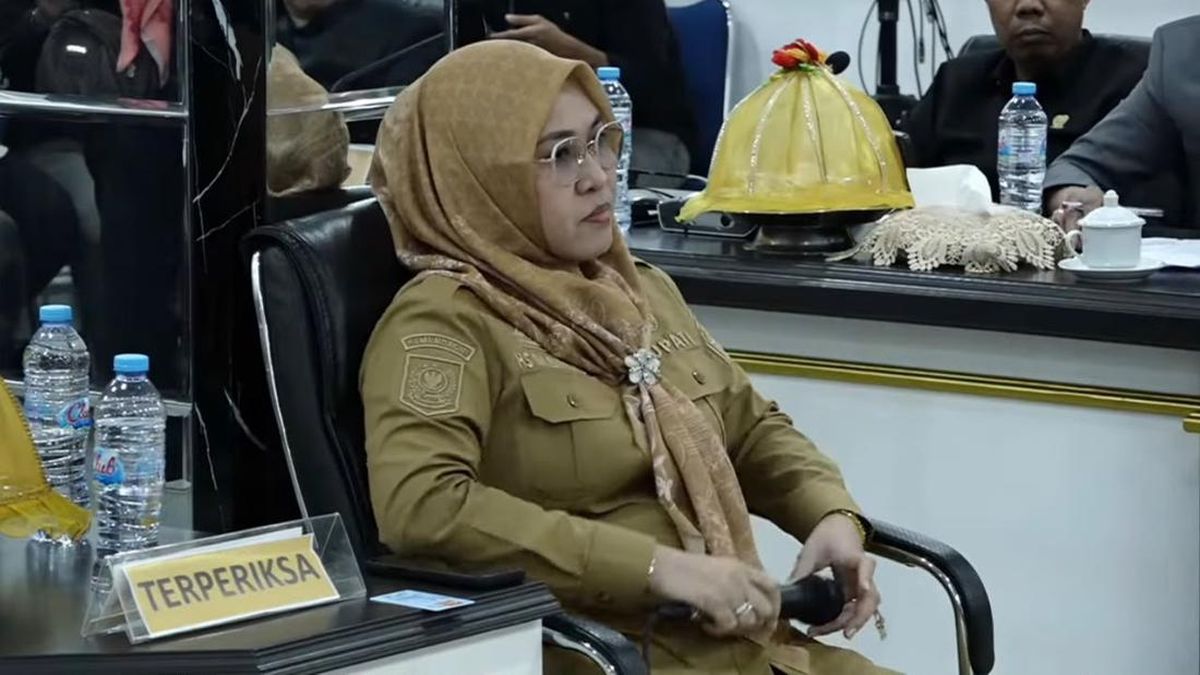
In response to the Regent’s walkout, Pansus Chairman Kasim Sila maintained that the committee would proceed with its mandate. He indicated that the Pansus possessed sufficient information and evidence to draw conclusions, even without the Regent’s full cooperation or direct answers during that specific session. "Even without her presence, we could draw conclusions, let alone with her presence. So, even without her presence, we wouldn’t know what the conclusions would be. We will have an internal meeting to conclude the results from all our Public Hearings until now," Sila stated at the time, underscoring the committee’s resolve to complete its work irrespective of the incident. This timeline culminated in the formal submission of the Pansus’s report on July 23, nine days after the Regent’s controversial departure from the hearing.
The Eight Recommendations: Focus on Corruption Allegations
The eight points of recommendation generated by the Pansus are strategically directed at three distinct entities, reflecting the multifaceted nature of the committee’s findings and the range of actions deemed necessary. These targets include law enforcement officials (APH), the Gowa Regency Government, and the leadership of the Gowa DPRD. This structured approach aims to ensure accountability, prompt corrective measures, and guide future legislative actions.
Among these recommendations, one stands out for its direct implication of criminal misconduct: the recommendation directed at law enforcement agencies concerning alleged corruption. "We recommend to the police matters related to indications of alleged corruption in the free school procurement program," Kasim Sila revealed. This specific allegation points to potential misuse of public funds or irregularities in the procurement process for a critical public service initiative. The "free school program" is designed to enhance educational access and equity, making any allegations of corruption within its framework particularly sensitive and damaging to public trust. By referring this matter to the police, the Pansus effectively shifts the investigation from a legislative inquiry to a criminal investigation, potentially leading to formal charges and prosecution if sufficient evidence is found. The other recommendations, though not detailed in the provided text, would likely address administrative improvements for the Gowa Regency Government and procedural guidance for the DPRD leadership, reflecting the comprehensive nature of the Pansus’s oversight role.
Legal Framework and Process for Impeachment in Indonesia
The potential progression to the "Hak Menyatakan Pendapat" and ultimately a proposal for the dismissal of the regional head is a process governed by specific legal frameworks in Indonesia, primarily Law No. 23 of 2014 on Regional Government. This law outlines the conditions under which a regional head can be removed from office. Grounds for dismissal typically include:
- Violation of oath of office: This could encompass actions that betray the trust placed in the official.
- Violation of prohibitions: Breaching specific legal prohibitions applicable to regional heads.
- Serious misconduct: Engaging in criminal acts such as corruption, terrorism, treason, or other serious felonies, as proven by a final court decision.
- Abuse of authority: Using one’s position for personal gain or to harm others.
If the Gowa DPRD, through its "Hak Menyatakan Pendapat," decides there are sufficient grounds, it can propose the dismissal of the Regent. This proposal would then be submitted to the Supreme Court (Mahkamah Agung) for a judicial review of the legal grounds. The Supreme Court’s decision, which focuses solely on the legal validity of the charges, is binding. If the Supreme Court upholds the DPRD’s findings, the proposal then moves to the Minister of Home Affairs, who would then issue a decree for the temporary suspension or permanent dismissal of the regional head. This multi-layered process involving both legislative and judicial branches underscores the gravity and complexity of removing an elected official from office, ensuring due process and legal scrutiny at each stage.
Implications for Gowa Regency and Public Trust
The ongoing situation carries significant implications for the political stability and governance of Gowa Regency. Should the DPRD proceed with the "Hak Menyatakan Pendapat" and eventually propose the Regent’s dismissal, it could usher in a period of political uncertainty. The focus on allegations of corruption within the "free school program" is particularly concerning, as it directly impacts public services and the welfare of the community’s children. Public trust in local government institutions, already fragile in many areas, could be further eroded if such allegations are substantiated and mishandled. Conversely, a transparent and thorough process, culminating in appropriate action, could reinforce the public’s faith in the accountability mechanisms of local governance.
For Regent Sitti Husniah Talenrang, the stakes are exceptionally high. A successful impeachment process would not only mean the loss of her office but could also carry significant legal ramifications if the corruption allegations referred to law enforcement lead to criminal charges. Her legal team’s arguments regarding due process highlight the importance of fair treatment and adherence to legal procedures throughout such inquiries. The Gowa DPRD, on its part, is under intense scrutiny to conduct its duties responsibly, fairly, and in strict accordance with the law, balancing its oversight function with the rights of the accused. The outcome of this process will undoubtedly serve as a precedent for legislative oversight in Gowa and potentially other regions in South Sulawesi.
The Road Ahead: Awaiting DPRD’s Decision
As the report now rests with the DPRD leadership for distribution, all eyes are on the 45 members of the Gowa Regency DPRD. Their collective decision on whether to activate the "Hak Menyatakan Pendapat" will determine the next chapter in this unfolding political drama. The process demands careful deliberation, adherence to legal principles, and a commitment to upholding good governance. The potential for an impeachment proposal underscores the critical role of regional legislative bodies in safeguarding public interest and ensuring the accountability of elected officials. The coming weeks will reveal how Gowa Regency navigates this challenging period, with profound implications for its leadership and its citizens.
