The landscape of Islamic education in Indonesia is undergoing a critical paradigm shift as policymakers and academic institutions join forces to redefine the standard of schooling for the modern era. In a decisive move to future-proof Islamic educational institutions, House of Representatives (DPR) Commission VIII, in strategic collaboration with the Faculty of Tarbiyah at Raden Mas Said State Islamic University (UIN) Surakarta, has spearheaded a comprehensive campaign to champion the transformation of madrasahs across the region. This collaborative initiative is fundamentally designed to foster learning environments that are fiercely inclusive, deeply humanistic, and fortified by robust digital ecosystems capable of navigating the complexities of the twenty-first century.
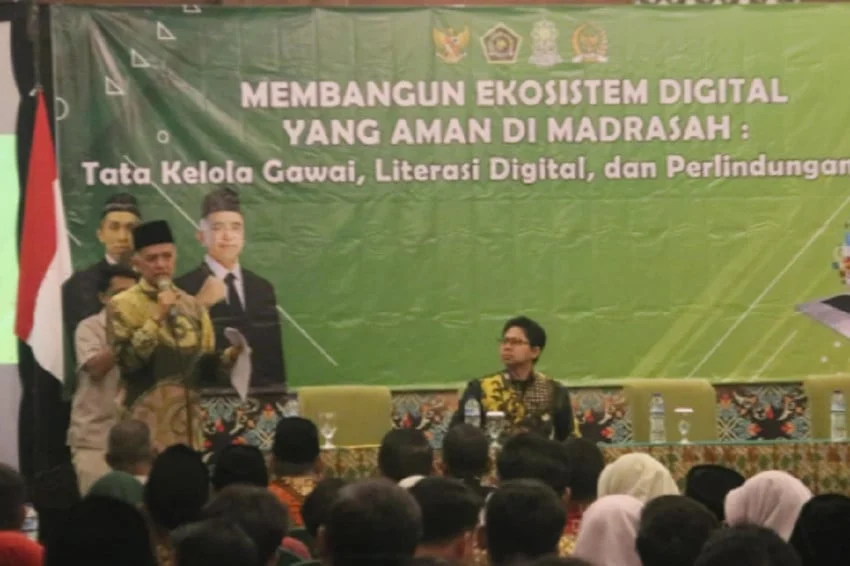
The joint initiative materialized through a series of high-profile seminars and stakeholder dialogues held recently in Sukoharjo Regency and surrounding areas in Central Java. These academic and policy-driven forums were curated to tackle some of the most pressing structural, technological, and social challenges confronting Islamic educational institutions today. By addressing systemic vulnerabilities head-on, the organizers aimed to establish a benchmark for madrasahs that not only excel in traditional academic and religious scholarship but also prioritize student safety, psychological well-being, and technological fluency.
Strategic Themes and Core Objectives of the Educational Forums
The collaborative seminars anchored their discussions on two pivotal themes that reflect the modern imperatives of educational administration and child protection. The first central theme, titled Transformation of Inclusive Madrasahs: Strengthening Protection, Accessibility, and the Creation of Humanistic and Equitable Learning Environments, focused heavily on dismantling physical and social barriers within schools. This track emphasized that true educational reform must move beyond mere curriculum updates to fundamentally guarantee the rights of every student, including those with special needs, ensuring that no child is marginalized within the school system.
The second core theme, Building a Safe Digital Ecosystem in Madrasahs: Gadget Governance, Digital Literacy, and Child Protection, directly addressed the double-edged sword of modern technology. As smartphones and digital learning tools become ubiquitous in classrooms, educators and policymakers face an urgent need to regulate digital consumption without stifling innovation. This segment of the seminar provided actionable frameworks for school administrators, teachers, and parents to collaborate on digital governance, protect students from cyberbullying, shield them from harmful online content, and cultivate responsible digital citizenship from an early age.
Through these dual tracks, the organizers sought to shift the institutional mindset from passive compliance to proactive empowerment. Participants were repeatedly reminded that contemporary madrasah transformation requires a holistic approach—one that harmonizes academic excellence with robust child protection mechanisms, universal accessibility, and ethical digital integration.
Background Context and Chronology of the Initiative
The push for a renewed educational framework in madrasahs does not occur in a vacuum. Over the past decade, the role of madrasahs in Indonesia has expanded exponentially. No longer viewed strictly as traditional religious institutions, modern madrasahs serve millions of students across the archipelago, frequently functioning as the primary social and educational anchors in rural and semi-urban communities.
However, this rapid expansion has brought to light systemic vulnerabilities. Reports of bullying, inadequate infrastructure for students with disabilities, and a lack of institutional preparedness regarding student gadget usage have prompted national lawmakers and academic researchers to intervene. The collaboration between DPR Commission VIII and UIN Raden Mas Said Surakarta was conceptualized several months prior to the execution of the seminars, stemming from a series of regional oversight visits and academic assessments that revealed a widening gap between urban digital-literate schools and regional madrasahs struggling with resource allocation and policy enforcement.
The chronology of the initiative began with preliminary research and stakeholder mapping conducted by the Faculty of Tarbiyah at UIN Raden Mas Said Surakarta. Academic researchers identified critical areas of concern, notably the psychological safety of students and the digital divide. Following these findings, DPR Commission VIII—which oversees religious affairs, social services, women’s empowerment, and child protection—partnered with the university to translate academic insights into legislative advocacy and community outreach.
The culmination of this preparation led to the multi-session seminars in Sukoharjo. These events served as interactive sounding boards where regional madrasah principals, teachers, student representatives, and parent-teacher association leaders could voice their localized challenges. The discussions were designed not merely as lectures, but as participatory workshops aimed at drafting localized guidelines for inclusive education and digital governance.
Official Perspectives and Legislative Insights
A cornerstone of the collaborative effort was the active participation of key legislative figures who provided high-level policy perspectives on the future of Indonesian education. Singgih Januratmoko, Deputy Chairman of DPR Commission VIII, played a central role in articulating the urgency of the transformation process during the proceedings.
Addressing the assembled educators and stakeholders, Januratmoko offered a candid assessment of the multifaceted challenges currently testing the resilience of madrasahs. He emphasized that institutions operating in the modern era must contend with rapid societal transformations, cultural shifts, and the relentless acceleration of digital technology. According to Januratmoko, traditional teaching models alone are no longer sufficient to prepare students for a globally competitive and technologically saturated world.
"Madrasahs must undergo continuous structural and cultural introspection to ensure they remain relevant, safe, and competitive," Januratmoko stated during the proceedings. He underscored that institutional quality is intrinsically linked to an institution’s capacity to deliver inclusive services that cater to an increasingly diverse student demographic. This includes making physical and pedagogical accommodations for children with diverse learning needs, as well as establishing institutional zero-tolerance policies toward bullying, discrimination, and violence.
Furthermore, Januratmoko highlighted that the legislative branch stands ready to support educational institutions through budgetary oversight, regulatory frameworks, and collaborative partnerships with higher education institutions like UIN Raden Mas Said Surakarta. He argued that bridging the gap between national policymaking and grassroots implementation is the only viable path to achieving long-term educational equity.
Broader Implications and Fact-Based Analysis of the Transformation
The partnership between DPR Commission VIII and UIN Raden Mas Said Surakarta carries significant implications for the broader national education ecosystem in Indonesia. By focusing specifically on madrasahs—which fall under the administrative purview of the Ministry of Religious Affairs rather than the Ministry of Education, Culture, Research, and Technology—the initiative targets a sector that has historically required dedicated, specialized support to achieve parity with public secular schools.
From a sociological and educational standpoint, the push toward inclusive madrasahs addresses a long-standing structural deficit. Historically, mainstream Indonesian schools have struggled with universal accessibility for students with physical or cognitive disabilities. By introducing inclusive education principles directly into the madrasah system, the initiative helps normalize diversity in religious learning spaces, teaching empathy and social cohesion from the foundational years of basic education.
Simultaneously, the focus on digital ecosystem governance is both timely and essential. Recent data from national child protection agencies indicate an upward trend in children’s exposure to cyberbullying, online grooming, and unregulated digital media consumption. By equipping madrasah educators with frameworks for digital literacy and gadget governance, the initiative mitigates the risks associated with unmonitored internet use. It transforms smartphones from potential distractions and security hazards into structured tools for enhanced learning.
The involvement of UIN Raden Mas Said Surakarta also underscores the vital role that regional state Islamic universities play as intellectual and developmental engines for their surrounding communities. Rather than operating within academic ivory towers, institutions of higher education are increasingly expected to leverage their research and human capital to solve real-world problems faced by primary and secondary schools.
Challenges Ahead in Sustaining Educational Reform
Despite the enthusiastic reception of the seminars and the clear alignment of goals between lawmakers and academics, education analysts point out that sustaining this momentum will require persistent effort and institutional commitment. Transforming educational culture cannot be achieved through one-off seminars alone; it demands continuous monitoring, sustained funding, and comprehensive teacher training programs.
Many regional madrasahs continue to grapple with severe budgetary constraints, limited internet infrastructure, and a shortage of specialized educators trained in inclusive pedagogy. Translating the visionary concepts of humanistic learning and digital governance into daily classroom practices will require targeted capacity-building initiatives, infrastructural investments from the central government, and ongoing administrative guidance from regional offices of the Ministry of Religious Affairs.
Moreover, shifting institutional mindsets regarding child protection and anti-bullying protocols requires overcoming deeply ingrained cultural habits within traditional educational settings. Establishing confidential reporting mechanisms for victims of bullying and enforcing strict accountability measures for perpetrators remain sensitive issues that require delicate, culturally resonant implementation strategies.
Looking Ahead: The Future of Inclusive and Digital Madrasahs
As the initiative concludes its initial phases of stakeholder engagement and seminar rollouts, the roadmap for the future centers on institutionalizing these insights into concrete action plans. Stakeholders have expressed optimism that the collaboration between DPR Commission VIII and UIN Raden Mas Said Surakarta will serve as a pilot model capable of replication in other provinces across Indonesia.
By systematically addressing the pillars of inclusivity, humanistic equity, and digital safety, the Indonesian madrasah system is positioning itself to meet the demands of a changing world without losing its core religious and moral identity. The ultimate success of this transformation will be measured not by policy documents or seminar resolutions, but by the tangible daily experiences of students—children who walk into their classrooms and find environments that protect their rights, respect their differences, and empower them to thrive in a digital age.