
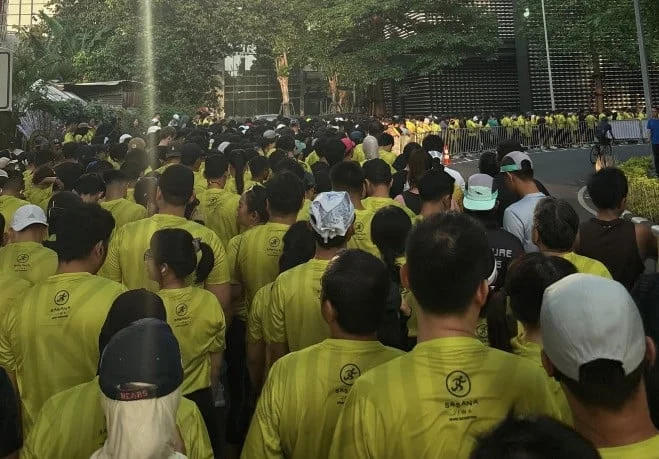
The Sudirman Central Business District (SCBD) in South Jakarta transformed into a vibrant corridor of physical endurance and urban celebration this past Sunday, November 1, 2026, as the inaugural Jakarta One Running Series (JORS) 2026 officially commenced. Attracting a field of 3,000 enthusiastic participants, the event served as a high-profile precursor to the upcoming quincentennial anniversary of Jakarta, a milestone that underscores the city’s evolution from a historical port town into a sprawling, modern megalopolis.
The race, which featured a 5-kilometer (5K) course, was designed to showcase the architectural and economic heart of Indonesia’s capital. Starting and finishing at Lot 17 in the SCBD, the event provided runners with a unique vantage point of the city’s skyline, navigating through a route that represents the intersection of Indonesia’s economic prowess and its public infrastructure.
The Route and Technical Specifications
The meticulously planned 5K route began at the Lot 17 SCBD hub, a strategic location chosen for its accessibility and ability to accommodate large crowds without significantly disrupting the heavy weekend traffic patterns typical of the capital. From the starting block, the runners proceeded toward the Grand Lucky SCBD, moving through the narrow but iconic Jalan Tulodong Atas 2.
The course then maneuvered past the BEJ (Bursa Efek Jakarta) Halte, moving toward the primary artery of the city, Jalan Jenderal Sudirman. This stretch offered participants a rare, unobstructed view of the skyscrapers that define Jakarta’s modern identity. The route continued toward the Bundaran Senayan, an iconic landmark that connects the city’s business district with the sports and residential sectors. The final leg of the race took participants through Jalan Sisingamangaraja, Jalan Mataram Raya, Jalan Pattimura, and Jalan Senopati, before circling back to the finish line at Lot 17.
The technical planning for the route involved coordination between the organizers, PT Sasana Jiwa, and local authorities, including the Jakarta Transportation Agency (Dishub) and the Jakarta Metropolitan Police. By selecting a circuit that weaves through both corporate hubs and established residential corridors, the organizers aimed to create a microcosm of the Jakarta experience—a blend of rapid development and historic charm.
Strategic Objectives and Organizational Vision
Rufina Novalita, the President Director of PT Sasana Jiwa, emphasized that the JORS 2026 is intended to be more than a singular sporting event. Instead, it is positioned as a long-term initiative to integrate physical wellness into the lifestyle of Jakarta’s working population.
"Jakarta One Running Series was conceived as a platform to celebrate a healthy lifestyle amidst the high-pressure dynamics of a metropolitan city," Novalita stated during the post-race proceedings. "We are genuinely impressed by the enthusiasm shown by the 3,000 participants who gathered here today. This overwhelming support demonstrates that the public is eager for structured, high-quality athletic events that promote community health."
Novalita noted that the selection of the SCBD as the host site was a deliberate choice to provide an elevated experience. The modern urban infrastructure of the district offers a clean, safe, and visually stimulating environment that differs significantly from traditional park-based running routes. By situating the race in the city’s business center, the organizers hope to attract the corporate demographic, encouraging executives and employees alike to prioritize fitness as a necessary component of professional life.
Historical Significance: Leading to the 500-Year Milestone
The timing of the Jakarta One Running Series is not incidental. With Jakarta approaching its 500th anniversary, the city government and private stakeholders have launched a series of initiatives aimed at revitalizing the city’s image, improving public spaces, and fostering a sense of civic pride.
The history of Jakarta—dating back to the port of Sunda Kelapa—has been marked by cycles of trade, transformation, and modernization. As the city approaches its half-millennium mark, the focus has shifted toward sustainability and livability. The JORS 2026 serves as a soft-power campaign, encouraging residents to "reclaim" their city streets for non-motorized activities. Such events are seen as vital in shifting the perception of Jakarta from a traffic-congested capital to a city that values human-centric infrastructure.
Economic and Health Implications for Jakarta
The surge in participation numbers—with 3,000 runners registering for the inaugural event—is reflective of a broader trend in Indonesia. Over the past decade, the "running boom" has taken hold across major Indonesian cities, with a significant rise in the number of road races, marathons, and community-led running clubs.
Economically, the JORS 2026 contributes to the local service sector. Events of this scale drive demand for sports apparel, nutrition products, and post-race hospitality. Furthermore, the collaboration between private entities like PT Sasana Jiwa and the city government highlights a growing trend in public-private partnerships (PPP) for urban development. By leveraging the SCBD area, the event highlights the potential for commercial districts to serve as public hubs on weekends, maximizing the utilization of infrastructure that might otherwise be underused on non-business days.
From a health perspective, the implication is equally significant. With non-communicable diseases (NCDs) such as diabetes and hypertension on the rise in urban Indonesia, promoting moderate-intensity exercise like running is a critical public health strategy. The JORS 2026 acts as a gateway for novice runners, providing a supportive environment that can serve as a catalyst for long-term health behavior changes.
Future Outlook and Expansion Plans
As the first in a series, the success of the inaugural JORS 2026 sets a high benchmark for subsequent events. Organizers have indicated that the series is designed to evolve, with plans to introduce longer distances and potentially expand to other regions within Jakarta to reflect the city’s geographic diversity.
Observers of the local sports scene suggest that the success of the JORS will depend on the organizers’ ability to maintain logistical excellence and community engagement as they scale. Future installments are expected to integrate more educational components, such as workshops on nutrition, injury prevention, and sustainable urban living, thereby deepening the impact of the series beyond the race day itself.
The JORS 2026 is a testament to the resilience and changing priorities of Jakarta. By framing the race within the context of the city’s 500-year history, the organizers have successfully connected the physical act of running with the collective identity of the capital’s inhabitants.
Conclusion: A City on the Move
As the sun rose over the SCBD on Sunday, the sight of thousands of runners moving in unison through the heart of the capital served as a powerful metaphor for the city’s own journey. The Jakarta One Running Series is not merely a sporting competition; it is a movement that bridges the gap between the city’s historic past and its ambitious future.
With the momentum generated by this first series, stakeholders and participants alike are looking forward to the subsequent events in the calendar, each designed to bring the city closer to its 500th anniversary. Through the simple, universal act of running, Jakarta is redefining its rhythm—one kilometer at a time. The successful execution of the JORS 2026 confirms that the capital is prepared to embrace a future where health, community, and urban vitality are at the forefront of its evolution. As the city continues its preparations for the quincentennial celebration, the legacy of the JORS will likely be measured by its ability to foster a more active, connected, and health-conscious citizenry, ensuring that Jakarta remains a vibrant and thriving metropolis for generations to come.
