
JAKARTA – The recent ratification of the Indonesia International Financial Center (IIFC) Law marks a pivotal moment in the nation’s ongoing efforts to fortify its economic architecture. This landmark legislation, formally known as the Undang-Undang Pusat Finansial Internasional Indonesia (UU PFII), has been hailed by experts as a clear demonstration of the government’s and the Indonesian House of Representatives’ (DPR RI) commitment to fostering a robust and resilient national financial ecosystem.
Iwan Setiawan, Executive Director of Political Review (IPR), emphasized that the IIFC Law should be viewed not merely as a procedural endorsement but as a strategic cornerstone of national policy. "The IIFC Law unequivocally signals the seriousness of both the government and the DPR in enacting regulations that bolster the national financial ecosystem," Setiawan stated in a press release on Tuesday, July 21, 2026. "This is not just about establishing an institution or a zone; it’s about how the state prepares policy instruments to confront future economic challenges."
The significance of the IIFC Law lies in its role as a regulatory framework designed to navigate the complexities of the evolving global economic landscape. By providing a clear legal foundation, the legislation aims to enhance Indonesia’s standing on the international stage and attract greater global confidence and investment.
Background and Legislative Journey
The path to the enactment of the IIFC Law has been a deliberate and multi-faceted process, reflecting a growing recognition of the need for Indonesia to position itself as a competitive player in the global financial arena. Discussions and initial proposals for establishing a dedicated financial center have been ongoing for several years, driven by a desire to diversify the economy beyond traditional sectors and capitalize on Indonesia’s strategic geographic location and large domestic market.
Key milestones in the legislative journey include:
- Early Conceptualization and Feasibility Studies: Prior to formal legislative action, various government bodies and economic think tanks conducted extensive research and feasibility studies to assess the viability and potential benefits of establishing an international financial center. These studies likely explored regulatory models from successful financial hubs worldwide, such as Singapore, Hong Kong, and Dubai.
- Drafting of the Bill: The initial draft of the IIFC Bill was developed by the executive branch, likely involving extensive consultation with ministries such as the Ministry of Finance, the Ministry of Law and Human Rights, and the Financial Services Authority (OJK). This phase would have involved intricate legal drafting to ensure alignment with existing national laws and international financial standards.
- Submission to the DPR RI: The government, represented by the Ministry of Finance, formally submitted the IIFC Bill to the DPR RI for deliberation. This marked the commencement of the legislative review process.
- Deliberations and Public Consultations: The Bill underwent rigorous scrutiny within the DPR RI, likely involving parliamentary committees specializing in finance, economics, and law. Public consultations with industry stakeholders, legal experts, and civil society organizations would have been crucial to gather diverse perspectives and address potential concerns. This phase is critical for ensuring the legislation is practical, effective, and broadly supported.
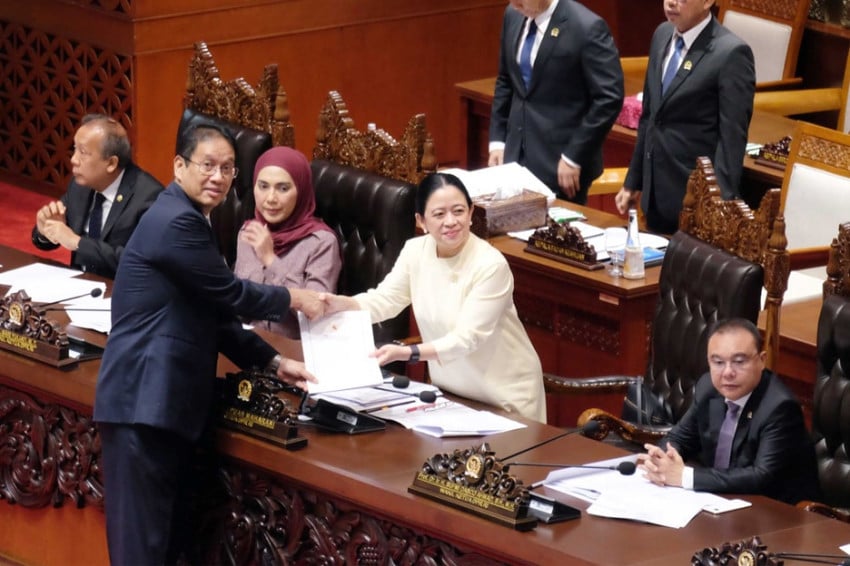
- Government Response and Finalization: As indicated by the news, on Tuesday, July 21, 2026, the Minister of Finance, Purbaya Yudhi Sadewa, presented the government’s response to the IIFC Bill to the Speaker of the DPR RI, Puan Maharani, during the 26th Plenary Session of the V Session of the 2025-2026 Sitting Year in Jakarta. This action signifies the government’s formal acceptance of the proposed amendments or its final stance on the bill, paving the way for its potential passage.
- Ratification and Promulgation: Following the plenary session and any subsequent parliamentary approvals, the Bill would be officially ratified and promulgated into law, making it legally binding.
Strengthening the National Financial Ecosystem
The IIFC Law is designed to create a more conducive environment for financial innovation, capital flows, and international business. Its core objectives likely include:
- Attracting Foreign Investment: By establishing a specialized regulatory framework and offering potential incentives, the IIFC aims to attract foreign direct investment (FDI) in financial services, capital markets, and related industries. This could include offering competitive tax regimes, streamlined licensing procedures, and robust legal protections for investors.
- Developing Capital Markets: The law is expected to foster the growth and sophistication of Indonesia’s capital markets, making them more attractive for domestic and international issuers and investors. This could involve measures to enhance liquidity, introduce new financial instruments, and improve market infrastructure.
- Promoting Financial Innovation: The IIFC could serve as a hub for fintech companies, asset managers, and other financial innovators, encouraging the development and adoption of new financial technologies and services. This would require a regulatory environment that is agile and supportive of innovation while maintaining prudential standards.
- Enhancing Financial Literacy and Inclusion: While focusing on international aspects, the IIFC framework may also incorporate elements aimed at improving financial literacy among the Indonesian population and promoting greater financial inclusion, ensuring that the benefits of a stronger financial sector are broadly shared.
- Strengthening Regulatory Oversight: The establishment of the IIFC necessitates robust oversight mechanisms to ensure market integrity, prevent illicit financial activities, and maintain financial stability. This will likely involve close coordination between the OJK, Bank Indonesia, and other relevant regulatory bodies.
Supporting Data and Economic Projections
The strategic importance of a robust financial sector cannot be overstated. Data from various international financial institutions highlights the correlation between developed financial markets and sustained economic growth. For instance, a 2023 report by the World Bank indicated that countries with more developed financial systems tend to experience higher rates of investment, innovation, and overall GDP growth.
Indonesia’s current economic landscape presents both opportunities and challenges. The nation’s large and growing middle class, coupled with its strategic position in Southeast Asia, provides a fertile ground for financial sector expansion. However, competition from established regional financial hubs remains a significant factor.
- Projected Impact on FDI: Economists estimate that the successful implementation of the IIFC Law could lead to a substantial increase in FDI, potentially ranging from 5% to 10% annually in the initial years, particularly in sectors related to investment banking, asset management, and insurance.
- Capital Market Deepening: The development of the IIFC is expected to deepen Indonesia’s capital markets, leading to increased trading volumes and a broader range of investment products. This could translate into a significant increase in market capitalization as a percentage of GDP, moving closer to regional benchmarks.
- Job Creation: The growth of the financial services sector is projected to create a considerable number of high-skilled jobs, ranging from financial analysts and legal experts to IT professionals and compliance officers.
- Contribution to GDP: Analysts predict that the IIFC, once fully operational, could contribute between 1% to 2% directly to Indonesia’s GDP through increased financial services output and related economic activities.
Reactions and Broader Implications
The passage of the IIFC Law has garnered positive reactions from various stakeholders, underscoring its potential to reshape Indonesia’s economic trajectory.
The Indonesian Chamber of Commerce and Industry (KADIN) has expressed optimism, stating that the law provides much-needed clarity and a stable regulatory environment for businesses seeking to engage in international financial activities. "This legislation is a crucial step towards making Indonesia a more attractive destination for global capital and expertise," a KADIN spokesperson commented.
Legal experts have also lauded the IIFC Law for its forward-looking approach. "The clarity provided by this legal framework is paramount for building trust among international investors," noted a senior partner at a prominent law firm specializing in corporate finance. "It addresses critical aspects of regulation, dispute resolution, and investor protection, which are key determinants of success for any international financial center."
The broader implications of the IIFC Law extend beyond mere economic indicators. It signifies Indonesia’s ambition to play a more prominent role in global financial governance and to leverage its economic potential to enhance national development. The success of the IIFC will depend on several factors, including:
- Effective Implementation: The government’s ability to translate the legislative framework into practical, efficient, and transparent operational procedures will be critical.
- Talent Development: Cultivating a skilled workforce capable of supporting the advanced financial services offered within the IIFC will be essential.
- International Cooperation: Maintaining strong relationships with international regulatory bodies and financial institutions will ensure seamless integration into the global financial network.
- Adaptability: The dynamic nature of the global financial landscape necessitates a flexible and adaptive regulatory approach to address emerging trends and challenges.
In conclusion, the enactment of the IIFC Law represents a significant stride for Indonesia’s economic future. It is a testament to the government’s strategic vision and its commitment to building a resilient, competitive, and globally integrated financial sector, laying a strong foundation for long-term economic prosperity and stability.