
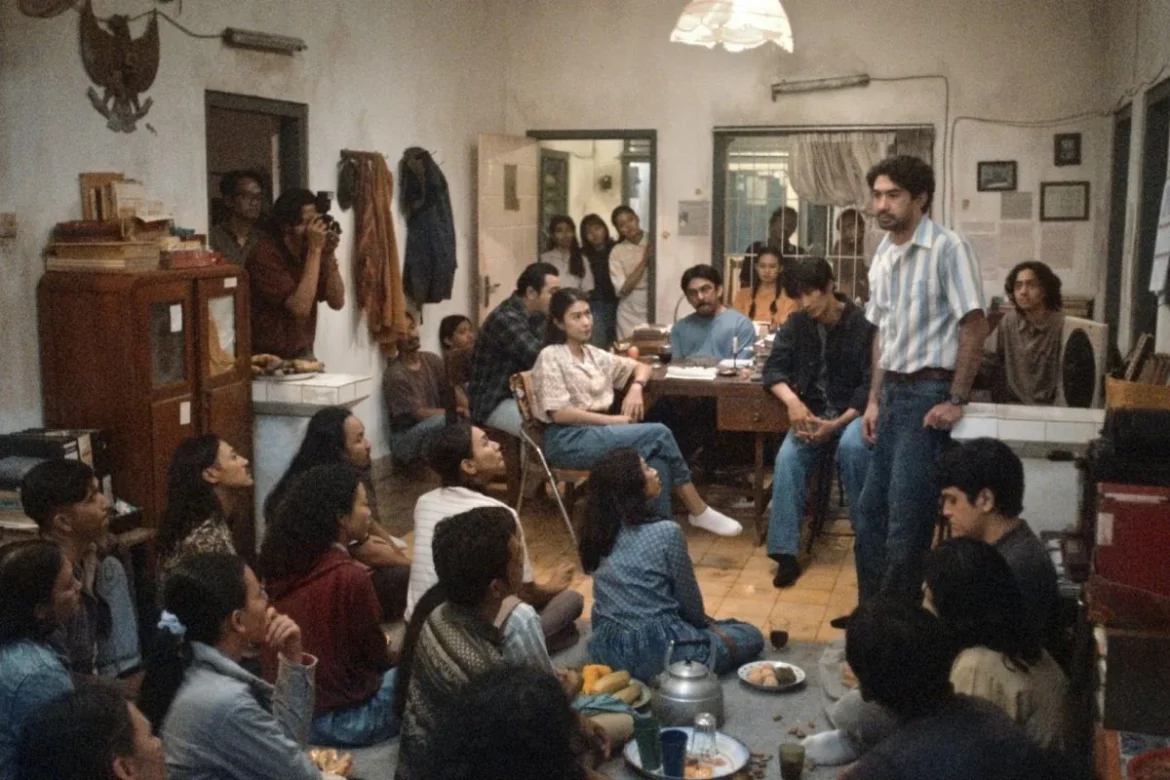
The Indonesian cinematic landscape is bracing for one of its most anticipated and emotionally resonant releases as the theatrical adaptation of Leila S. Chudori’s critically acclaimed novel, Laut Bercerita, prepares to hit silver screens nationwide on October 29, 2026. Directed by acclaimed filmmaker Yosep Anggi Noen, who co-wrote the screenplay alongside the author herself, the 135-minute drama transports audiences back to the volatile political climate of late 1990s Yogyakarta. Produced by Pal8 Pictures, the film strategically arrives just a day after Indonesia’s National Youth Pledge (Sumpah Pemuda) commemoration, serving as a poignant cinematic reminder of the heavy price paid for freedom of expression and the enduring quest for historical justice.
Main Facts and Production Overview
Laut Bercerita centers on the life of Biru Laut, a university student whose passion for literature and political discourse pulls him into the perilous world of anti-establishment activism. Boasting a powerhouse ensemble cast, the film features Reza Rahadian in the demanding lead role of Biru Laut, supported by a stellar lineup of Indonesian cinematic royalty, including Christine Hakim, Arswendy Bening Swara, Yunita Siregar, Kevin Julio, Ben Nugroho, Dewa Dayana, Dian Sastrowardoyo, and Eva Celia.
The production represents a monumental bridge between Indonesian literature and visual storytelling. Originally published as a novel in 2017, Laut Bercerita quickly became a cultural phenomenon, striking a deep nerve with readers by fictionalizing the very real and painful history of student activists who were abducted and forcibly disappeared during the twilight years of the New Order regime. The cinematic adaptation seeks to translate this collective trauma onto the big screen, balancing the intimate grief of a shattered family with the broader socio-political turbulence of an era defined by authoritarian suppression.
Chronological Journey into Activism and Tragedy
The narrative unfolds chronologically against the backdrop of an increasingly repressive Indonesia in the late 1990s. The story’s genesis is rooted in the academic hubs of Yogyakarta, where intellectual freedom was severely policed.
The Formation of Winatra and Rising Tensions
Biru Laut, alongside companions such as Daniel, Alex, and Sunu, finds himself drawn to a clandestine student study group known as Winatra. For these young intellectuals, reading banned political texts, engaging in underground discussions, and critiquing government policies are not merely academic exercises, but moral obligations. They believe that true freedom of expression is foundational to a just society.
However, the political atmosphere grows increasingly suffocating. The breaking point arrives when university authorities and security forces crack down on student networks, arresting three members for disseminating prohibited literature. Despite the escalating risks and the palpable danger looming over their daily lives, Laut and his comrades refuse to silence their voices, choosing instead to double down on their advocacy.
The Disappearance and the Endless Wait
The central conflict erupts on a fateful night when Laut and several of his closest associates vanish without a trace. Their sudden disappearance shatters the lives of those left behind. The narrative shifts its emotional core to Laut’s family: his grieving mother (played by Christine Hakim), his steadfast father (Arswendy Bening Swara), and his fiercely determined younger sister, Asmara Jati (Yunita Siregar).
Years bleed into one another as the family endures a harrowing limbo, grappling with the agonizing uncertainty of not knowing whether their loved one is dead or alive. Asmara Jati takes up the mantle of investigator, collaborating with former associates of her brother to retrace his final steps. This multi-year search evolves into a broader exploration of the psychological scars left by political violence, highlighting how the trauma of forced disappearances lingers across generations.
Adapting a Literary Landmark to the Screen
Transitioning a deeply nuanced, multi-layered literary work into a feature film presented unique creative challenges. Director Yosep Anggi Noen and author Leila S. Chudori had to make difficult editorial choices to compress hundreds of pages of internal monologues and historical context into a strict two-hour and fifteen-minute runtime.
According to Chudori, certain subplots and secondary scenes from the novel had to be streamlined or omitted, though the core emotional DNA of the story was preserved. To maintain authenticity, lead actor Reza Rahadian relied heavily on the original source material and the finalized script to anchor his portrayal of Biru Laut. Both the director and the cast worked meticulously to ensure that the historical gravity of the characters’ plight was respected without sensationalizing the tragic real-world events that inspired the narrative.
Historical Context and Sociopolitical Background
To fully grasp the weight of Laut Bercerita, audiences must understand the historical landscape of Indonesia in the late 1990s. This period was characterized by widespread economic crisis, systemic corruption, and mounting public frustration with President Suharto’s authoritarian New Order government. University campuses transformed into epicenters of resistance, where student movements mobilized millions to demand democratic reforms (reformasi).
Dissent, however, carried catastrophic consequences. Dozens of student activists across major cities like Jakarta and Yogyakarta were targeted, arrested, tortured, or subjected to forced disappearances by state apparatuses. While some activists eventually returned home with harrowing tales of captivity, many others remain missing to this day, leaving their families in a perpetual state of ambiguous loss. By revisiting this dark chapter, the film contributes to a crucial national dialogue about historical accountability, human rights, and the dangers of forgetting the sacrifices made for modern Indonesian democracy.
Cultural Implications and Industry Analysis
The release of Laut Bercerita in October 2026 is expected to spark significant cultural and political discourse across the archipelago. Industry analysts view the film not merely as a commercial entertainment product, but as a cultural artifact that underscores the growing appetite for mature, socially conscious cinema in Indonesia.
Pal8 Pictures’ deliberate scheduling of the film’s premiere—juxtaposed against the anniversary of the Youth Pledge—signals a targeted effort to engage younger generations who may have little to no lived memory of the 1998 transition. By framing the narrative around themes of profound friendship, romantic longing, betrayal, state-sponsored violence, and familial resilience, the filmmakers hope to foster empathy and critical thinking among contemporary youth.
Furthermore, the involvement of heavyweight performers like Reza Rahadian, Christine Hakim, and Dian Sastrowardoyo guarantees high box-office visibility and critical scrutiny. Their participation elevates the production’s profile, ensuring that the dark truths embedded within the narrative will reach mainstream audiences who might not otherwise engage with historical non-fiction or political documentaries.
As the countdown to October 29, 2026, continues, anticipation mounts for what promises to be one of the most culturally significant cinematic events of the decade. Laut Bercerita stands as a testament to the resilience of the human spirit, a tribute to those who dared to dream of a free Indonesia, and a stark reminder that true justice requires society to confront, rather than bury, its most painful histories.
