
Pertamina Patra Niaga, the fuel retail arm of Indonesia’s state-owned energy company Pertamina, has officially stated that there is no national policy prohibiting motorcycles, specifically mentioning the Suzuki Thunder model, from refueling at General Fuel Stations (SPBUs). The company clarified that any such restrictions observed at specific stations are local decisions made by individual SPBU operators.
Roberth M.V. Dumatubun, Corporate Secretary of Pertamina Patra Niaga, emphasized the company’s commitment to ensuring subsidized fuel is distributed equitably and reaches its intended recipients. He stated that all vehicles, regardless of whether they are two-wheeled or four-wheeled, are encouraged to use subsidized fuel reasonably and in accordance with their normal daily needs.
"Regarding specific brands, this is not a limitation or a special case. In fact, based on statements from the Chairman of the motorcycle club concerned, there are no obstacles in refueling at SPBUs because it is used for daily activities in a reasonable manner," Roberth stated in a written release on Monday, July 20th.
However, Roberth acknowledged that instances of individuals exploiting the Suzuki Thunder, particularly those with modified fuel tanks exceeding standard manufacturer capacity, to repeatedly refuel subsidized fuel have been observed in practice. He indicated that these situations likely served as the impetus for the emergence of the localized policies at some SPBUs.
"This is what causes these policies to emerge with a positive spirit for equitable supply and with no intention of discrediting any particular brand," he added, underscoring the underlying concern for fair distribution.
Background of the Restrictions
Previously, reports emerged of several SPBUs in Jakarta and Bekasi displaying notices prohibiting the refueling of Suzuki Thunder motorcycles. These advisories were disseminated through flyers placed around fuel dispensers and banners within the SPBU premises. The restrictions were not solely limited to the Suzuki Thunder; some SPBUs also barred refueling for motorcycles with modified tanks and restricted bulk purchases using jerrycans.
According to a report by Detik on Friday, July 17th, these measures were implemented as an effort to prevent alleged misuse of subsidized fuel, to anticipate repeated purchases suspected of being resold retail, and to maintain the integrity of fuel distribution to ensure it remains on target. The primary objective, as understood from these localized actions, was to curb potential fuel hoarding and illegal resale activities that could disrupt the intended subsidized fuel program.
Analysis of the Suzuki Thunder’s Role
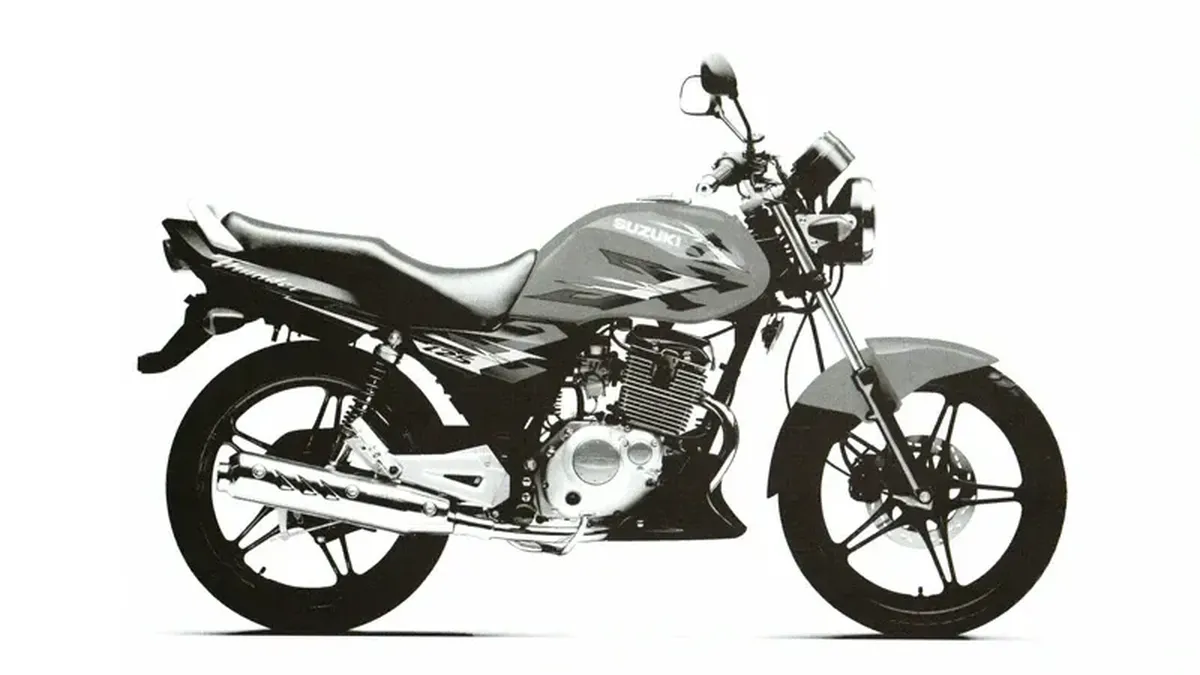
The Suzuki Thunder model has garnered attention due to its larger fuel tank capacity compared to many motorcycles in its class. This characteristic has made it a favored choice for some informal retailers of gasoline who use it to accumulate fuel stocks. Furthermore, a significant number of these motorcycles have reportedly been modified to accommodate even greater fuel volumes, amplifying concerns about potential misuse.
The Suzuki Thunder was historically offered in two main models in Indonesia. The Thunder 250 was launched in 1999 and production ceased in 2005. Subsequently, the Thunder 125 was marketed from 2004 until its production ended in 2015. Both models were equipped with a substantial 15-liter fuel tank, reflecting their design intent as touring motorcycles suitable for long-distance journeys. This inherent capacity, combined with potential modifications, makes them attractive for individuals seeking to transport larger quantities of fuel, thus raising red flags for fuel distributors aiming to prevent diversion.
Uneven Enforcement and Ongoing Concerns
Despite the emergence of these localized restrictions, a spot check revealed that their implementation was not uniform across all SPBUs. Many stations in Jakarta and Bekasi continued to serve Suzuki Thunder motorcycles without issue, provided no clear indications of violation were present. This inconsistency in enforcement highlights the challenges in managing fuel distribution and preventing misuse across a vast network of retail outlets.
The situation underscores a broader challenge faced by Pertamina and fuel distributors: balancing the accessibility of subsidized fuel for legitimate daily use with the imperative to prevent its diversion for commercial gain or hoarding. While national policies aim for equitable distribution, the nuances of local enforcement and the specific characteristics of certain vehicle models can create complex scenarios.
Broader Implications for Fuel Subsidy Management
The incident involving the Suzuki Thunder and the localized SPBU restrictions brings to the forefront the persistent issues surrounding the management of fuel subsidies in Indonesia. Subsidized fuel, such as Pertalite, is a critical component of the national energy policy, designed to alleviate the burden on lower-income households and support economic activities. However, the allure of profit margins in reselling subsidized fuel at higher prices has consistently led to attempts at exploitation.
Data on Fuel Subsidies and Consumption
Indonesia allocates a significant portion of its national budget to fuel subsidies. For instance, in 2023, the government projected an allocation of Rp 149.1 trillion for fuel and LPG subsidies, a substantial figure that underscores the economic importance of these programs. However, this also highlights the vulnerability of these subsidies to misuse.
According to data from the Ministry of Energy and Mineral Resources, the consumption of subsidized fuel has often exceeded initial projections, partly due to leakage and diversion. While specific figures for the diversion attributed to motorcycles like the Suzuki Thunder are difficult to quantify precisely, the recurring nature of such incidents suggests a systemic issue that requires ongoing attention and adaptive strategies.
Pertamina’s Stance and Future Outlook
Pertamina Patra Niaga’s clarification aims to alleviate confusion and reassure Suzuki Thunder owners who use their vehicles for legitimate purposes. The company’s emphasis on "reasonable use" and "normal needs" signals an ongoing effort to educate the public and foster a sense of responsibility in consuming subsidized fuel.
The company’s support for targeted distribution mechanisms, such as those being explored through digital platforms or vehicle registration data, could offer a more robust solution to ensure subsidies reach their intended beneficiaries. Such measures, if implemented effectively, could reduce the reliance on localized, and potentially discriminatory, restrictions at the pump.
The ongoing dialogue between Pertamina, motorcycle communities, and SPBU operators will be crucial in finding sustainable solutions. While the immediate concern about the Suzuki Thunder has been addressed by Pertamina’s national clarification, the underlying challenge of preventing fuel subsidy misuse remains a complex and evolving issue for Indonesia. The company’s commitment to "equitable supply" and "no intention of discrediting any particular brand" suggests a desire for a balanced approach that upholds the spirit of the subsidy program while actively combating its abuse. The effectiveness of such an approach will depend on continued vigilance, clear communication, and potentially, the implementation of more sophisticated monitoring and distribution technologies.
The broader impact of such localized bans, even if not nationally mandated, can be significant. It can lead to a perception of unfair treatment among specific vehicle owners and create operational complexities for SPBU managers caught between national directives and local enforcement pressures. The current situation, therefore, necessitates a clear and consistently applied national framework that addresses the root causes of fuel diversion, rather than relying on ad-hoc measures at the retail level. Pertamina’s clear statement is a step towards this clarity, but the practical implementation and ongoing monitoring of fuel distribution remain paramount.


