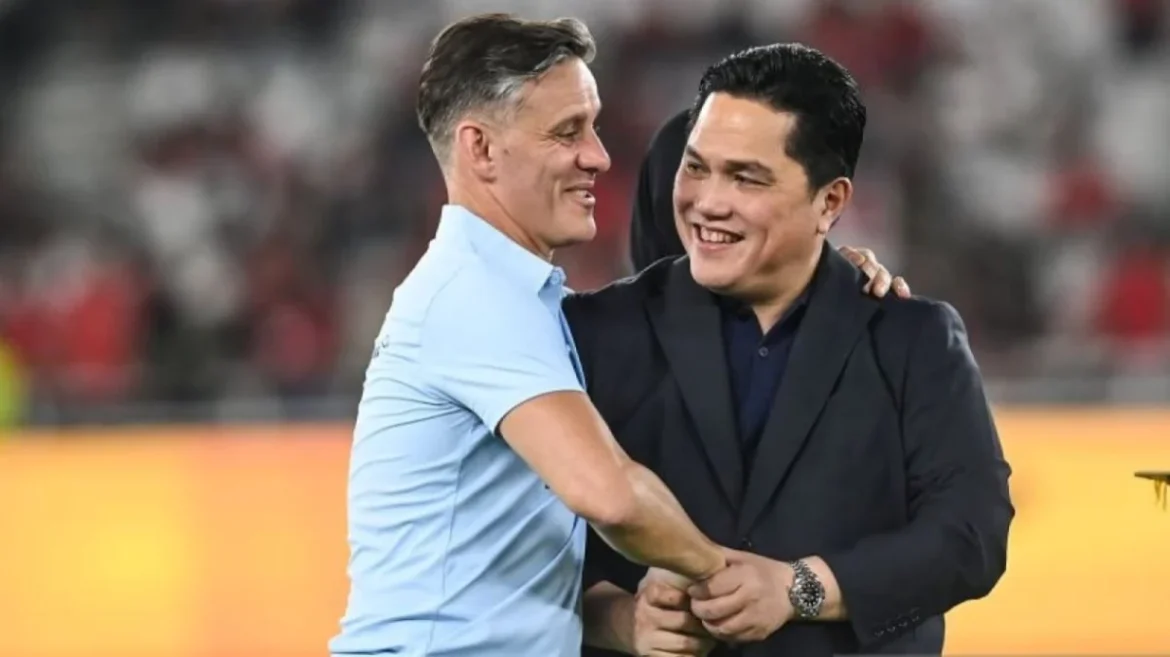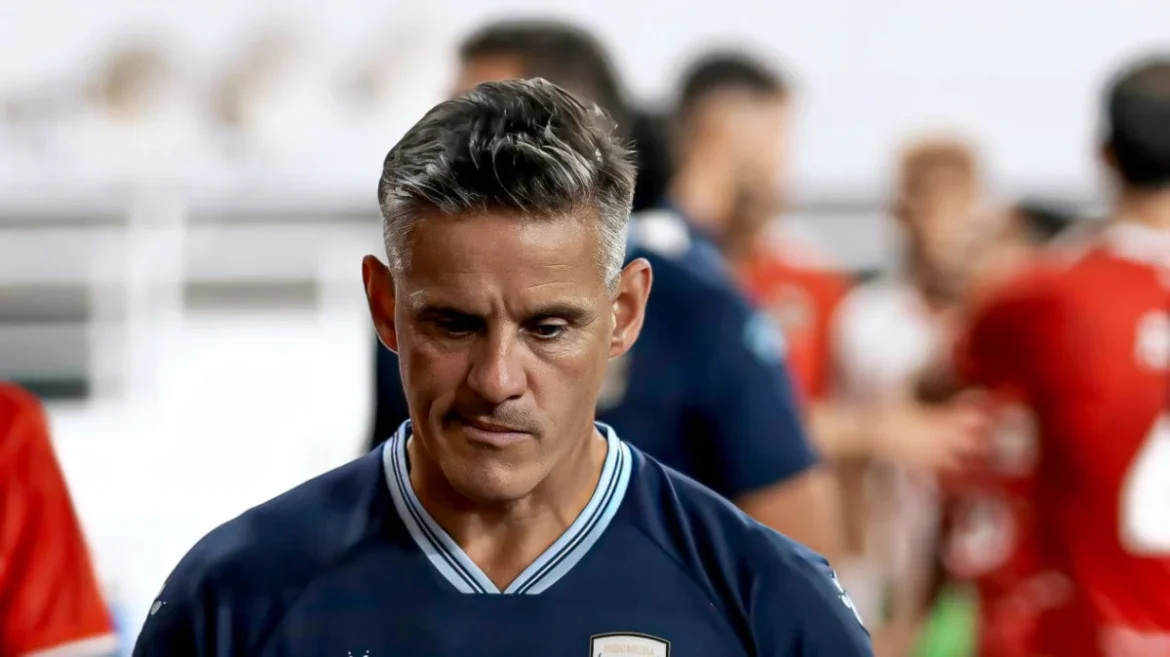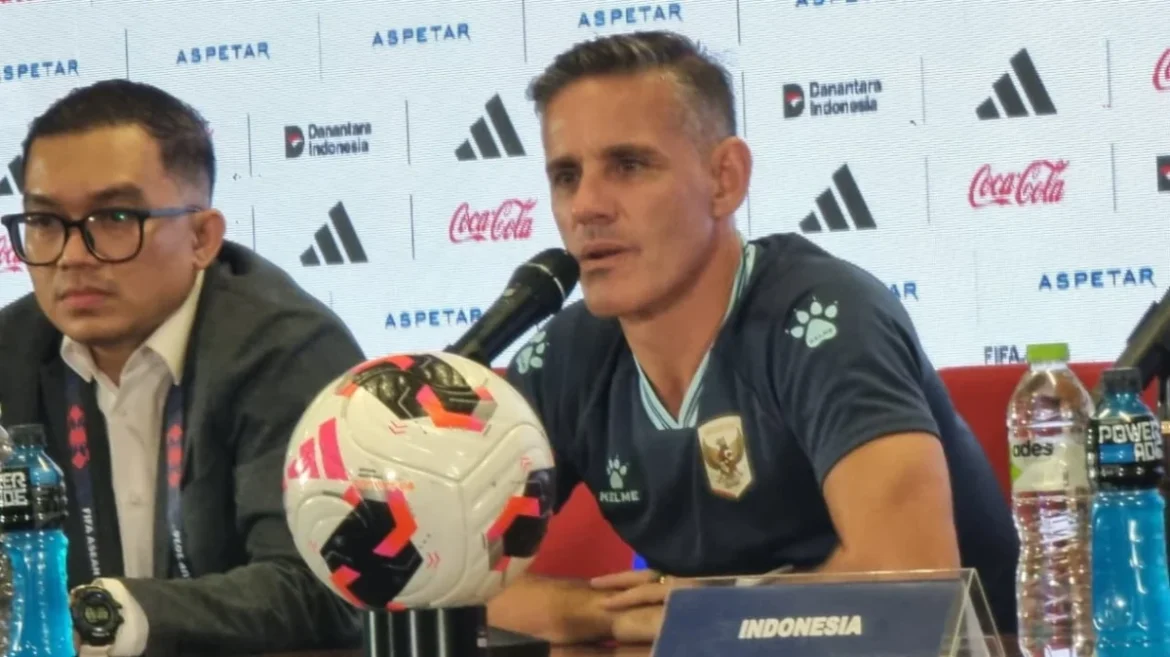
JAKARTA — Indonesia’s men’s national football team head coach John Herdman has firmly put to rest the ongoing debate surrounding the categorization of players within the national setup, declaring that the distinction between local players and the diaspora has been completely eradicated. Speaking at a press conference following Indonesia’s commanding 2-0 victory over Singapore in the opening match of Group A at the FIFA ASEAN Cup 2026, the English tactician emphasized unity, collective identity, and shared national pride.
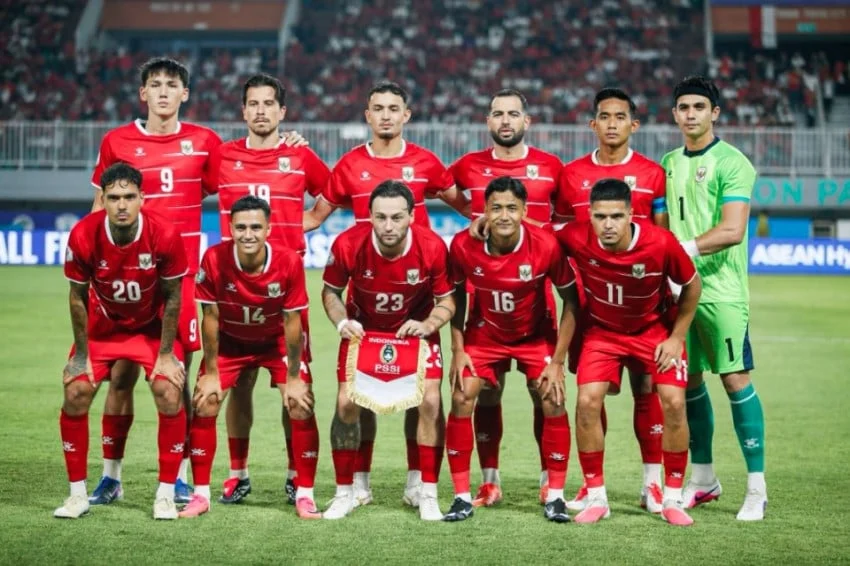
The match, held on Friday, September 25, 2026, at the iconic Gelora Bung Karno Main Stadium (SUGBK) in Jakarta, marked a significant milestone for the Garuda squad as they commenced their regional championship campaign on home soil. Yet, beyond the final scoreline, the primary talking point of the evening centered on Herdman’s tactical selection—specifically, a starting lineup consisting entirely of players of Indonesian descent playing their club football abroad, commonly referred to in domestic media as diaspora players.
Addressing the media with characteristic intensity and clarity, Herdman dismissed the labels that have frequently dominated sports talk shows and fan forums across the archipelago. His message was direct, impassioned, and framed around a singular national identity.
"There is no such thing as a local player. There is no difference. There is no local, there is no diaspora. We are Indonesian," Herdman stated firmly during the post-match press conference.
Background Context of the FIFA ASEAN Cup 2026 and Squad Composition
The FIFA ASEAN Cup 2026 represents a pinnacle of regional competition, bringing together Southeast Asia’s finest footballing nations to contest continental supremacy. For Indonesia, a nation with a fervent and demanding football culture, the tournament carries massive expectations. Under the guidance of John Herdman, the national team has undergone a strategic evolution, blending domestically developed talent with high-level professionals competing in competitive European and global leagues.
Over recent years, the Indonesian Football Association (PSSI) has aggressively pursued a dual-track strategy: investing in domestic grassroots development while simultaneously identifying and recruiting players of Indonesian heritage playing abroad. This policy has transformed the competitiveness of the Garuda squad, elevating their standing in FIFA rankings and making them formidable contenders in regional and continental fixtures.
However, this policy has occasionally sparked debates regarding national identity and representation. Critics and purists have periodically raised questions about the balance between locally trained athletes and foreign-born or foreign-raised players. Herdman’s post-match comments served as a definitive policy statement from the coaching staff, designed to unify the dressing room and align public perception with the reality of modern international football.
Match Chronology and Tactical Breakdown Against Singapore
The opening fixture against Singapore proved to be a tactical showcase of Herdman’s blueprint. Despite the absence of domestic league starters in the initial eleven, the cohesive unit displayed high tactical discipline, physical intensity, and technical superiority throughout the ninety minutes.
The deadlock was broken early in the match. In the 13th minute, winger Luke Vickery orchestrated a dangerous attacking move down the right flank, delivering a precise low cross into the penalty area. Winger Ragnar Oratmangoen timed his run perfectly, meeting the ball with a clinical finish to send the capacity crowd at SUGBK into raptures. The goal settled any early nerves and established Indonesia’s dominance on the pitch.
Singapore attempted to reorganize, utilizing compact defensive blocks and counter-attacking strategies, but struggled to break through a resilient Indonesian backline. The match remained fiercely contested until the 74th minute, when sustained pressure inside the opponent’s box forced a defensive error, resulting in a penalty kick for Indonesia.
Forward Ole Romeny stepped up to the spot. Demonstrating immense composure, Romeny struck a firm, accurate shot past the Singaporean goalkeeper to double Indonesia’s lead. The 2-0 scoreline held until the final whistle, securing three crucial points for the hosts in their Group A campaign.
Herdman’s Philosophy on Commitment and National Pride
When questioned by journalists regarding the decision to field a starting lineup comprised exclusively of players with diaspora backgrounds, Herdman expanded on his philosophy of what it truly means to represent the national team. He argued that birthplace or upbringing is secondary to commitment, professionalism, and emotional investment in the shirt.
"This is a lineup that wants to represent this country, who are willing to get on an airplane and make 50/50 tackles, play with sincerity, passion, and heart for the fans," Herdman emphasized.
The former national team manager urged fans, analysts, and the media to fundamentally shift their mindset. He stressed that international football in the modern era relies on global scouting networks and multicultural integration, echoing trends seen across many of the world’s top-tier national sides.
"You defend the flag, you sing the national anthem, and we stand together every single moment. This is the mindset we have to change," Herdman asserted. "These people are Indonesian now. They love playing for you."
To validate a player’s commitment, Herdman pointed directly to their on-pitch behavior rather than their demographic background. He argued that doubts regarding a player’s dedication are only valid if visible effort begins to wane during the heat of competition.
"When they start hesitating in making tackles, when they stop running in a match, that is when you can ask that question," Herdman remarked, signaling his absolute trust in the current generation of players representing the Garuda badge.
Broader Implications for Indonesian Football
Herdman’s strong stance carries profound implications for the future of Indonesian football culture and team dynamics. By erasing the psychological barrier between domestic and diaspora players, the coaching staff aims to foster a harmonious, unified dressing room devoid of cliques or perceived favoritism.
Furthermore, this inclusive narrative helps insulate the players from external pressures and media scrutiny regarding their backgrounds, allowing them to focus entirely on athletic performance. As Indonesia progresses through the group stages of the FIFA ASEAN Cup 2026, maintaining this collective ethos will be crucial for squad morale and team chemistry.
The victory over Singapore provides an ideal springboard for the team’s upcoming fixtures. Beyond the immediate tournament objectives, Herdman’s leadership is setting a cultural benchmark for the national program—one where talent, work ethic, and pride in the red-and-white flag override any labels of geography or origin. As the Garuda march forward in the tournament, the unified squad stands ready to prove that under one banner, they are simply, and proudly, Indonesian.