The Indonesian National Minifootball Team has officially shifted its strategic focus toward the upcoming World Minifootball Federation (WMF) World Championship 2027, following a commendable yet challenging campaign at the Asian Minifootball Championship (AMNC) Asia Cup 2026. Although the Garuda squad missed out on a podium finish after conceding a 0-3 defeat to the United Arab Emirates in the third-place playoff at the ASIOP Stadium in Jakarta, the tournament served as a crucial stepping stone for the development of the sport in the country. The overarching objective has now transitioned from regional consolidation to global preparation, as the team looks to elevate its competitive standards against the world’s elite minifootball powerhouses in the Czech Republic.
Regional Campaign and Road to the Semifinals
The journey of the Indonesian team through the AMNC 2026 was marked by both dominant performances and formidable tactical challenges. Competing on home soil provided an initial boost of confidence, which was vividly demonstrated in their opening fixture against Bangladesh. Displaying offensive efficiency and tactical discipline, Indonesia dismantled the South Asian side with an 8-1 victory, sending a strong signal to their Group A rivals.
Momentum continued to build in their second fixture when Indonesia was awarded a walkover (WO) victory over Iraq, recorded officially as a 5-0 win after the opposing team failed to show up for the match. This unexpected administrative advantage placed the Garuda squad in a strong position heading into the middle tier of the group stage. Capitalizing on this momentum, Indonesia produced their most clinical offensive display of the tournament by routing India 9-0. This comprehensive victory mathematically secured their progression from Group A, showcasing the depth and attacking versatility of the squad.
However, the final match of the group stage exposed vulnerabilities that would later prove decisive in the tournament’s latter stages. Facing a tactically disciplined Thailand side, Indonesia struggled to break down their opponents’ defensive block and ultimately fell 0-1. The result cemented Thailand at the summit of Group A with a flawless 12 points, while Indonesia advanced to the knockout stages as the group runner-up with nine points. Finishing second in the group set up a high-stakes semifinal clash against a physically imposing Uzbekistan side, a match that tested the structural integrity and endurance of the Indonesian squad.
The Decisive Matches and Concluding Fixtures
The culmination of the AMNC 2026 campaign highlighted both the immense potential and the remaining developmental gaps within the Indonesian minifootball ecosystem. While the semifinal match against Uzbekistan pushed the Garuda squad to their physical and tactical limits, the ultimate test of resilience came during the third-place playoff against the United Arab Emirates on Friday, September 18, 2026.
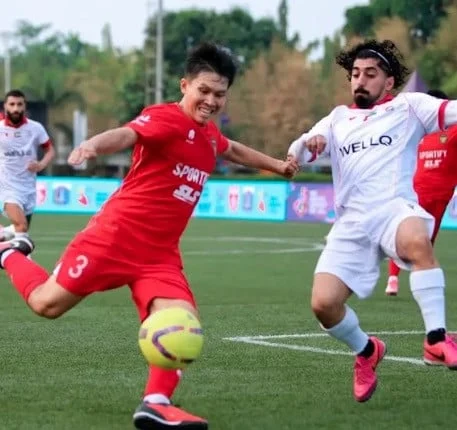
In the match against the UAE, the Indonesian team struggled to maintain offensive rhythm against a physically robust and tactically astute opponent. Despite flashes of individual brilliance and coordinated build-up play, the defensive lapses capitalized on by the UAE frontline resulted in a 0-3 defeat. This scoreline relegated Indonesia to the fourth position in the final tournament standings.
Nevertheless, the primary objective of the tournament—securing qualification for the global stage—was successfully achieved. By virtue of reaching the tournament’s semifinal bracket, Indonesia earned a coveted qualification ticket to the WMF World Championship 2027, which is scheduled to take place in the Czech Republic. This qualification represents a historic milestone for Indonesian minifootball, offering the nation an unprecedented opportunity to measure its progress against top-tier international competition.
Comprehensive Evaluation and Strategic Adjustments
Recognizing the stark gap in quality between regional contenders and global heavyweights, the coaching staff has instituted a comprehensive evaluation process. Head Coach Indra Kurnia Purnomo emphasized that superficial assessments would be insufficient to prepare the team for the rigorous demands of the Czech Republic tournament. The evaluation encompasses technical, tactical, physical, and psychological dimensions of the squad.
Speaking in Jakarta following the conclusion of the tournament, Coach Indra underscored the necessity of a total overhaul in specific tactical areas. "Evaluation is certainly underway, and it extends far beyond basic set pieces," Indra stated. "There are numerous structural elements within our gameplay that must be systematically evaluated and upgraded if we are to successfully elevate our competitive level ahead of the 2027 World Cup."
The technical staff has identified several critical areas requiring immediate remediation. These include defensive transitions, spatial awareness during high-intensity pressing phases, and clinical finishing in the final third. Minifootball, characterized by its fast-paced nature, smaller pitch dimensions, and dynamic player rotations akin to futsal combined with traditional football elements, demands exceptional aerobic capacity and rapid decision-making. The coaching staff plans to address these physiological demands through structured domestic training camps, scheduled international friendlies, and potential exposure tours in Europe prior to the 2027 global showcase.
Background and Context of Asian Minifootball
The Asian Minifootball Confederation (AMC) and its premier regional competition, the AMNC, serve as the primary qualification pathways for the WMF World Championship. Minifootball as an organized sport has experienced exponential growth across Southeast Asia and the broader Asian continent over the past decade. Governed internationally by the World Minifootball Federation, the sport differentiates itself from standard association football and futsal through specific regulatory frameworks, pitch sizes, and squad dynamics, typically played on high-grade artificial turf with perimeter barriers.
Hosting the AMNC 2026 at the ASIOP Stadium in Jakarta marked a significant milestone for the development and public visibility of the sport in Indonesia. The tournament brought together elite national teams from across Asia, fostering regional competitiveness and elevating the profile of Indonesian sports infrastructure. For Indonesia, participation in this tournament was not merely about pursuing regional silverware, but about constructing a sustainable developmental pipeline capable of sustaining international competitiveness over the long term.
The transition of the Indonesian Minifootball Association (KORMI/Federasi Minifootball Indonesia) toward a more professionalized structure has been instrumental in facilitating these achievements. By establishing structured domestic leagues and talent scouting networks across multiple provinces, the governing body has expanded the talent pool available to the national team coaching staff.
Broader Implications and Future Outlook
The fourth-place finish at the AMNC 2026, paired with qualification for the WMF World Championship 2027, carries profound implications for the trajectory of the sport in Indonesia. Primarily, it validates the strategic investments made in grassroots development and domestic competition structures over recent years. Qualification for the global tournament provides a vital platform for Indonesian athletes to showcase their talents on the international stage, potentially attracting corporate sponsorship, increased media coverage, and heightened government support.
However, the margin for error at the global level is significantly narrower than in regional competitions. Nations from Europe and the Americas, such as the Czech Republic, Romania, Mexico, and Brazil, possess decades of experience in high-level minifootball competition, featuring highly sophisticated tactical systems and professionalized player pools. For Indonesia to compete effectively against these established global powerhouses in 2027, the developmental momentum generated during the AMNC 2026 must be sustained and accelerated.
This requires a collaborative effort involving sports authorities, club owners, corporate partners, and the coaching staff. Establishing a consistent, long-term training roadmap that bridges the gap between domestic amateur structures and elite international standards will be paramount. As the team pivots its focus from the disappointment of the third-place playoff loss to the expansive horizons of the Czech Republic tournament, the Indonesian National Minifootball Team stands at a critical juncture. The months leading up to the 2027 WMF World Championship will ultimately determine whether the Garuda squad can transition from a promising regional contender into a respected competitor on the global minifootball stage.