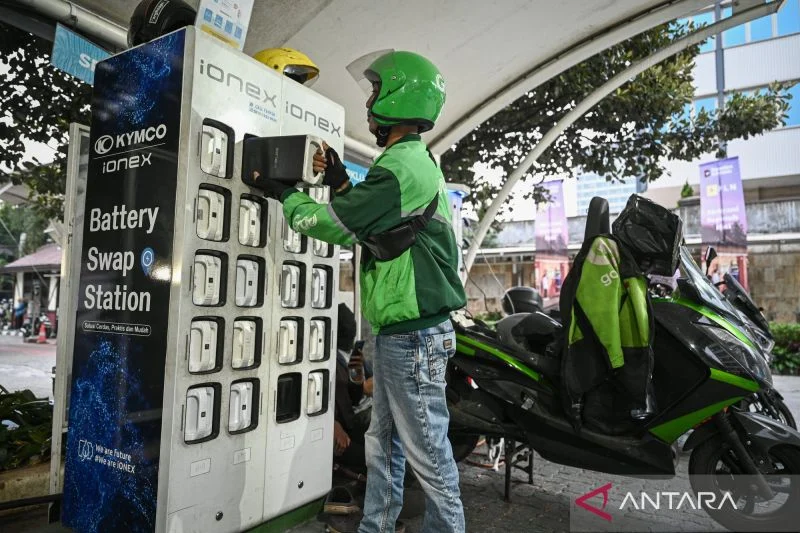
The electric vehicle landscape in Indonesia is undergoing a structural shift, driven by innovative ownership frameworks designed to accelerate green mobility adoption. Among the most significant developments is the rapid expansion of the battery-as-a-service (BaaS) or battery subscription model. By decoupling the cost of the battery—historically the most expensive single component of an electric vehicle—from the initial purchase price of the motorcycle chassis, manufacturers have successfully lowered the barrier to entry for prospective buyers. Recent market updates outline a diverse array of subscription pricing structures across popular brands operating within the domestic market, with monthly fees ranging from Rp84,000 to Rp250,000. This evolving economic model is reshaping how Indonesian consumers evaluate electric two-wheelers, bridging the gap between high upfront capital costs and long-term operational affordability.
Background Context and the Evolution of Electric Mobility in Indonesia
To understand the rise of the battery rental model, one must examine the broader trajectory of Indonesia’s electric vehicle ecosystem. For years, the high upfront cost of electric motorcycles remained a primary deterrent for mainstream adoption, despite government incentives and mounting environmental urgency. Lithium-ion battery packs often account for up to 40% to 50% of an electric motorcycle’s total manufacturing cost. Recognizing this economic bottleneck, automotive brands began exploring alternative sales strategies inspired by global markets, particularly China and parts of Europe, where battery leasing has proven effective.
The introduction of subscription models alters the traditional asset-ownership paradigm. Instead of purchasing the battery outright, consumers buy the motorcycle chassis and enter into a recurring service agreement for the power source. This strategy not only reduces the initial out-of-pocket expense by millions of rupiah but also alleviates consumer anxiety regarding battery degradation. Because the battery technically remains the property of the manufacturer or service provider, brands often assume the responsibility of health monitoring, maintenance, and eventual replacement when capacity drops below guaranteed thresholds.
Detailed Brand Breakdown: VinFast, Polytron, and ALVA
Several major automotive players in Indonesia have institutionalized these subscription frameworks, tailoring their pricing structures to accommodate different vehicle classes and usage intensities.
VinFast leads the market in terms of entry-level affordability under its current subscription portfolio. The Vietnamese electric vehicle manufacturer offers a dedicated battery subscription service for three of its popular models: the Evo, the Feliz II, and the Viper. For consumers opting to purchase the vehicle without the battery, the monthly subscription tariff starts at an economical Rp84,000 for a single battery setup. For models requiring a dual-battery configuration to support extended ranges or higher power outputs, the fee is adjusted to Rp144,000 per month. All three models utilize a dual-slot compartment located beneath the seat, which also facilitates seamless battery swapping capabilities. By establishing a price point starting at Rp84,000, VinFast has positioned itself as one of the most competitively priced alternatives in the structured battery-rental market.
Polytron, an established Indonesian consumer electronics and automotive brand, has adopted a tiered approach for its popular Fox lineup. The company structures its subscription fees according to the performance tier and battery capacity of each specific model. The Polytron Fox 200 carries a monthly battery rental fee of Rp125,000. Meanwhile, the higher-performance variants, namely the Fox 500 and the Fox R, are subject to a monthly subscription fee of Rp200,000. Polytron has emphasized that this financial structure is explicitly engineered to minimize the initial acquisition hurdle for everyday commuters and commercial riders alike. Furthermore, Polytron provides a vital consumer protection clause: the company guarantees that the battery will be replaced free of charge or serviced if its operational capacity drops below 85 percent under normal usage conditions adhering to program guidelines.
ALVA, a prominent domestic premium electric motorcycle brand, implements its battery subscription model under the moniker BEBAS (Berlangganan Baterai Sewa). This program covers its flagship lifestyle and commuter models, the ALVA N3 and the ALVA CERVO. For the ALVA N3, consumers can choose between a single-battery configuration priced at Rp150,000 per month or a dual-battery configuration set at Rp250,000 per month. The high-performance ALVA CERVO, which operates exclusively on a dual-battery system, also carries a monthly subscription fee of Rp250,000. ALVA has structured these rates to be inclusive of applicable taxes under its service terms, ensuring transparency for the end user. Through the BEBAS scheme, the battery is maintained as an ongoing service utility rather than a depreciating consumer asset.
Comparative Financial Analysis for Consumers
While subscription models successfully lower the initial purchase price, industry analysts emphasize that consumers must evaluate the complete total cost of ownership (TCO) before making a purchasing decision. The monthly rental fees implemented by VinFast, Polytron, and ALVA represent only one component of vehicle maintenance and operation.
Vehicle owners must continuously factor in several additional expenditures, including:
- The base purchase price of the motorcycle chassis or rolling chassis.
- Regular electricity costs incurred during home charging or public charging station usage.
- Periodic mechanical and software maintenance (brakes, tires, suspension, and electronics).
- Annual vehicle registration taxes and insurance premiums.
- Potential overage fees or specific contractual obligations tied to mileage caps, depending on the brand’s policy.
For instance, a rider utilizing an ALVA CERVO at Rp250,000 per month will spend Rp3,000,000 annually purely on battery leasing. Over a standard five-year vehicle financing lifecycle, this accumulates to Rp15,000,000 in rental fees. Consumers must weigh this recurring expenditure against the alternative of purchasing a battery outright, factoring in the likelihood of battery degradation and the manufacturer’s replacement warranty terms.
Broader Economic Implications and Industry Perspectives
The proliferation of battery subscription frameworks aligns closely with national strategic objectives in Indonesia. Government stakeholders, including the Ministry of Industry and the Ministry of Higher Education, Science, and Technology, have consistently emphasized the necessity of expanding the electric vehicle population to meet national carbon reduction targets and curb fossil fuel import dependencies. With the national electric motorcycle population steadily growing—surpassing hundreds of thousands of units—diversifying ownership models is seen as a critical catalyst for mass adoption.
Furthermore, the operational viability of these subscription models depends heavily on the maturation of the domestic battery industry. Legislative bodies such as the House of Representatives (DPR RI) have continuously advocated for the acceleration of the national battery manufacturing ecosystem. Developing localized supply chains for precursor materials, cathode production, and cell assembly will eventually reduce the procurement costs for manufacturers, which may translate to even more competitive subscription rates or lower overall vehicle prices in the future.
Industry observers note that battery-as-a-service models also solve the perennial consumer anxiety surrounding battery disposal and resale value. In traditional internal combustion engine vehicles, engine health dictates resale value; in electric vehicles, battery health is paramount. By keeping the battery under the ownership and maintenance umbrella of the manufacturer, the risk of residual value depreciation is effectively transferred away from the consumer. If a battery degrades, the manufacturer steps in to recycle or refurbish the unit, thereby supporting a circular economy within the domestic automotive sector.
Strategic Recommendations for Prospective Buyers
As the market matures through 2026, prospective electric motorcycle buyers in Indonesia are advised to adopt a methodical approach when selecting a brand and ownership scheme. Experts recommend evaluating daily commuting distances, access to home-charging infrastructure versus public swap stations, and the long-term financial implications of recurring subscription fees versus upfront capital investments.
While brands like VinFast offer exceptionally low entry thresholds starting at Rp84,000, and brands like Polytron and ALVA provide robust performance tiers with comprehensive degradation guarantees up to the 85 percent threshold, individual user requirements will ultimately dictate the most cost-effective choice. By carefully analyzing these variables, consumers can navigate Indonesia’s rapidly expanding electric vehicle market with financial clarity, ensuring that sustainable transportation aligns seamlessly with their personal economic realities.