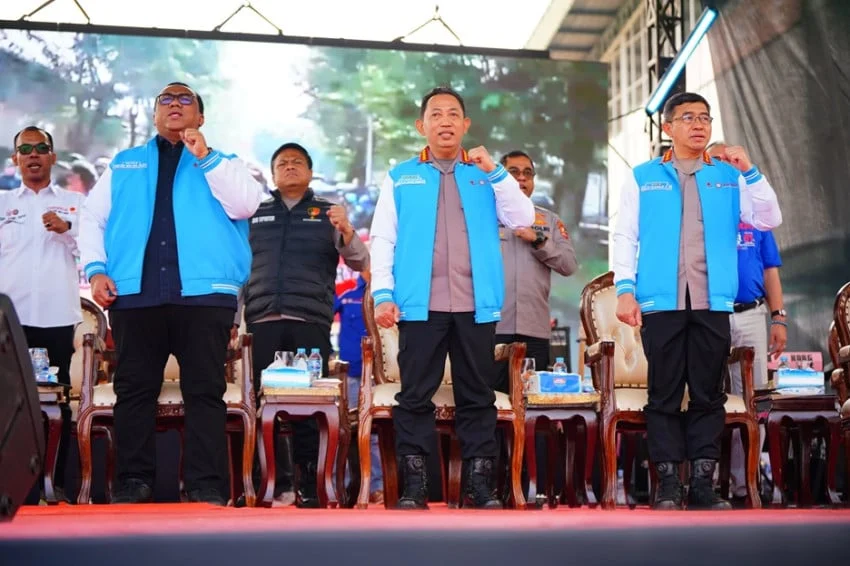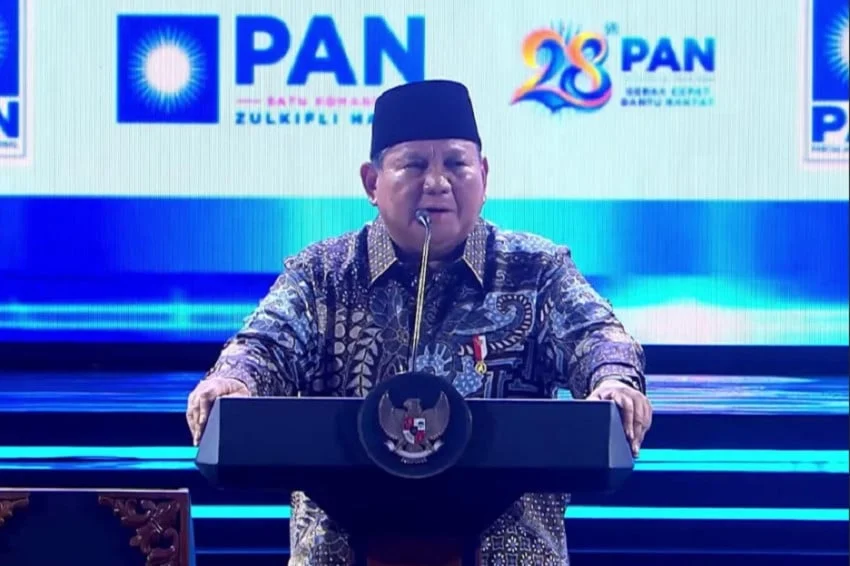
President Prabowo Subianto delivered a stern rebuke to academic and professional critics during the 28th-anniversary celebration of the National Mandate Party (PAN) held at the Jakarta International Convention Center (JICC) on Friday evening, September 18, 2026. Addressing an audience of party loyalists and high-ranking officials, the President framed the ongoing debate surrounding his administration’s flagship policies not merely as policy friction, but as a moral conflict between political intent and what he characterized as intellectual slander.
The President’s remarks represent a significant escalation in the rhetoric between the executive branch and the academic community. By invoking theological references to emphasize the gravity of the critiques leveled against his administration, Prabowo sought to recalibrate the public narrative, shifting the focus from economic technicalities to his stated core objective: the eradication of systemic poverty and malnutrition in Indonesia.
The Context of the Rhetoric
The event, which served as a milestone for the PAN party, provided a platform for President Prabowo to solidify his ideological stance. His address was characterized by an impassioned defense of his “pro-people” agenda, specifically focusing on food security, universal healthcare access, and the mitigation of stunting.
Prabowo argued that his political mandate is rooted in the fundamental necessity of ensuring that no Indonesian citizen suffers from hunger or the lack of medical care. This vision, he noted, is the driving force behind his legislative priorities, which include massive investments in social safety nets and infrastructure aimed at improving child development. During his speech, he expressed deep frustration with the discourse surrounding these programs, suggesting that experts often prioritize theoretical critique over the immediate, practical needs of the impoverished.
Chronology of Policy Friction
The tension between the Prabowo administration and various academic circles has been building since the inception of his term. The administration has faced persistent scrutiny regarding the fiscal sustainability of its “Free Nutritious Meals” program and the long-term impact of its massive infrastructure spending.
- Early 2026: Economists and policy analysts began expressing concerns regarding the widening budget deficit, questioning whether the government’s ambitious welfare programs could be funded without destabilizing the national currency or increasing external debt.
- Mid-2026: Several think tanks released reports suggesting that the focus on stunting prevention, while noble, lacked the necessary administrative infrastructure to be effective, sparking a wave of op-eds questioning the efficacy of the programs.
- September 2026: Public criticism reached a crescendo following the announcement of new tax adjustments intended to fund health-related initiatives, prompting a robust response from the presidential office.
- September 18, 2026: President Prabowo’s address at the PAN anniversary directly challenged the legitimacy of his critics, characterizing the academic skepticism as “fitnah” (slander) and questioning the intellectual integrity of those who oppose the administration’s social welfare roadmap.
The Stunting Crisis and Welfare Data
To understand the President’s urgency, one must look at the data governing Indonesia’s public health challenges. According to the Indonesian Nutritional Status Survey (SSGI), while stunting rates have shown a downward trend, they remain a significant hurdle to the nation’s “Golden Indonesia 2045” vision.
Stunting—chronic malnutrition in early childhood—is not merely a health issue but an economic one. Scientific consensus indicates that stunted growth correlates directly with lower cognitive development, reduced productivity in adulthood, and limited economic mobility. President Prabowo’s emphasis on this issue, while controversial in its implementation, addresses a tangible national deficit. The President noted, “If the brain cells are weak, they cannot compete with the children of other nations,” underscoring his belief that the nation’s future competitiveness is tethered to the health of its youngest generation.
Analyzing the “Expert vs. Politician” Divide
The President’s comment, “Saking pintarnya jadi goblok” (so smart that they become stupid), serves as a polarizing rhetorical device. In political science, this is often interpreted as an attempt to delegitimize technocratic oversight in favor of populist-driven executive action.
By framing critics as individuals disconnected from the lived reality of the poor, Prabowo is effectively maneuvering to bypass traditional gatekeepers of public opinion. However, this strategy carries inherent risks. Critics argue that rigorous, evidence-based scrutiny is the only mechanism to prevent fiscal mismanagement and ensure that state funds are used efficiently. If the government labels all criticism as "slander," it may inadvertently stifle the feedback loop required for corrective policy adjustments, potentially leading to the very failure the experts are concerned about.
Official Responses and Political Implications
The response from the political spectrum has been predictable. Supporters within the ruling coalition view the President’s remarks as a necessary assertion of leadership, designed to prevent policy paralysis caused by endless academic debate.
Conversely, members of the opposition and civil society groups have expressed concern over the tone of the rhetoric. Some have suggested that equating policy criticism with "slander" or "murder" (via the reference to the Quranic verse in Surah Al-Baqarah 191) could have a chilling effect on the freedom of speech. If intellectuals fear that providing a critical analysis of government programs will result in being labeled as malicious actors, the quality of public discourse may suffer.
In a statement following the event, a spokesperson for the Presidential Palace emphasized that the President welcomes constructive input, provided it is aimed at finding solutions rather than obstructing progress. "The President is deeply committed to the welfare of the people. His frustration stems from the belief that some critiques are aimed at undermining the government’s efforts to solve hunger and poverty rather than offering viable alternatives," the spokesperson said.
Broader Economic and Social Implications
The implications of this public standoff are profound. Firstly, it signals a shift in the administration’s tolerance for institutional pushback. The government appears determined to accelerate its welfare programs, potentially disregarding the warnings of economic analysts regarding fiscal space.
Secondly, the use of religious references in this context is significant. By aligning his struggle against poverty with moral and theological imperatives, Prabowo is effectively elevating his political agenda to a spiritual duty. This resonates deeply with his conservative base but creates a widening divide with the urban, secular, and academic elites who rely on secular-rationalist arguments to evaluate government performance.
Future Outlook
As the administration moves toward the next fiscal quarter, the success or failure of these welfare programs will be the primary barometer for the public’s trust in the President. If the programs result in measurable improvements in stunting rates and poverty reduction, the President’s aggressive stance will likely be vindicated in the eyes of the electorate.
However, should the fiscal burden of these programs lead to inflation or economic instability, the President’s dismissal of expert warnings may become a focal point for future political challenges. The conflict highlights a recurring tension in Indonesian politics: the struggle to balance the need for rapid, decisive action to alleviate human suffering with the necessity of maintaining a stable, transparent, and evidence-based governance framework.
As it stands, the President’s message to the nation is clear: the administration is moving forward with its social mandate, and it will no longer tolerate what it perceives as obstructionist critique masquerading as objective analysis. Whether this emboldened stance leads to a stronger, more equitable Indonesia or a more isolated administration remains one of the most critical questions facing the country today.