The Indonesian Communist Party, commonly known as the Partai Komunis Indonesia (PKI), remains one of the most polarizing and heavily studied political entities in modern Southeast Asian history. Before its dramatic collapse and ultimate legal prohibition in 1966, the PKI evolved from a clandestine colonial-era leftist association into a formidable electoral powerhouse that shaped the socio-political landscape of the post-independence Indonesian republic. The trajectory of the party is a complex narrative spanning over half a century, characterized by early anti-colonial resistance, ideological schisms, armed uprisings, democratic resurgence under the parliamentary system, profound alignment with President Sukarno’s Guided Democracy, and a catastrophic downfall following the events of October 1, 1965.
Decades after its dissolution, the legacy of the PKI continues to be scrutinized by historians, archivists, and human rights organizations. The National Archives of the Republic of Indonesia (ANRI), alongside international repositories spanning the United States and Japan, houses vast collections of documents that shed light on this turbulent chapter. Modern historical analysis requires a rigorous distinction between officially documented facts, state decrees promulgated during shifting political regimes, and ongoing historiographical debates regarding actor motivations, levels of institutional complicity, and the tragic humanitarian aftermath of the mid-1960s purge.
Roots of the Left: From Colonial Resistance to the 1926 Rebellion
The ideological genesis of the Indonesian communist movement traces back to May 1914, with the establishment of the Indische Sociaal-Democratische Vereeniging (ISDV) by Dutch social democrat Henk Sneevliet and a small cadre of European and native socialists. Operating within the Dutch East Indies, the ISDV sought to inject Marxist-Leninist doctrines into the burgeoning anti-colonial nationalist movement. By capitalizing on grievances against colonial agrarian exploitation and labor abuses, the organization steadily expanded its indigenous grassroots base.
In May 1920, the ISDV was officially transformed into the Perserikatan Komunis di Hindia (PKH), which subsequently adopted the name Partai Komunis Indonesia (PKI) in 1924, firmly embedding itself as the premier vanguard party of the native proletariat and peasantry. However, ideological radicalization soon led to direct confrontation with the Dutch colonial administration.
In late 1926, the PKI orchestrated a coordinated anti-colonial rebellion across parts of West Java and West Sumatra. The uprising, lacking unified military strategy, broad national coordination, and adequate preparation, was swiftly suppressed by the colonial security apparatus. The Dutch response was uncompromising: thousands of party members and suspected sympathizers were arrested, and hundreds were exiled to the harsh penal colony of Boven Digoel in remote Papua. For the remainder of the colonial era, the PKI was forced underground, operating as a proscribed and heavily monitored underground resistance movement.
The 1948 Madiun Affair and the First Major Crisis
Following the Japanese occupation and the subsequent declaration of Indonesian independence on August 17, 1945, the political arena expanded rapidly. The PKI re-emerged from the shadows, reclaiming its legal status and reintegrating into the national political fabric. As the young republic fought to defend its sovereignty against returning Dutch colonial forces, ideological tensions within the nationalist camp intensified.
The year 1948 marked a critical internal crisis for the Indonesian republic. On September 18, 1948, an armed conflict erupted in Madiun, East Java, spearheaded by radical leftist factions, including elements of the PKI and the People’s Democratic Front (Front Demokrasi Rakyat, or FDR). According to the Historical Encyclopedia of Indonesia published by the Ministry of Culture, and records preserved by ANRI, this insurrection culminated in the unilateral proclamation of the "Soviet Republic of Indonesia" in Madiun.
The rebellion posed an existential threat to the central government led by President Sukarno and Vice President Mohammad Hatta, who were simultaneously engaged in diplomatic and military struggles with the Dutch. The Indonesian National Armed Forces (TNI), under the command of General A.H. Nasution and other loyalist commanders, launched a decisive military campaign to crush the revolt. Within months, the Madiun insurrection was neutralized. Key communist leaders, including Musso, were killed in military operations, while Amir Sjarifuddin and other prominent figures were captured and subsequently executed. The Madiun Affair left deep scars in the collective memory of the fledgling republic, establishing a profound distrust between the military establishment and the communist movement.
Electoral Resurgence and the 1955 Democratic Triumph
Despite the near-total destruction of its organizational infrastructure in 1948, the PKI demonstrated remarkable resilience. Under the astute stewardship of a new generation of leaders—most notably Dipa Nusantara (D.N.) Aidit, Njoto, Lukman, and Sudisman—the party embarked on a pragmatic strategy of mass mobilization. Moving away from premature armed insurrection, the new leadership emphasized parliamentary democracy, legal mass organization building, and populist appeals to peasants, industrial workers, youth, and women.
This strategy bore fruit during Indonesia’s first democratic legislative elections in 1955. Official data from the General Elections Commission (KPU) revealed that the PKI secured a staggering 6,179,914 votes, translating to 16.36 percent of the national share and yielding 39 seats in the People’s Representative Council (DPR). This placed the party fourth overall, closely trailing established nationalist and religious giants such as the Indonesian National Party (PNI), Masyumi, and Nahdlatul Ulama (NU).
Furthermore, in the elections for the Constituent Assembly (Konstituante), the PKI garnered approximately 6.23 million votes, securing 80 seats. These electoral milestones cemented the PKI’s status as a formidable mainstream political force, integrated fully into the parliamentary framework of the mid-1950s and commanding the allegiance of millions through ancillary mass organizations such as SOBSI (labour), BTI (peasants), Lekra (artists), and Pemuda Rakyat (youth).
The Nasakom Era and Guided Democracy
The political architecture of Indonesia underwent a radical transformation following President Sukarno’s Decree of July 5, 1959, which dissolved the Constituent Assembly and inaugurated the era of "Guided Democracy." Power became increasingly concentrated in the hands of Sukarno, who sought to balance three competing pillars of Indonesian society: nationalism, religion, and communism—a tripartite concept he popularized as Nasakom.
During the early 1960s, the PKI skillfully aligned itself with Sukarno’s anti-imperialist rhetoric, particularly regarding the campaign to reclaim Western New Guinea (Irian Barat) and the policy of Konfrontasi against Malaysia. By positioning itself as the most loyal defender of Sukarno’s revolutionary ideals, the party gained unprecedented institutional access and ideological protection. By 1965, the PKI claimed a membership base numbering in the millions, making it arguably the largest communist party outside the Soviet bloc and the People’s Republic of China.
However, this rapid accumulation of influence catalyzed intense counter-reactions. Tensions escalated dangerously between the PKI and the Indonesian Army (Angkatan Darat), as well as with conservative Islamic organizations like Masyumi and Nahdlatul Ulama. Clashes over land reform implementation (Aksi Sepihak), ideological dominance in the bureaucracy, and the controversial PKI proposal to arm a "Fifth Force" of peasants and workers pushed the nation to the brink of civil conflict.
The 1965 Turning Point: G30S and the National Tragedy
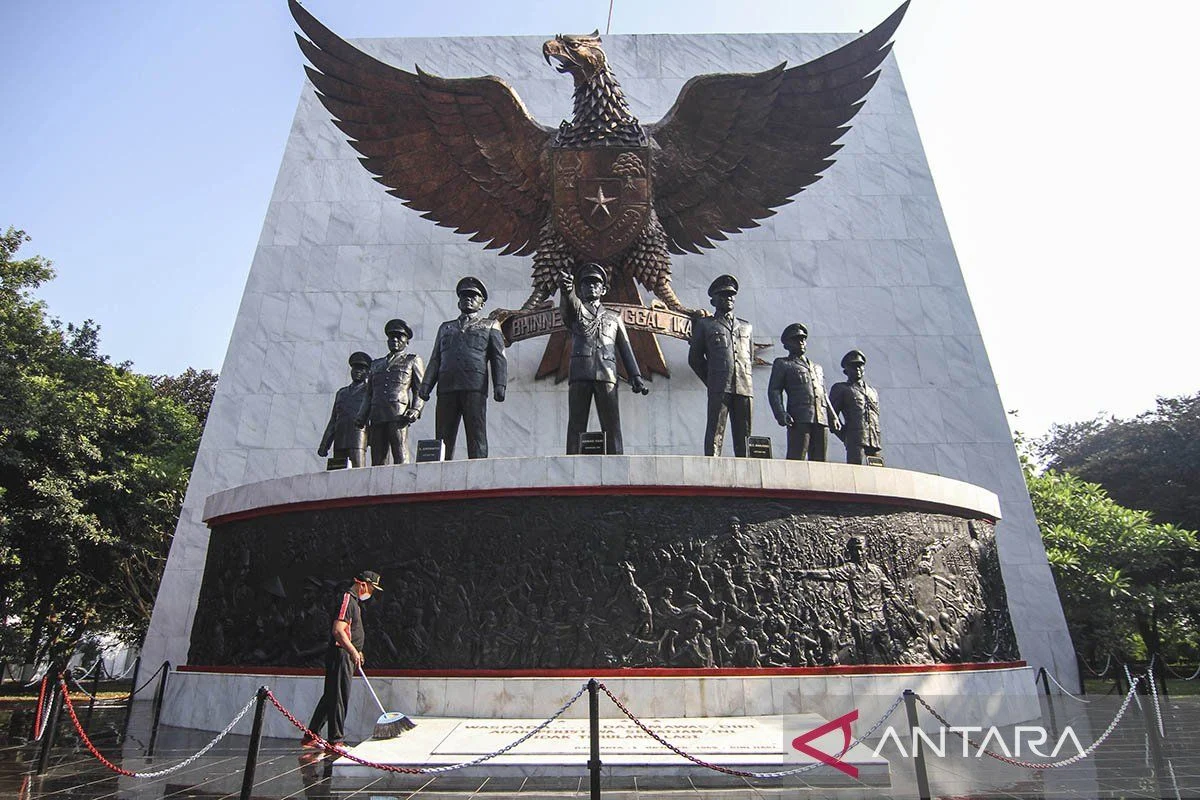
The precarious political equilibrium shattered on the night of September 30 leading into October 1, 1965. A faction within the military, calling itself the September 30 Movement (G30S) and led by Lieutenant Colonel Untung Syamsuri of the Tjakrabirawa presidential guard, orchestrated the kidnapping and assassination of six prominent Army generals and one officer. Their bodies were subsequently dumped in a disused well in the Lubang Buaya area on the outskirts of Jakarta.
The exact nature of the orchestration, the extent of institutional PKI involvement as a corporate body, and the true motivations behind the operation remain subjects of intense historical debate. The official historiography of the subsequent New Order regime under General Suharto attributed the entirety of the G30S plot to the PKI, framing it as a treasonous coup attempt. Conversely, various independent historical investigations, international archives, and academic studies have pointed to a complex confluence of internal military factionalism, intelligence machinations, and opportunistic maneuvers involving various domestic and foreign actors.
The National Commission on Human Rights (Komnas HAM) documented that the assassination of the generals served as the catalyst for an unprecedented wave of state-sponsored and vigilante violence. In the wake of the failed movement, Major General Suharto assumed operational control of the military, moving swiftly to purge the state apparatus and dismantle the communist infrastructure.
The Purge, Humanitarian Crisis, and Legal Proscription
Between late 1965 and 1966, Indonesia descended into one of the worst mass atrocities of the 20th century. Hundreds of thousands—with estimates ranging widely from 500,000 to over a million individuals—accused of being members, sympathizers, or associates of the PKI were subjected to mass extrajudicial executions, arbitrary arrests, torture, sexual violence, forced displacement, and prolonged detention without trial.
Komnas HAM later classified these systematic operations as gross human rights violations. The humanitarian fallout extended far beyond active party cadres; entire families, including spouses and children of accused individuals, faced severe social stigmatization, discrimination, loss of employment, and denial of basic civil rights for decades under the New Order administration.
Politically, the collapse of the PKI dismantled the left wing of Indonesian politics entirely. On March 12, 1966, Major General Suharto issued an executive order formally banning the PKI and its affiliated mass organizations. This presidential decree was subsequently formalized and strengthened by the Provisional People’s Consultative Assembly (MPRS) through Decree No. XXV/MPRS/1966, enacted on July 5, 1966.
This foundational legal instrument explicitly dissolved the PKI, declared it a forbidden organization throughout the territory of the Republic of Indonesia, and criminalized the dissemination, propagation, and development of Marxist, Leninist, and communist teachings. To this day, the legal strictures derived from this decree remain embedded in Indonesia’s legal framework, underlining the enduring sensitivity of the ideology in national governance.
Broader Implications and Ongoing Historical Discourse
The destruction of the PKI fundamentally altered Indonesia’s geopolitical orientation and domestic governance structure. The political vacuum created by the purge enabled General Suharto to steadily sideline President Sukarno, culminating in his official assumption of the presidency in 1968 and the institutionalization of the authoritarian New Order regime, which endured until 1998.
More than six decades after the 1965 tragedy, the events surrounding the PKI continue to resonate in contemporary Indonesian society. Discussions regarding historical transparency, archival access, and human rights reconciliation periodically surface in public discourse. In 2024, ANRI underscored the importance of opening access to multi-national archival troves—incorporating records from domestic institutions alongside those from the United States and Japan—to foster a more nuanced, comprehensive, and evidence-based historical understanding.
Ultimately, the history of the PKI is not merely a localized political narrative of rise and fall; it serves as a critical case study in the dangers of ideological polarization, the fragility of democratic institutions during times of systemic crisis, and the enduring necessity of rigorous, archival-backed historical scholarship in addressing unresolved national traumas.