The strategic decision by the Indonesian Ministry of Transportation to exempt specific logistics sectors from heavy-duty vehicle restrictions during peak holiday seasons reflects a delicate balance between traffic management and national economic stability. During the 2022/2023 Christmas and New Year (Nataru) period, the government implemented a nuanced policy regarding the operational movement of trucks with three or more axles. While general restrictions were enforced to mitigate traffic congestion—a hallmark of the holiday exodus—the Ministry of Transportation, in coordination with various ministries and relevant stakeholders, carved out critical exemptions for Bottled Drinking Water (AMDK) and export-import (exim) commodities. This policy decision highlights the prioritized nature of essential consumer goods and international trade activities within Indonesia’s broader logistics framework.
The Dynamics of Holiday Traffic Management
Traffic management during the Nataru period poses a unique challenge for Indonesian authorities. Unlike the Eid al-Fitr (Lebaran) homecoming tradition, which typically involves a massive, synchronized migration of people from urban centers to rural areas, the Christmas and New Year period is characterized by more dispersed travel patterns, including tourism-related trips and end-of-year logistics activity.
Hendro Sugiatno, who served as the Director General of Land Transportation during the 2022/2023 policy implementation, emphasized that the decision to maintain road access for specific heavy vehicles was not arbitrary. It was a product of inter-ministerial deliberations aimed at preventing supply chain disruptions. According to Sugiatno, the volume and nature of traffic during the Nataru period differ significantly from the Lebaran homecoming season, allowing for more flexible, situational policies on the ground.
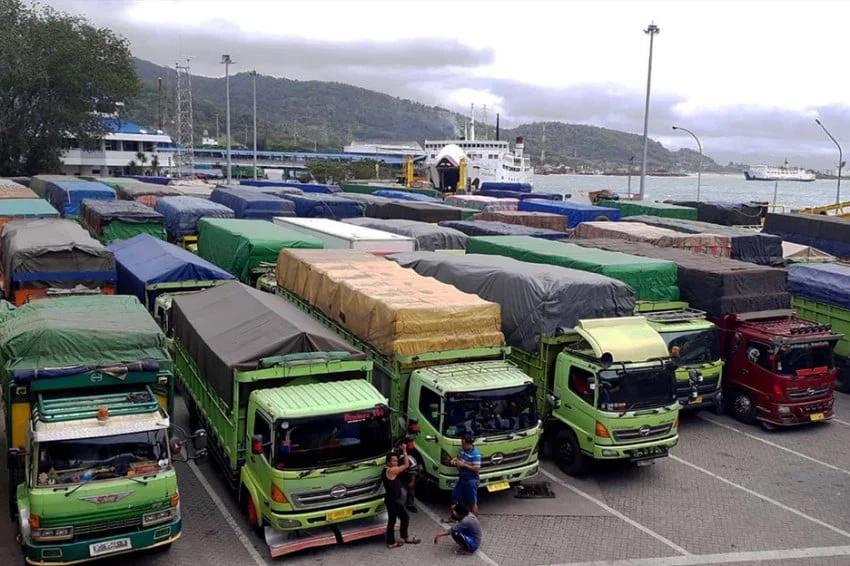
The policy allowed trucks with three or more axles—which are typically restricted during high-volume periods to reduce road wear and congestion—to continue operations if they were carrying essential goods, specifically AMDK and export-import cargo. This was supported by a situational discretionary power granted to the Indonesian National Police Traffic Corps (Korlantas), which could adjust enforcement based on real-time traffic density assessments.
Rationale Behind Exemptions: Essential Commodities and Economic Stability
The exclusion of Bottled Drinking Water (AMDK) from standard transit restrictions is rooted in the essential nature of the product. Water is a fundamental human necessity, and the demand for packaged water often surges during the year-end holidays due to increased tourism, public gatherings, and domestic travel. Ensuring the continuous flow of AMDK prevents potential localized shortages in hospitality and retail sectors.
Regarding the export-import (exim) sector, the rationale is primarily macroeconomic. The end of the fiscal year is a critical period for trade, characterized by a spike in the movement of goods entering and leaving the country. Any disruption to the flow of logistics to and from ports—such as Tanjung Priok in Jakarta or Tanjung Perak in Surabaya—can have cascading effects on Indonesia’s trade balance and international commitments. By allowing these vehicles to operate, the Ministry of Transportation aimed to ensure that global supply chain operations remained uninterrupted, preventing delays in shipment schedules that could lead to financial penalties or contractual breaches for domestic manufacturers.
Historical Context and Policy Evolution
The 2022/2023 Nataru policy serves as a benchmark for how the government navigates the tension between public mobility and industrial efficiency. Historically, the Ministry of Transportation has issued Circular Letters (Surat Edaran) prior to major holidays to outline specific technical directives for road transport. These documents define which vehicle classes are prohibited and which are permitted to operate under special conditions.
The inclusion of AMDK and exim goods in these directives did not emerge in a vacuum. It followed rigorous advocacy from industry associations, such as the Indonesian Food and Beverage Association (GAPMMI). These organizations have consistently argued that heavy-duty trucks carrying food, beverages, and export-bound raw materials are the "lifeblood" of the economy. In recent years, GAPMMI has been vocal in requesting that these exemptions be codified well in advance of the holiday season to allow for better logistics planning and reduced uncertainty for manufacturers.
Data-Driven Logistics and Traffic Flow Analysis
To understand the scale of the challenge, one must consider the volume of heavy traffic on major toll roads, such as the Trans-Java Toll Road. During the 2022/2023 period, the Indonesian government monitored thousands of vehicles daily. The decision to permit specific trucks was supported by data indicating that the movement of essential goods does not contribute to the same level of traffic stagnation as the mass transit of private vehicles.
Furthermore, the integration of technology, such as the Ministry of Transportation’s traffic monitoring systems and the use of the electronic Traffic Law Enforcement (e-TLE) system, has allowed authorities to manage the road network more precisely. Instead of a blanket ban, the shift has been toward a "targeted restriction" model, where only non-essential, heavy, or slow-moving logistics are prioritized for removal from the roads during peak hours, while critical sectors continue to function.
The Role of Inter-Ministerial Coordination
The decision-making process for these exemptions involves multiple stakeholders, including the Ministry of Transportation, the Ministry of Public Works and Housing, the Ministry of Industry, and the National Police. This collaborative approach is essential because traffic management involves not only road engineering but also trade policy and public safety.
The inter-ministerial meetings (Rapat K/L) analyze supply chain data to determine which commodities are critical for national stability. For instance, while export-import goods are prioritized to support the national GDP, AMDK is prioritized for domestic consumption stability. The result of these meetings is a set of regulations that are disseminated through various channels, ensuring that logistics companies, truck drivers, and port operators are aware of the operational windows allowed during the holiday period.
Implications for the Future of Indonesian Logistics
As Indonesia continues to develop its infrastructure, the lessons learned from the 2022/2023 holiday period remain highly relevant. The ongoing dialogue between industry bodies and government agencies regarding the 2026/2027 holiday period and beyond suggests that the government is moving toward a more predictable and transparent policy framework.
There are several broader implications of this policy:
- Economic Resilience: Maintaining the flow of exports and imports during holidays helps sustain Indonesia’s position in the global supply chain, ensuring that local businesses remain competitive.
- Operational Efficiency: By providing clear exemptions, logistics companies can optimize their fleet usage, reducing the costs associated with downtime and storage at ports.
- Infrastructure Longevity: While heavy trucks do contribute to road degradation, the policy forces a trade-off. The government appears to prioritize immediate economic health during peak holiday demand over the marginal preservation of road assets, provided that traffic flow remains manageable.
- Regulatory Certainty: The consistent push by industry stakeholders for earlier and more clearly defined regulations suggests that predictability is the primary need for the private sector. The more transparent the criteria for exemptions, the more efficiently the logistics sector can prepare.
Addressing Future Challenges
Looking forward, the challenge for the Indonesian government will be to scale this policy as traffic volume grows. With increasing vehicle ownership and expanding logistics demand, the government may eventually need to explore alternative transport modes, such as rail-based freight or enhanced maritime shipping, to reduce the reliance on road transport for heavy goods.
Until such alternatives are fully optimized, the "situational policy" approach, as described by former Dirjen Hendro Sugiatno, will likely remain the standard. This approach provides the flexibility required to respond to unexpected spikes in traffic or supply chain bottlenecks. However, it also places a significant burden on law enforcement on the ground, who must differentiate between exempt and non-exempt vehicles in real-time.
Conclusion
The exemption of AMDK and export-import commodities from holiday transit restrictions serves as a critical case study in pragmatic governance. By recognizing the essential role these goods play in both public well-being and national economic performance, the Indonesian government has demonstrated an ability to adapt its regulatory framework to the complex realities of modern supply chain logistics. As the nation prepares for future holiday seasons, the continued collaboration between industry, transport authorities, and law enforcement will be paramount in ensuring that the wheels of the economy keep turning, even amidst the busiest travel periods of the year. The evolution of these policies will ultimately serve as a barometer for Indonesia’s success in balancing infrastructure constraints with the imperative of industrial growth.