The five survivors—Captain Febri, Captain Sugand, Second Lieutenant Fercis, Private First Class Gilang, and Chief Sergeant Kadiya—are currently recuperating at the Dr. R. Soeharsono Army Hospital (RS TNI AD) in Banjarmasin, South Kalimantan. The decision to relocate the personnel follows a comprehensive medical evaluation conducted by the hospital’s trauma and recovery team. The transfer is designed to provide the survivors with access to advanced medical infrastructure and specialized rehabilitation services that will facilitate their return to duty and ensure their long-term health.
Chronology of the Incident
The Mi-17V5 helicopter, an asset of the Indonesian Army’s Aviation Center (Penerbad), was deployed to support the government’s aggressive campaign against forest and land fires (karhutla) in Central Kalimantan. On Wednesday, November 4, the aircraft was executing a water-bombing mission when it encountered a catastrophic mechanical or environmental failure, leading to a crash in a remote sector of the province.
The mission was part of a larger, inter-agency effort to mitigate the environmental and economic impact of forest fires, which frequently plague the region during the dry season. Shortly after communication with the aircraft was lost, a search and rescue (SAR) operation was launched. Rescuers navigated challenging terrain to reach the crash site, eventually confirming the loss of three crew members and the survival of five others.
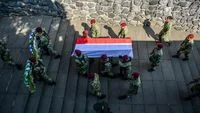
The three fallen soldiers, who were posthumously honored for their service, have been identified as Lieutenant Colonel (posthumous) Dudi Firmansyah, Captain (posthumous) Nurhafiz Akbar, and Sergeant (posthumous) Heri Prasetyo. Their sacrifice highlights the immense dangers faced by aerial crews during high-stakes fire suppression operations.
Medical Assessment and Recovery
Upon their arrival at the Dr. R. Soeharsono Army Hospital, the five survivors were initially in a state of physical exhaustion and shock. Dr. Leidina Rachmadian, the Head of the Hospital, confirmed that the medical team conducted a rigorous diagnostic protocol, including hematological testing and comprehensive radiological imaging (X-rays).
"When we first admitted the patients, they were in a state of significant fatigue, and their clinical condition necessitated immediate, intensive monitoring," Dr. Rachmadian stated. "We conducted a full-body scan and blood analysis. We are pleased to report that, despite the intensity of the crash, none of the survivors sustained bone fractures. Their condition has stabilized significantly over the past 48 hours, though they require continued medical oversight to address residual trauma and fatigue."
The planned transfer to Jakarta and Semarang marks a transition from emergency trauma care to long-term recuperative therapy. Minister of Forestry Raja Juli Antoni visited the facility on Friday, November 6, to offer his personal gratitude to the survivors and to inspect the medical arrangements being made for their relocation.
The Strategic Importance of Mi-17V5 in Fire Suppression
The Mil Mi-17V5 is a versatile Russian-made transport helicopter widely utilized by the Indonesian military for its ruggedness and payload capacity. In the context of Indonesia’s annual forest fire management, these aircraft serve as the backbone of water-bombing operations. Their ability to operate in austere environments—often flying low over dense, smoke-filled, and thermally unstable forests—makes them essential for reaching fire fronts that are inaccessible to ground crews.
However, the nature of these operations carries an inherently high risk. The "karhutla" season in Indonesia often involves flying through "smoke haze" which reduces visibility, creates unpredictable wind shear, and subjects the airframes to intense heat. Data from the Ministry of Environment and Forestry indicates that aerial support has historically been the most effective tool in containing large-scale fires before they spread to critical infrastructure or protected peatland zones.
Broader Implications and Safety Protocols
The loss of the Mi-17V5 and its crew has triggered a mandatory safety review within the Indonesian Army’s aviation units. Military analysts suggest that the incident will likely lead to a temporary pause in non-essential aerial missions to facilitate a fleet-wide technical audit.
Beyond the technical investigation, the incident has reignited national discourse regarding the safety of pilots and ground crews who risk their lives annually to combat wildfires. The government’s reliance on aerial suppression is a necessity dictated by the scale of the fires, but the recurring nature of these accidents has prompted calls for increased investment in advanced navigational systems, more frequent aircraft maintenance cycles, and enhanced pilot training specifically tailored for low-altitude fire-fighting maneuvers in turbulent conditions.
"The government remains committed to the protection of our natural resources, but the safety of our personnel remains the absolute priority," said an official spokesperson familiar with the matter. "Every lesson learned from this tragedy will be integrated into our Standard Operating Procedures (SOPs) for future fire-suppression missions."
Support and National Recognition
The tragic loss of the three crew members and the injuries sustained by the survivors have drawn an outpouring of support from across the country. The Indonesian Armed Forces (TNI) have pledged full support for the families of the fallen and the recovery process for the survivors.
Minister Raja Juli Antoni’s visit to the hospital was not merely a ceremonial gesture; it served to underscore the government’s appreciation for the high-risk work performed by these soldiers. "Their dedication to duty in the face of such adversity is a testament to the professionalism of our military," the Minister noted in his written statement. "We are ensuring that the survivors receive the best care available in our national medical system."
Future Outlook
As the investigation into the specific cause of the crash—whether due to technical malfunction, human error, or adverse weather conditions—continues, the focus remains on the well-being of the survivors. The transfer to Jakarta and Semarang will allow the crew members to reunite with their families and undergo specialized psychological and physical therapy.
For the aviation branch of the military, the path forward involves a delicate balance between maintaining operational readiness for fire suppression and ensuring that the men and women tasked with these missions are equipped with the safest possible technology and protocols. The incident serves as a sobering reminder of the high price paid by those standing on the front lines of environmental protection in Indonesia.
As of the latest reports, the survivors remain in stable condition and are expected to be transferred within the coming days, contingent upon final medical clearance from the team in Banjarmasin. The public and military leadership alike continue to monitor the situation, with many offering tributes to the courage displayed by the crew in their final, and successful, attempts to contain the devastating forest fires of Central Kalimantan.