The Indonesian energy sector reached a significant milestone on Friday, November 6, 2026, as the Ministry of Energy and Mineral Resources (ESDM) and the Special Task Force for Upstream Oil and Gas Business Activities (SKK Migas) were honored with prestigious accolades at the CNN Indonesia Awards 2026. Held at the Hotel JW Marriott in Jakarta, the ceremony recognized the government’s aggressive push toward high-value industrial downstreaming and the successful acceleration of national energy projects. These awards serve as a testament to the strategic shifts currently reshaping Indonesia’s economic landscape, moving the nation away from raw commodity exports toward a more sophisticated, value-added industrial economy.
Strategic Leadership in the Era of Downstreaming
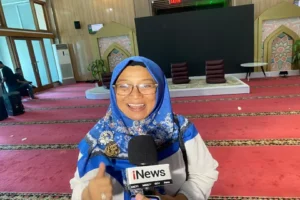
The centerpiece of the evening was the award for "Strategic Leadership in High-Value Downstreaming & Energy Transition," presented to Minister of Coordinating Ministry for Downstreaming and Energy Transition and Minister of ESDM, Bahlil Lahadalia. The award was received on his behalf by the Ministry of ESDM’s Spokesperson, Dwi Anggia, and presented by the Director of Transmedia CNN Indonesia, Latif Harnoko.
This recognition highlights Bahlil’s tenure in steering the national agenda toward "value-added downstreaming." The core philosophy championed by his ministry is that Indonesia’s natural resources—ranging from nickel and copper to bauxite—must not merely be exported as semi-processed goods. Instead, they must be integrated into a complex domestic supply chain that supports the global transition to green energy, particularly through the production of electric vehicle (EV) batteries, high-grade chemicals, and sustainable energy components.
Chronology of Recent Energy Milestones
The awards were not conferred in isolation but were the result of a series of accelerated achievements throughout 2026. The ministry’s recent performance has been characterized by its ability to clear bureaucratic bottlenecks and expedite long-stalled infrastructure projects.
- October 2026: The Ministry officially launched 11 major downstreaming projects with a cumulative investment value of approximately Rp180 trillion. These projects span various regions, aiming to stimulate regional economic growth while enhancing the country’s manufacturing capacity.
- Late 2026 (Pre-Award Period): Indonesia witnessed the historic first export of locally produced electric vehicle batteries. This marked the fulfillment of a long-standing national ambition to move up the global battery supply chain, transitioning from a mere supplier of raw nickel ore to a producer of high-tech energy storage components.
- Q3-Q4 2026: The Abadi Masela LNG project, a cornerstone of Indonesia’s upstream gas strategy, saw its initial design phase finalized ahead of the projected schedule. This development is expected to significantly boost national gas production capacity and ensure energy security for the coming decade.
Data-Driven Progress in the Energy Sector
The strategic importance of these initiatives is supported by robust data. The move toward downstreaming is not merely a political slogan but a structural necessity to mitigate the volatility of raw commodity price cycles. By shifting toward high-value manufacturing, the government aims to increase the fiscal contribution of the mining and energy sectors.
The Rp180 trillion investment in the 11 recent projects represents a massive injection of capital into the domestic industrial ecosystem. These projects are strategically located to optimize logistics and leverage local labor, thereby addressing the persistent issue of unemployment in regions rich in natural resources. Furthermore, the acceleration of the Abadi Masela project is vital for the national gas output targets. Current projections suggest that as these projects reach full operational capacity, Indonesia will significantly reduce its reliance on imported refined petroleum products and LNG, potentially improving the national trade balance by billions of dollars annually.
Institutional Responses and Official Stance
During the awards ceremony, the Ministry of ESDM emphasized the collaborative nature of these successes. Dwi Anggia, representing Minister Bahlil, reiterated that the awards belong to the entire apparatus of the Ministry and its partner institutions, such as SKK Migas.

"The directive from the Minister is clear and unwavering," Anggia stated. "Hilirisasi (downstreaming) must not stop at semi-finished products. Our ultimate goal is the creation of a high-value industrial ecosystem that generates significant employment opportunities and strengthens our national energy independence. These projects are the building blocks of a future where Indonesia is a major player in the global energy transition, not just a bystander."
The role of SKK Migas has been equally critical. As the institution tasked with supervising the upstream oil and gas industry, their ability to manage the complexities of projects like Abadi Masela under tight deadlines has been pivotal. Their work ensures that the fiscal targets set by the government are met while maintaining international standards for safety and environmental protection in extractive activities.
The Broader Implications for Indonesia’s Economy
The success of these initiatives carries significant implications for Indonesia’s macro-economic outlook. First, the move toward EV battery production positions Indonesia as a strategic partner for global automotive manufacturers looking to diversify their supply chains away from a single source. As the world transitions toward electric mobility, Indonesia’s ability to provide processed battery materials domestically offers a unique competitive advantage.
Second, the focus on "Energy Transition" indicates a dual-track strategy. While the country continues to utilize its hydrocarbon reserves, it is simultaneously investing in the infrastructure needed to support renewable energy. The integration of gas projects like Masela into the energy mix provides a "bridge fuel" that allows for a smoother transition to cleaner energy sources.
Third, the administrative efficiency demonstrated in the 11 projects launched in October suggests a shift in the regulatory environment. The "coordination across ministries" mentioned in the award criteria points to a successful inter-agency effort, which is often the most significant hurdle for large-scale infrastructure projects in Indonesia. By aligning the policies of the Ministry of ESDM with those of the Ministry of Investment and regional governments, the state has managed to reduce the "cost of doing business" for major energy players.
Future Challenges and Sustainability Concerns
Despite the optimism surrounding these awards, experts point out that the path forward remains challenging. The sustainability of downstreaming depends on several factors, including the availability of affordable and green electricity to power processing plants, the stability of the global investment climate, and the continuous development of human capital.
Environmentalists and policy analysts have also emphasized the importance of ensuring that this rapid industrialization does not come at the expense of ecological integrity. As the government continues to push for faster project completion, the rigorous implementation of Environmental, Social, and Governance (ESG) standards will be the true test of the sustainability of this "high-value" vision.
In conclusion, the recognition of the Ministry of ESDM and SKK Migas at the CNN Indonesia Awards 2026 marks a pivotal moment in the nation’s economic narrative. By successfully transitioning from a raw material exporter to an industrial powerhouse, Indonesia is signaling its intent to capture a larger share of the global value chain. The challenge ahead will be to maintain this momentum, ensuring that the fruits of these massive investments are shared equitably and that the energy transition remains both effective and environmentally responsible. The achievements of 2026 have set a high bar, and the upcoming years will likely see the implementation of even more complex projects as the nation seeks to solidify its position as a key player in the global energy market.