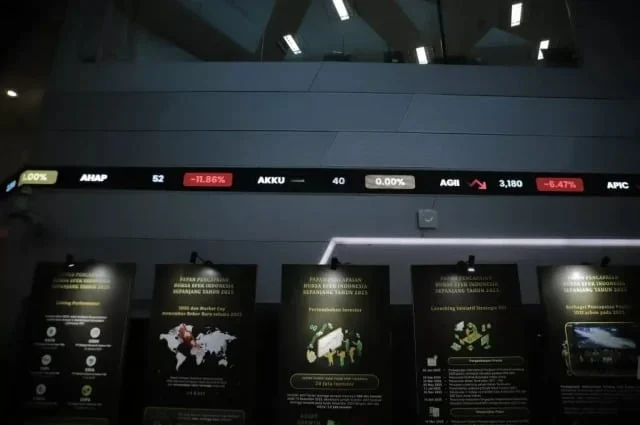
The Indonesia Composite Index (IHSG) experienced a notable decline during the opening session of Friday, November 6, 2026, dropping 1.48% to reach the 4,955 level. This downward trajectory reflected a broader sentiment of caution among investors, as selling pressure permeated nearly every sector of the stock market. The early trading session was characterized by a sea of red, with a significant majority of listed companies recording losses, signaling a shift in momentum compared to the bullish performance observed in the previous trading day.
Market Performance and Initial Trading Dynamics
Within the first sixty seconds of the opening bell, the index had already retracted by 1.40% to 4,960. Market breadth was decisively negative, with 465 stocks trading in the red, while only 86 managed to maintain an upward trajectory. Meanwhile, 412 stocks remained stagnant, reflecting a period of price discovery as investors recalibrated their portfolios.
The volume of activity during these initial minutes was substantial, with a transaction value reaching Rp513 billion and a total volume of 2.1 billion shares exchanged. This level of early turnover suggests that institutional players and retail participants alike were actively adjusting their positions, likely reacting to regional market cues or domestic economic indicators that emerged overnight.
The decline was not isolated to the main index but was mirrored across several prominent market benchmarks. The LQ45 index, which tracks the 45 most liquid stocks on the Indonesia Stock Exchange (IDX), saw a contraction of 1.16% to 507. Similarly, the Jakarta Islamic Index (JII), a barometer for Sharia-compliant equities, experienced a steeper drop of 2% to 284. Other key indices followed suit, with the MNC36 index sliding 1.23% to 224 and the IDX30 index falling 1.08% to 286.
Contextualizing the Market Reversal
To understand the severity of this morning’s movement, one must look at the preceding trading session. On Thursday, November 5, 2026, the IHSG demonstrated a robust performance, jumping 2.25% to close at 5,030. That session saw a total transaction value of Rp9.8 trillion, a figure that highlights a period of high confidence that preceded the current, more volatile environment.
The abrupt pivot from a gain of over 2% to a significant opening loss suggests that the market is struggling with a lack of sustained positive catalysts. Financial analysts often point to the "overnight effect," where global market movements in the United States and European exchanges significantly influence the opening behavior of the Jakarta market. Given the volatility inherent in global commodity prices and fluctuating interest rate expectations, the IHSG remains susceptible to rapid shifts in sentiment.
Factors Influencing Investor Sentiment
Several macroeconomic factors are likely contributing to the current bearish sentiment. First, global inflationary pressures continue to be a primary concern for emerging markets. As central banks worldwide balance the need for economic stimulation with the imperative to curb inflation, capital flows often become unpredictable.
Second, the performance of the rupiah against the US dollar remains a critical metric for domestic investors. Any significant weakening of the local currency tends to trigger capital flight from the equity market, as foreign investors seek safer havens or higher yields in dollar-denominated assets.
Third, domestic sectoral performance, particularly in the banking and energy sectors—which carry significant weight in the IHSG—often dictates the overall direction of the index. If bellwether stocks in the banking sector show signs of margin compression or if energy companies face headwinds from fluctuating global oil and coal prices, the index is almost certain to face downward pressure.
Institutional and Market Reactions
While official statements from the Indonesia Stock Exchange (IDX) regarding specific daily fluctuations are typically reserved for end-of-day reports, market participants have noted that the current volatility is consistent with a period of "macro-readjustment." Analysts suggest that the market is currently in a phase where it is testing the strength of the 4,900 support level. If the index fails to hold this floor, further technical selling could be expected.
Investment managers have advised retail investors to maintain a long-term perspective. Despite the sharp morning decline, the index remains within a range that many analysts describe as "consolidative." The strategy favored by many institutional players during such sessions is to focus on defensive stocks—those with strong cash flows and lower debt-to-equity ratios—which are generally more resilient during broader market downturns.
Broader Economic Implications
The volatility observed on this Friday morning serves as a reminder of the challenges facing the Indonesian economy in the final quarter of 2026. While the previous day’s gains indicated a level of optimism, the quick reversal suggests that investors are not yet convinced of a sustained recovery.
The implications for the broader economy are multifaceted. A sustained decline in the IHSG can impact corporate financing costs, as equity funding becomes more expensive or less attractive. Furthermore, consumer sentiment, which is often linked to the performance of the stock market through wealth effects, may be dampened if the index continues to languish below the 5,000 mark.
The government and the Financial Services Authority (OJK) continue to monitor these developments closely. Policy interventions, such as adjustments to stock buyback regulations or fiscal stimuli, remain tools that can be deployed if the market volatility begins to threaten the stability of the financial system at large.
A Look Ahead: Technical Outlook
From a technical perspective, the IHSG’s drop below the 5,000 psychological barrier is a significant event. Traders are now watching to see if the index can recover during the midday session or if the afternoon will see further profit-taking. A recovery would require a concerted effort from blue-chip stocks, particularly in the financial and consumer goods sectors, to draw the index back into positive territory.
Conversely, if the downward momentum persists, the next major support level to watch will be around the 4,900 mark. The volume of trading for the remainder of the day will be a key indicator; high volume on a downward move would suggest a strong consensus among sellers, whereas low volume could indicate that the current dip is merely a temporary correction.
Conclusion and Summary of Market Data
In summary, the trading session on Friday, November 6, 2026, began under significant duress. The 1.48% decline in the IHSG to 4,955 reflects a broad-based retreat across all sectors, reversing much of the gains recorded on the previous day. With 465 stocks declining and a strong initial transaction volume of Rp513 billion, the market is currently in a state of high alert.
The performance of secondary indices—LQ45, JII, MNC36, and IDX30—confirms that the selling is not limited to small-cap stocks but is affecting the largest and most liquid components of the Indonesian market. As the day progresses, investors will be looking for signs of stabilization or further deterioration, with the 4,900 support level serving as the critical threshold for the week’s final session.
The events of this morning highlight the inherent volatility of the Indonesian market and the ongoing sensitivity of investors to both domestic and international macroeconomic signals. As the market matures, the role of institutional investors in stabilizing the index becomes increasingly vital, particularly during periods of panic selling or rapid market corrections. For now, market participants are encouraged to exercise caution and monitor for official updates or significant shifts in volume that may indicate a reversal in sentiment.
As the trading day continues, the focus will remain on whether the index can reclaim its lost ground. For investors, the takeaway from this morning’s session is clear: market sentiment remains fragile, and the path to recovery will likely require more than just short-term buying to sustain the index above the 5,000 level. The current data serves as a sobering reminder of the importance of risk management in a volatile global financial environment.
This morning’s decline represents a test of resilience for the Indonesian capital market. While the opening was undoubtedly difficult, the market has shown a history of volatility followed by rapid recovery in the past. Whether this Friday will end as a correction or the beginning of a sustained downturn remains a point of intense speculation among market analysts and stakeholders alike. With the market moving into the mid-day session, all eyes will be on the price action of the banking sector, as their recovery is essential for any potential rebound in the afternoon.