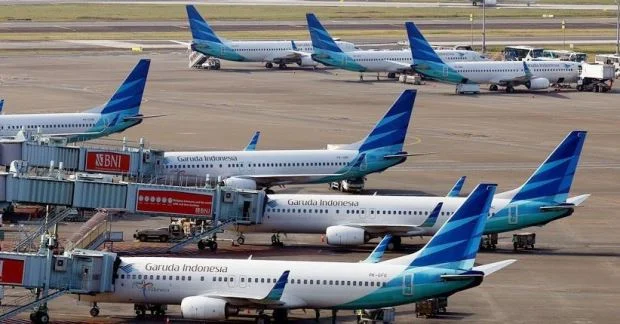
PT Garuda Indonesia (Persero) Tbk, alongside its low-cost subsidiary Citilink, has officially announced a comprehensive operational readiness plan for the upcoming peak travel season. The airline group has prepared a massive seating capacity of up to 1 million flight seats to accommodate public mobility during the critical Christmas 2026 and New Year 2027 (Nataru) holiday period. This strategic rollout is coupled with a projected ticket price reduction ranging between 11 to 12 percent, directly enabled by a targeted government transportation stimulus package aimed at easing the financial burden on travelers while stimulating the national tourism and aviation ecosystems.
The announcement comes as the Indonesian government finalizes broader fiscal interventions to support the domestic transportation sector during one of the country’s busiest travel windows. With families preparing for holiday migrations, reunions, and tourism excursions across the archipelago, the dual strategy of expanded seat capacity and reduced fare pricing is expected to significantly stabilize the domestic aviation market.
Strategic Capacity Deployment for the Peak Holiday Season
The deployment of up to 1 million seats by the Garuda Indonesia Group is specifically tailored to meet the surging travel demands spanning a twenty-day operational window. According to the operational roadmap, this enhanced capacity will be actively deployed from December 22, 2026, through January 10, 2027. This timeframe captures the pre-Christmas exodus, the Christmas holiday weekend, the subsequent New Year celebrations, and the concluding return migration wave as schools and workplaces prepare to resume normal schedules in mid-January.
Micky Irfandi, Vice President of Global Sales & Distribution at Garuda Indonesia, detailed the operational alignment during an official corporate briefing in Jakarta. He emphasized that the meticulous planning of these 1 million seats—distributed strategically across the full-service network of Garuda Indonesia and the budget-friendly routes of Citilink—is entirely synchronized with recent national policy frameworks.
"Through this policy implementation, flight ticket prices are projected to decrease by approximately 11 to 12 percent, with the exact adjustment magnitude aligned with prevailing regulatory frameworks and operational parameters," Irfandi stated.
The dual-brand approach ensures that diverse segments of the traveling public are adequately served. Garuda Indonesia will continue to cater to passengers seeking premium full-service amenities across major trunk routes and key domestic economic hubs, while Citilink will absorb a high volume of leisure and budget-conscious travelers heading toward secondary cities and regional tourism destinations.
Government Intervention and the Mechanics of the Price Reduction
The anticipated 11 to 12 percent drop in airfares is not merely a corporate promotional discount, but the direct result of a structural government intervention designed to revitalize the domestic aviation and tourism sectors. The fiscal stimulus package is multi-layered, focusing on relieving the heavy tax and operational cost burdens traditionally shouldered by airlines, which are subsequently passed down to consumers.
At the core of this stimulus is the Government-Borne Value-Added Tax (PPN DTP) policy, which absorbs the standard 11 percent value-added tax on domestic economy class flights. By eliminating this tax component for the end consumer, a substantial portion of the ticket price deflation is instantly realized.
Furthermore, the policy framework incorporates a 50 percent reduction on specific airport service fees and aeronautical charges levied by airport operators. These operational relief measures target landing, parking, and passenger service charges (PSC) at designated airports across Indonesia. Because high operating costs—particularly aviation turbine fuel and airport handling fees—have historically kept domestic airfares elevated, this targeted reduction in airport fees provides airlines with the necessary margin flexibility to lower ticket prices without compromising safety, maintenance, or operational standards.
Aviation industry analysts have noted that these dual mechanisms—the PPN DTP and airport fee cuts—directly address the structural friction points that have hindered domestic air travel affordability in recent years. By lowering the baseline cost of operations, the government has created a viable pathway for airlines to scale up capacity while maintaining accessible price points for the general public.
Background Context: Navigating Post-Pandemic Recovery and Seasonal Surges

The announcement by Garuda Indonesia and Citilink arrives against the backdrop of a steadily recovering, yet operationally complex, Indonesian aviation landscape. In the years following global travel restrictions, airlines worldwide have faced continuous pressures, including fluctuating global jet fuel prices, supply chain bottlenecks for aircraft spare parts, and macroeconomic shifts affecting currency exchange rates.
During peak holiday seasons such as Christmas and New Year, these pressures historically translated into surging ticket prices due to a sharp imbalance between high consumer demand and constrained fleet availability. In response, the Indonesian government has increasingly stepped in during major holiday windows—such as Eid al-Fitr and Nataru—to implement temporary policy adjustments that protect consumer purchasing power and support equitable regional mobility.
For Garuda Indonesia, the Nataru operational readiness plan also represents a crucial milestone in the airline’s ongoing financial and operational restructuring. Having successfully navigated extensive debt restructuring processes in recent years, the national flag carrier has focused on prudent capacity management, route optimization, and strengthening domestic market dominance. Partnering with Citilink allows the group to capture market share across both premium and low-cost segments efficiently, maximizing fleet utilization during high-demand periods.
Chronology of the Holiday Travel Initiative
The unfolding of the 2026-2027 Nataru travel preparation follows a structured timeline involving regulatory coordination, airline operational planning, and public disclosure:
- Early November 2026: Government ministries, including the Ministry of Transportation and the Ministry of Finance, finalize the parameters of the transportation stimulus package, detailing the application of the PPN DTP for domestic economy flights and airport fee adjustments.
- November 9, 2026: Garuda Indonesia officially announces its operational readiness plan, revealing the 1-million-seat capacity target and confirming the projected 11 to 12 percent ticket price reduction resulting from the government stimulus.
- Mid-November to Mid-December 2026: Both Garuda Indonesia and Citilink open comprehensive booking windows, adjusting flight frequencies, deploying wide-body aircraft on high-density routes, and coordinating ground handling operations to manage the anticipated surge in passenger traffic.
- December 22, 2026: Official commencement of the Nataru peak travel period, marking the activation of the 1 million seats across the combined airline networks.
- January 10, 2027: Conclusion of the peak holiday travel window, followed by operational evaluations and reporting on traffic volume and stimulus effectiveness.
Implications for Passengers, Tourism, and the National Economy
The implementation of this coordinated capacity expansion and fare reduction carries profound implications across multiple sectors of the Indonesian economy.
First and foremost, for everyday travelers, the reduction in ticket prices removes a significant financial barrier that often limits holiday mobility. Families separated by geographic distances can plan reunions more affordably, while domestic tourists are incentivized to explore cultural and natural destinations across the archipelago rather than seeking costly alternative international itineraries.
Second, the tourism sector stands to gain immensely from the influx of accessible domestic air capacity. Regions heavily reliant on tourism revenue—such as Bali, Yogyakarta, Lombok, North Sumatra, and parts of Eastern Indonesia—frequently experience spikes in economic activity during the Nataru season. By ensuring that flights remain affordable and widely available, the initiative supports hotel occupancy rates, local culinary businesses, transportation providers, and micro, small, and medium enterprises (MSMEs) operating within regional tourism ecosystems.
Third, from a macroeconomic perspective, the policy reflects a successful model of public-private synergy. By absorbing specific tax burdens and reducing airport fees, the government acts as a catalyst for consumer spending velocity during a critical retail and travel quarter. This targeted intervention helps stimulate gross domestic product (GDP) growth through increased domestic consumption and sectoral multiplier effects.
Operational Guidelines and Traveler Recommendations
As the December 22 travel commencement date approaches, aviation authorities and airline management have issued several advisory points for passengers planning to utilize the Garuda Indonesia and Citilink networks during the Nataru season:
- Early Booking and Reservation: Despite the substantial increase to 1 million seats, high-demand routes leading to major tourist and cultural hubs are expected to experience rapid booking velocities. Passengers are strongly encouraged to secure their tickets well in advance through official airline channels, mobile applications, or authorized travel partners.
- Verification of Stimulus Application: Travelers should ensure that the flights selected qualify under the domestic economy class criteria stipulated by the PPN DTP guidelines to fully benefit from the projected price adjustments.
- Compliance with Safety and Security Protocols: Given the high volume of passenger movement across all major Indonesian airports during this peak window, travelers are advised to arrive at departure terminals significantly ahead of scheduled boarding times—typically two hours for domestic flights—to accommodate security screening and check-in procedures smoothly.
- Digital Integration: Both Garuda Indonesia and Citilink have updated their digital ecosystems to facilitate seamless check-in, real-time flight status tracking, and customer support inquiries, minimizing physical queues at airport service counters.
Conclusion
The proactive alignment between Garuda Indonesia, Citilink, and the Indonesian government in preparing 1 million seats and implementing targeted fiscal stimulus for the 2026-2027 Christmas and New Year holidays underscores a concerted commitment to public accessibility, economic vitality, and operational excellence. By addressing the fundamental cost drivers of air travel through strategic tax relief and airport fee adjustments, the aviation sector is well-positioned to deliver a seamless, affordable, and robust holiday travel experience for millions of citizens across the nation.