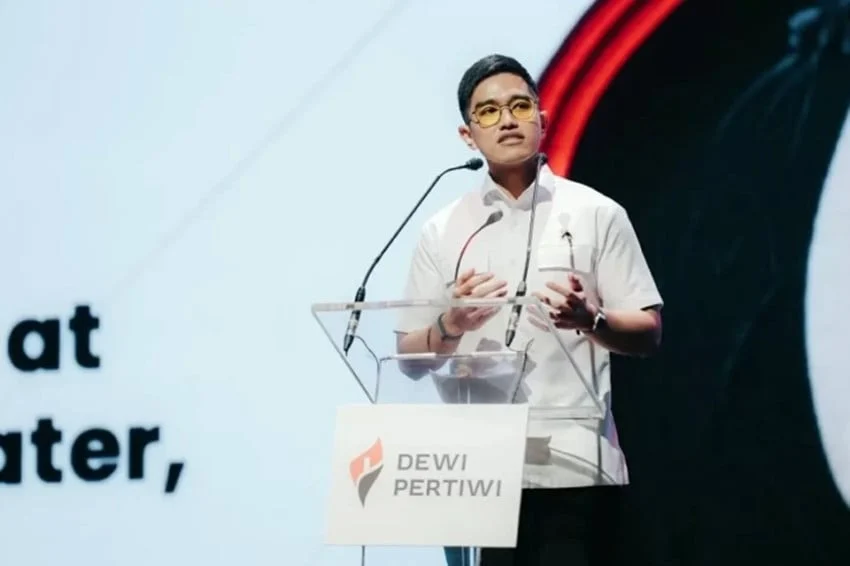
Jakarta — In a significant political development reflecting the intersection of party loyalty and governmental responsibility, Chairman of the Indonesian Solidarity Party (PSI) Central Executive Board (DPP), Kaesang Pangarep, officially announced the acceptance of resignation letters from three prominent party figures. The departures involve high-profile cadres who currently hold strategic positions within the national administration: Minister of Forestry Raja Juli Antoni, Deputy Minister of Culture Giring Ganesha, and Deputy Minister of Population and Family Development Isyana Bagoes Oka.
The announcement, delivered by Kaesang Pangarep in Jakarta on Monday, November 9, 2026, marks a pivotal moment for the young, progressive political party. As these senior figures transition to full-time focus on their ministerial and governmental duties under the Red and White Cabinet (Kabinet Merah Putih), the leadership of PSI faces a structural realignment. The move underscores an institutional ethos prioritizing state service above partisan ambitions, setting a distinct precedent for political ethics in contemporary Indonesian governance.
Background Context of the Resignations
The departure of Raja Juli Antoni, Giring Ganesha, and Isyana Bagoes Oka from their respective structural positions within PSI—where Raja Juli served as Secretary-General and Isyana as Deputy Chairperson of the DPP—did not come as an absolute surprise to political observers, though the formalization of their exits marks the end of an era for the party.
PSI, founded in 2014, has long positioned itself as a modern, transparent party appealing heavily to urban youth and progressive demographics. Raja Juli Antoni has been a foundational pillar of the party, instrumental in steering its administrative and political strategy through multiple electoral cycles. Giring Ganesha, a former popular musician turned politician, previously served as the acting chairman of the party before transitioning into high-profile national campaigning and eventually securing a prominent executive role in the cultural sector. Isyana Bagoes Oka, a former prominent television journalist, helped shape the party’s public relations, social welfare campaigns, and women’s empowerment agendas before ascending to the legislative and executive spheres.
Following the formation of the Red and White Cabinet, these three figures were appointed to critical executive portfolios. As their administrative responsibilities expanded—managing massive state apparatuses, tackling complex environmental and forestry challenges, revitalizing national culture, and addressing demographic shifts—balancing dual roles as active party executives and high-ranking government officials became increasingly untenable.
Chronology of the Executive Departures
The structural shift within the PSI leadership evolved progressively over several months following the establishment of the current administration.
Initially, as cabinet appointments were finalized, discussions arose regarding the potential conflict of interest and the physical demands placed upon political figures holding executive state power while simultaneously managing political parties. The discourse intensified as national policy implementation accelerated under the Red and White Cabinet.
The sequence of formal exits began gaining momentum when Giring Ganesha and Raja Juli Antoni initiated discussions with the party’s internal council regarding their need to step back from daily partisan management. The process culminated with Isyana Bagoes Oka similarly submitting her formal resignation from the DPP structure.
By Monday, November 9, 2026, the administrative review concluded when Kaesang Pangarep officially endorsed and accepted their resignations in an official statement released to the media. Kaesang emphasized that the decision was arrived at mutually, with the primary objective of ensuring that state apparatuses function with absolute dedication, unburdened by concurrent political party management responsibilities.
Official Statements and Party Perspective
In his official briefing, Kaesang Pangarep articulated a clear philosophical stance regarding the relationship between political affiliation and national duty. He stressed that the demands of governing the nation require undivided attention, particularly given the magnitude of the portfolios held by the departing members.
"The DPP PSI has received the resignation letters of Brother Raja Juli Antoni, Isyana Bagoes Oka, and Giring Ganesha," Kaesang stated. He further elaborated on the rationale behind accepting their departures, noting that the party maintains a steadfast belief in national primacy over factional interests. "We hold the view that the duties of service to the state stand far above the interests of any group or party."
Addressing the future trajectories of the former cadres, Kaesang conveyed the party’s profound gratitude for their years of foundational labor, institutional building, and electoral campaigning. The leadership expressed formal appreciation for their dedication and sacrifice during the formative years of PSI.
"We also pray that the three of them can become increasingly focused on carrying out their state duties and providing the best service to the people of Indonesia," Kaesang added, signaling an amicable parting of ways on an organizational level while maintaining strong ideological and personal ties.
Broader Impact and Political Implications
The departure of Raja Juli Antoni, Giring Ganesha, and Isyana Bagoes Oka from the PSI central board carries several strategic implications for the party’s future trajectory, organizational stability, and standing within the broader Indonesian political landscape.
First, from an institutional governance perspective, the move mitigates potential criticisms regarding conflicts of interest. In modern Indonesian politics, cabinet ministers holding concurrent executive leadership positions within political parties have occasionally faced public scrutiny regarding potential partisan bias in policy execution. By stepping down from their party posts, Raja Juli, Giring, and Isyana insulate themselves—and by extension, the Red and White Cabinet—from such perceptions, reinforcing the principle of professionalized public administration.
Second, for PSI as an organization, these resignations necessitate a generational handover and internal reorganization. With senior figures stepping away from day-to-day management to focus on state affairs, a window opens for a new tier of emerging leaders to step into prominent roles. This transition tests the institutional depth of PSI, determining whether the party can maintain its ideological coherence and structural momentum without its founding generation of administrators at the helm of the central executive board.
Third, the development highlights a cooperative relationship between PSI and the ruling administration. By gracefully releasing its top cadres to serve the state, PSI demonstrates alignment with national development goals, positioning itself as a constructive partner in governance rather than an insular political entity focused solely on partisan expansion.
As PSI prepares to restructure its central board to fill the vacancies left by these departures, political analysts will be closely watching how the party navigates this transition. The ability of Kaesang Pangarep to steer the organization through this period of structural adjustment will serve as a key indicator of PSI’s political maturity and long-term viability as a permanent fixture in Indonesia’s democratic ecosystem. Meanwhile, the nation will observe how Raja Juli Antoni, Giring Ganesha, and Isyana Bagoes Oka execute their heavy ministerial responsibilities now that their administrative focus is entirely dedicated to the service of the Indonesian public.