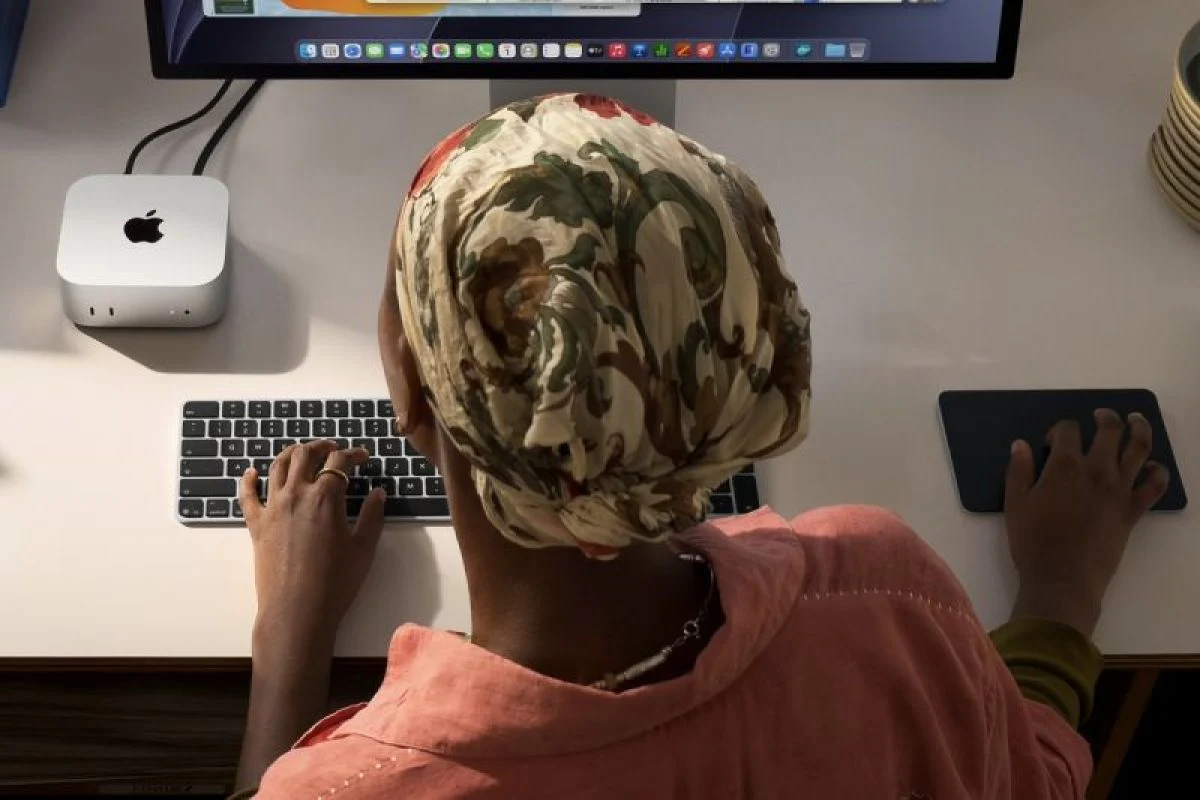
The landscape of professional desktop computing shifted significantly on August 25, 2026, when Apple unveiled its latest iteration of the Mac mini, powered by the cutting-edge M6 silicon. This release represents a pivotal moment in Apple’s hardware strategy, balancing the constraints of a compact, space-saving form factor with the aggressive computational demands of modern artificial intelligence and high-fidelity media production. As the industry moves toward deeper integration of on-device AI, the M6-powered Mac mini positions itself as a central hub for power users, developers, and creative professionals who require localized processing power without the bulk of traditional tower workstations.
The Evolution of the Apple Silicon Roadmap
To understand the impact of the Mac mini M6, one must contextualize the trajectory of Apple’s custom silicon transition. Since the introduction of the M1 chip in 2020, Apple has moved steadily toward total vertical integration of its hardware and software. The M4 generation, released previously, established a high bar for efficiency. However, the M6 arrives at a time when the market demand for "AI-ready" hardware has reached a fever pitch.
The rollout of the M6 series occurred in tandem with the M5 Pro variants, signaling a tiered approach to the professional market. While the M5 Pro addresses the needs of high-end creative studios, the standard M6 is designed to bring elite performance to the broader enterprise and prosumer demographic. Industry analysts have noted that the 40 percent improvement in CPU performance and the doubling of graphics capability compared to the M4 suggest that Apple is no longer just optimizing for power efficiency, but is aggressively scaling performance to keep pace with the rapidly evolving requirements of generative AI models.
Technical Architecture and Processing Power
The heart of the new Mac mini is its 12-core CPU architecture, which utilizes a sophisticated distribution of processing units: two "super cores" for heavy-duty tasks, four "performance cores," and six "efficiency cores." This triage of processing power ensures that the machine remains silent and cool during light browsing or document editing, while instantly scaling to handle complex 3D rendering or massive data sets when needed.
The inclusion of a 12-core GPU, bolstered by a dedicated Neural Accelerator on every core, marks a departure from traditional graphics processing. By integrating hardware-level AI acceleration, the M6 chip allows for real-time video upscaling, advanced object recognition, and fluid interaction with local large language models (LLMs) that previously required cloud-based processing. Furthermore, the implementation of Dual 16-core Neural Engines ensures that background AI tasks—such as live transcription, predictive text, and image manipulation—do not interrupt the system’s primary workflows.
Hardware-accelerated ray tracing has also been a focal point of this release. By offloading the complex geometry calculations of light and shadow to dedicated circuitry, the M6 enables visual designers and game developers to perform high-fidelity rendering on a device that fits in the palm of a hand. This is a critical development for creative professionals who need to preview complex scenes without relying on high-end, desktop-tethered GPU clusters.
Design and Connectivity: A Study in Minimalism
Despite the massive leap in raw processing power, Apple has maintained the iconic, minimalist design language of the Mac mini. The device remains a 12.7 cm square with a 5 cm height, weighing a mere 670 grams. The decision to retain this form factor is a deliberate strategic choice by Apple to cater to modern "clean desk" setups where physical space is at a premium.
The device’s connectivity suite has seen a significant overhaul to meet modern standards. The front-facing USB-C ports provide immediate access for peripherals, while the rear houses a robust array of three Thunderbolt 4 ports, an HDMI port, and an Ethernet port capable of scaling up to 10 Gb networking—a nod to the enterprise environments where this machine is frequently deployed as a server or a thin-client workstation.
With support for up to three external displays, including dual 6K monitors at 60 Hz or a 4K display at a high 165 Hz refresh rate, the Mac mini M6 is clearly aimed at users who demand extensive screen real estate. The integration of Wi-Fi 7 and Bluetooth 6, powered by the proprietary Apple N1 networking chip, ensures that the device is future-proofed for the next generation of high-speed wireless peripherals and smart home integration via the Thread protocol.
Market Positioning and Pricing Strategy
The pricing strategy for the M6 Mac mini in the Indonesian market reflects a balance between global manufacturing costs and local import considerations. As of November 11, 2026, the entry-level model starts at approximately IDR 17,499,000 for the 16 GB RAM and 256 GB SSD configuration. Mid-tier and high-tier configurations, scaling up to 24 GB of unified memory and 512 GB of storage, push the price point into the IDR 25 million range.
These prices stand in contrast to the US market, where the base model is priced at 899 USD. This disparity is consistent with regional tax structures and logistics costs. For prospective buyers, the critical decision involves the initial configuration of the unified memory. Because the architecture of Apple Silicon uses a unified memory pool—where the CPU and GPU draw from the same high-speed RAM—it is impossible to upgrade the memory after purchase. Consequently, power users are being advised to consider the 24 GB or 32 GB RAM configurations as a long-term investment against software bloat and increasingly memory-intensive AI applications.
Broader Implications and Industry Context
The release of the Mac mini M6 does not occur in a vacuum. It follows a series of strategic moves by Apple, including the upcoming release of touch-enabled MacBooks and a general overhaul of the macOS ecosystem, which has now transitioned to version 27. The deep integration of "Apple Intelligence" and the enhanced Siri AI within macOS 27 suggests that Apple is positioning the Mac mini not just as a computer, but as an AI-centric appliance.
This shift has significant implications for developers. By providing a relatively affordable entry point into high-performance AI processing, Apple is effectively democratizing access to local AI development. Smaller studios and independent developers can now run local inference on models that would have previously required an expensive server rack.
However, the lack of user-serviceable parts remains a point of contention for some in the tech community. As Apple continues to solder components directly onto the logic board to achieve these performance metrics, the "Right to Repair" debate continues to simmer in the background. Furthermore, the necessity for users to provide their own peripherals—monitors, keyboards, and mice—means that the total cost of ownership for a full, functioning workstation is higher than the base price of the unit itself.
A Forecast for the Future of Desktop Computing
Looking ahead, the Mac mini M6 serves as a bellwether for the rest of Apple’s product line. The performance metrics achieved in such a small chassis suggest that the thermal management and power efficiency of Apple Silicon have reached a level of maturity that allows for extreme miniaturization.
As we look toward late 2026 and into 2027, the industry expects to see this technology migrate into other form factors, including the much-rumored touch-screen MacBooks. The success of the Mac mini M6 will likely be measured by how well it sustains performance under the load of the next generation of AI-native applications. For now, it stands as the most efficient, compact, and powerful desktop solution Apple has ever produced, solidifying its place in the offices of creative professionals and tech enthusiasts alike.
While the market for traditional desktop towers is shrinking, the demand for high-performance, small-form-factor devices is clearly on the rise. Apple, by iterating on the Mac mini with such precision, has ensured that it remains a relevant, if not essential, component of the modern digital workspace. As users increasingly move away from bulky hardware, the Mac mini M6 proves that the future of computing is not necessarily in larger towers, but in smarter, more integrated silicon.