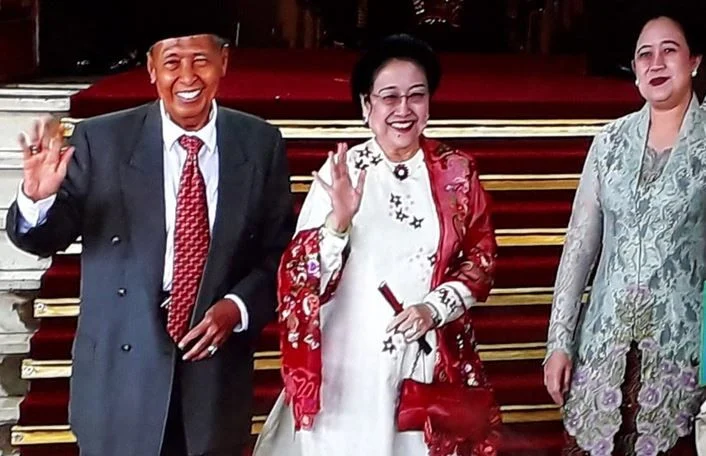
The Indonesian political landscape in 2001 was characterized by unprecedented volatility, marked by the constitutional transition that saw Megawati Soekarnoputri ascend to the presidency. Following the impeachment of President Abdurrahman Wahid, known as Gus Dur, by the People’s Consultative Assembly (MPR RI), a power vacuum emerged regarding the vice presidency. This vacancy necessitated a special session of the MPR to elect a new vice president, a process that underscored the intricate parliamentary maneuvering of the era. The election of Hamzah Haz, the then-chairman of the United Development Party (PPP), stands as a pivotal historical moment, reflecting the coalition-based political realities of early Reformasi-era Indonesia.
The Constitutional Crisis of 2001
The events of July 2001 were the culmination of months of friction between President Abdurrahman Wahid and the legislative branch. By mid-2001, the political deadlock had reached a breaking point, leading to the MPR’s decision to remove Gus Dur from office. On July 23, 2001, Megawati Soekarnoputri, who had served as the vice president, was inaugurated as the fifth President of the Republic of Indonesia.
Her ascension created a void in the second-highest office in the land. According to the constitutional framework and the internal regulations of the MPR at the time, the vice presidency could not remain vacant. Consequently, the MPR convened to elect a replacement, initiating a contest that drew in some of the most influential political figures of the day. This election was not merely a procedural requirement but a litmus test for the strength of political party alliances within the assembly.
The Candidates: A Field of Political Heavyweights
The race for the vice presidency in 2001 was highly competitive, featuring candidates who represented diverse ideological spectrums and institutional power bases. The list of contenders included:
- Hamzah Haz: The Chairman of the PPP, who had served as a Coordinating Minister in the previous administration. He was viewed as a stabilizing figure who could bridge the gap between nationalist and Islamic-based political factions.
- Akbar Tandjung: The Chairman of the Golkar Party and the Speaker of the House of Representatives (DPR RI). As the head of the largest political party in the legislature at the time, Tandjung was considered a formidable contender with significant grassroots influence.
- Susilo Bambang Yudhoyono (SBY): A retired military general who had served as the Coordinating Minister for Political, Social, and Security Affairs. His candidacy represented the growing influence of the security establishment in the new democratic order.
- Agum Gumelar: Another prominent figure from the military and cabinet ranks, known for his administrative experience.
- Siswono Yudo Husodo: A veteran politician associated with the Golkar Party, bringing a wealth of experience in governance and economic development.
Chronology of the Election
The election process was marked by intense lobbying and behind-the-scenes negotiations among the political parties represented in the MPR. Unlike the direct presidential elections that would be introduced in 2004, the 2001 selection was an indirect election, where the members of the MPR—composed of DPR members and regional representatives—cast their votes.
The voting process was held over several rounds, reflecting the inability of any single party to command an outright majority. In the final stage of the balloting, Hamzah Haz emerged victorious. His success was largely attributed to his ability to secure support from a coalition of Islamic parties, as well as segments of the nationalist bloc that sought a vice president who would complement Megawati’s leadership style. By defeating heavyweights like Akbar Tandjung and SBY, Hamzah Haz secured the mandate to serve as the vice president for the remainder of the 1999–2004 term.
Analysis of the Political Landscape
The election of Hamzah Haz was not accidental; it was a strategic outcome of the "middle-ground" politics that defined the post-Suharto transition. Megawati Soekarnoputri, a nationalist figurehead, needed a partner who could pacify the concerns of conservative Islamic groups that were initially hesitant about a female president. Hamzah Haz, as the leader of the PPP, fulfilled this role perfectly.
From a legislative perspective, the election demonstrated the influence of the MPR in shaping executive power. During this period, the MPR held significant authority, often acting as the supreme arbiter of political conflicts. The inclusion of figures like Akbar Tandjung and SBY in the race highlighted that the vice presidency was not just an auxiliary position but a post that carried weight in the governance of the nation, especially given the fragility of the cabinet at the time.
Official Responses and Public Sentiment
At the time of the election, the atmosphere was one of cautious optimism. Supporters of the new administration viewed the pairing of Megawati and Hamzah as a "National Unity" cabinet that could restore order to a nation reeling from financial crisis and ethnic tensions.
Conversely, critics pointed to the transactional nature of the election. Political analysts noted that the victory of Hamzah Haz underscored the "horse-trading" culture that permeated the MPR. Despite these criticisms, the transition was largely peaceful, signaling that the Indonesian political system was beginning to develop mechanisms—however complex—to manage succession and power-sharing without resorting to extra-constitutional measures.
Broader Implications for Indonesia
The election of Hamzah Haz served as a precursor to the systemic changes that would follow in subsequent years. The 2001 event highlighted the necessity for constitutional amendments that would eventually shift Indonesia toward a direct presidential election system. By 2004, the model of electing a vice president through the MPR was discarded in favor of the ticket-based system, where the president and vice president are elected simultaneously by the public.
Furthermore, the participation of Susilo Bambang Yudhoyono in this race provided him with a significant platform. His performance in the 2001 election helped raise his national profile, ultimately paving the way for his successful bid for the presidency in 2004, where he became the first directly elected President of Indonesia.
Conclusion
The 2001 vice-presidential election in the MPR remains a vital case study in Indonesian political history. It showcased the transition from the New Order’s centralized control to a fragmented, multi-party parliamentary system. Hamzah Haz’s victory over seasoned rivals like Akbar Tandjung and SBY was a testament to the importance of coalition building in the nascent democracy. As Indonesia continues to refine its democratic processes, the events of July 2001 serve as a reminder of the historical challenges the nation faced in building a stable, representative government. The legacy of this election is embedded in the constitutional architecture of modern Indonesia, illustrating the evolution of power and the persistence of political consensus-building in the face of crisis.