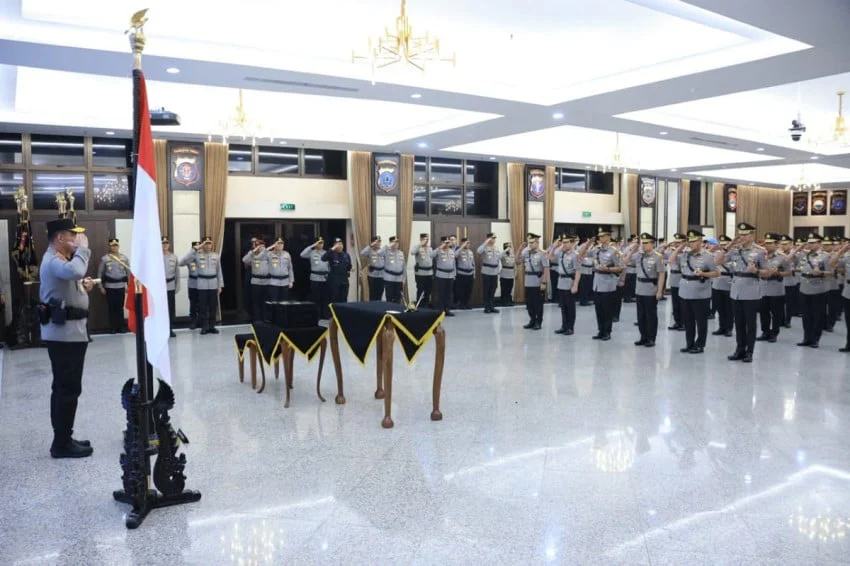
In a significant strategic realignment aimed at bolstering organizational efficiency and strengthening regional security, the Chief of the Indonesian National Police (Kapolri), General Suyudi Ario Seto, has officially sanctioned a comprehensive reshuffle of high-ranking officers. As of November 9, 2026, a total of 25 officers, including 16 mid-ranking officers (Pamen) holding the ranks of AKBP (Police Grand Commissioner Adjutant) and Kompol (Police Commissioner), have been reassigned to various Regional Police (Polda) units across the archipelago.
The directive, formalized through Telegram Letter Number ST/2515/XI/KEP./2026, marks the latest effort by the National Police leadership to streamline operations and optimize human resource deployment in critical administrative and operational areas, ranging from the East Nusa Tenggara (NTT) Police to the Papua Barat and Maluku Regional Police.
Strategic Context and Timeline of the Reshuffle
The November 2026 rotation is not an isolated event but rather part of a broader, ongoing initiative by the Polri leadership to recalibrate its internal structure. Throughout the latter half of 2026, General Suyudi Ario Seto has overseen a series of rigorous personnel assessments. This latest maneuver follows a massive restructuring exercise earlier in the month, which saw the repositioning of 44 Brigadier Generals, underscoring the urgency of refreshing leadership tiers at both the national and regional levels.
Chronologically, the administrative process began with internal evaluations by the Wanjakti (Council for High Ranks and Positions) in late October 2026. The selection process prioritized officers with specialized skills in criminal investigation, counter-terrorism, and intelligence—areas that have become increasingly vital given the evolving nature of domestic security threats. By the second week of November, the finalized list of transfers was disseminated to the respective units to ensure a seamless transition of command and control.
Analytical Breakdown of the Reassignments
The selection of these 16 officers is particularly noteworthy due to their previous roles in elite national units. For instance, officers moving to the NTT Police include personnel previously embedded within the Criminal Investigation Agency (Bareskrim) and the elite counter-terrorism unit, Densus 88 AT.
- AKBP Benito Harleandra, formerly serving as the Unit 4 Chief of Sub-Directorate IV at the Criminal Investigation Department (Dittipidum) of Bareskrim Polri, has been reassigned as a Pamen at the NTT Police. His transition signals a strategic move to strengthen investigative capacities in regions requiring closer oversight.
- AKBP Manuel Tadu Rebo, who previously held the position of Unit 1 Chief of Sub-Directorate for Counter-Intelligence at Densus 88 AT, has also been moved to the NTT Police. His background in high-stakes counter-intelligence is expected to augment the regional police’s intelligence-gathering capabilities.
- AKBP Ambuka Yudha Hardi Putra, formerly of the Unit 4 Sub-Directorate III of Dittipidum Bareskrim, joins the NTT Police, further highlighting a shift toward centralizing experienced investigators in peripheral regions to handle complex criminal cases.
The deployment of these officers to regions such as NTT, Papua Barat, and Maluku is indicative of a "meritocratic redistribution" policy. By moving highly specialized personnel from the national headquarters to regional commands, the Polri leadership aims to harmonize the standards of law enforcement across Indonesia, ensuring that provincial departments possess the same caliber of expertise as those stationed in the capital.
Official Stance and the Philosophy of Meritocracy
The official narrative from the Polri headquarters remains consistent with the principles of professional development. The Head of the Public Relations Division (Kadiv Humas) of the National Police, Inspector General Johnny Eddizon Isir, emphasized that these movements are not merely administrative formalities but are rooted in a strategic vision for the organization.
"The placement of personnel is conducted through a meticulous evaluation of meritocracy, competence, capability, and integrity," stated Inspector General Isir during a press briefing in Jakarta on November 12, 2026. "Our objective is to ensure that every officer entrusted with a new role is capable of fulfilling their duties professionally, thereby contributing to the overall improvement of the organization’s performance."
Isir further highlighted the importance of organizational agility. "The National Police operates in a dynamic environment. Regular rotation and mutation serve as a mechanism for institutional refreshing. It allows officers to broaden their experience by facing new challenges in different regional contexts, while simultaneously preventing complacency and ensuring the highest standards of service to the public."
Broader Impact and Organizational Implications
The ripple effects of this reshuffle are expected to be felt in several key areas of police administration and operational efficacy:
- Standardization of Investigative Quality: By transferring officers from Bareskrim to regional Polda units, the Polri is effectively "exporting" the investigative methodologies used at the central level. This will likely lead to more standardized case handling, improved file documentation, and a higher success rate in prosecution for regional crimes.
- Addressing Regional Security Challenges: The provinces identified for these transfers—NTT, Papua Barat, and Maluku—are regions characterized by unique geographic and social complexities. Strengthening the leadership tier in these areas with officers who have served in high-pressure national units is a proactive measure to address potential social conflicts, organized crime, and maritime security issues.
- Human Capital Development: For the officers involved, these transfers serve as a critical career milestone. The ability to transition successfully from a specialized national role to a broader regional oversight role is a key prerequisite for future promotion to higher command positions within the police force.
- Strengthening Solidities: As noted by Inspector General Isir, the expectation is that these new assignments will foster better integration between regional units and headquarters. By strengthening the "solidarity" among the officer corps, the police force hopes to eliminate silos and improve communication channels during multi-jurisdictional investigations.
Challenges and Future Outlook
While the reshuffle is aimed at optimization, analysts suggest that the success of these deployments will depend heavily on the officers’ ability to adapt to local cultural and operational nuances. Law enforcement in regional Indonesia often requires a delicate balance between strict legal enforcement and community-oriented policing (polmas).
As the Polri enters the final quarter of 2026, the success of this rotation will be measured by key performance indicators (KPIs) such as the reduction in regional crime rates, the speed and accuracy of criminal investigations, and the public trust index in these specific regions.
General Suyudi Ario Seto’s leadership style has thus far been characterized by a preference for institutional stability coupled with tactical change. By focusing on the "Pamen" (mid-ranking) level, the Kapolri is effectively strengthening the backbone of the organization. These officers are the bridge between policy and execution; their performance in the coming months will be a litmus test for the effectiveness of the Polri’s current meritocratic recruitment and placement policies.
Conclusion
The shift of 16 officers on November 9, 2026, is a microcosm of the larger, ongoing reform efforts within the Indonesian National Police. By prioritizing technical competence and placing seasoned investigators in critical regional roles, the leadership is signaling a commitment to a more capable and integrated police force. As these officers report to their new stations, the national police command will be closely monitoring their performance to ensure that the promise of a more professional, integrity-driven force is realized.
The move is ultimately about preparing the institution for the challenges of 2027 and beyond, ensuring that whether in the remote reaches of Papua Barat or the bustling districts of the capital, the Indonesian police remain a cohesive and highly skilled entity capable of safeguarding the nation. For the public, the primary expectation remains the same: that these leadership changes translate into safer communities, faster responses to grievances, and a transparent, accountable legal system.