Universitas Gadjah Mada (UGM), one of Indonesia’s most prestigious institutions of higher education, has issued a resolute stance against the deployment of aggressive crowd control measures—specifically tear gas and tactical law enforcement vehicles—near or within its academic enclave. The official statement follows a volatile series of demonstrations that took place in Yogyakarta on November 10, reigniting national debates regarding the boundaries of police authority, the protection of academic sanctuaries, and the constitutional right to peaceful assembly.
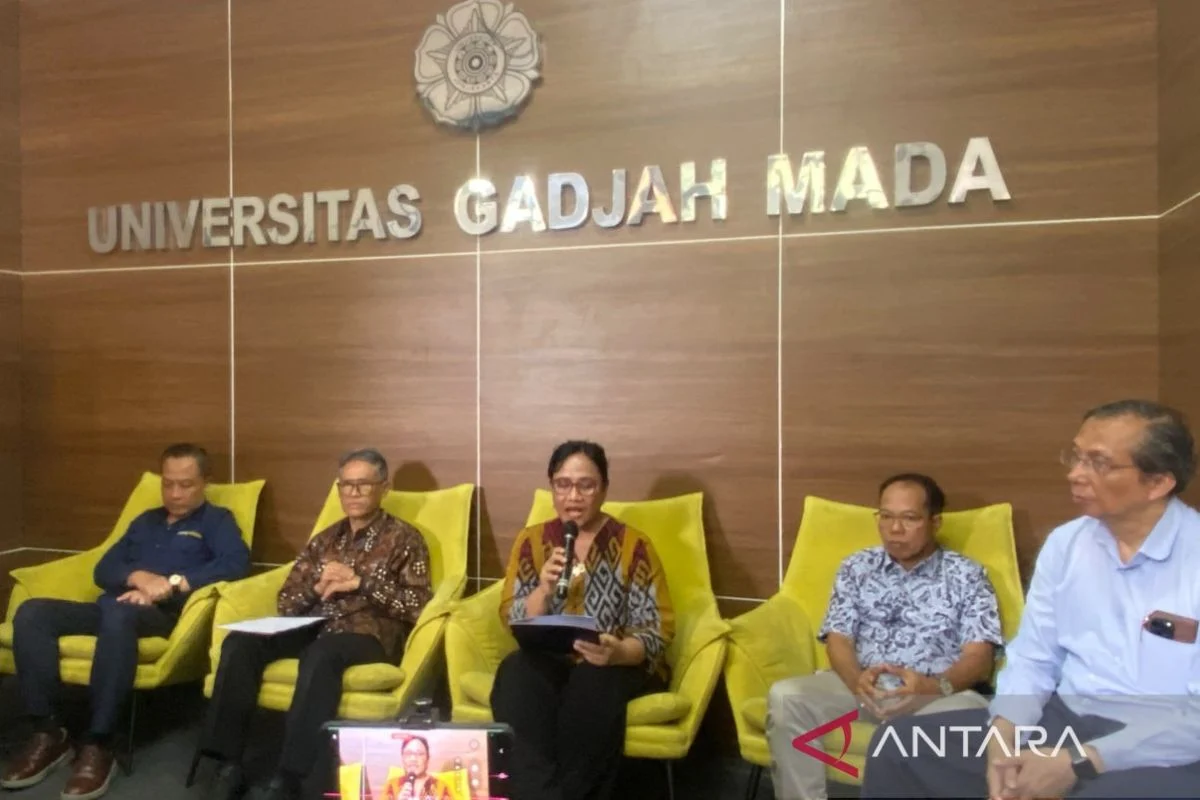
Speaking during a formal press briefing at the university’s central grounds in Yogyakarta on Wednesday, UGM Vice Rector for Education and Teaching, Wening Udasmoro, articulated the institution’s uncompromising position. Surrounded by university officials, Udasmoro addressed mounting concerns from the academic community regarding the presence of security forces during the recent protests. The university administration underscored that higher education institutions serve as vital zones for intellectual freedom and democratic discourse, spaces that must remain entirely shielded from physical coercion and chemical deterrents.
Main Facts and the Institutional Stance
The core of UGM’s grievance centers on the inviolability of the campus environment as a sanctuary for learning, critical thinking, and free expression. While acknowledging that reports regarding the exact trajectory of tactical vehicles—known locally as kendaraan taktis or rantis—during the November 10 demonstrations remain somewhat conflicting, the university administration drew a hard administrative and ethical line.
According to Udasmoro, the fundamental issue transcends the precise geographical coordinates of where a tear gas canister lands or where a tactical vehicle pauses. The university maintains that any employment of disproportionate force in the vicinity of an academic institution threatens the physical and psychological safety of students, faculty, and staff. UGM stressed that as an institution dedicated to cultivating critical analysis and peaceful problem-solving, it actively teaches students to reject violence in all its forms. Consequently, the university cannot condone the use of violence by any entity, whether internal or external, state-sponsored or otherwise.
Furthermore, the university administration framed student protests not as a public security threat, but as an indispensable component of a healthy, functioning democracy. UGM argued that the state should view student activism and public dissent with gratitude rather than apprehension. In the eyes of the university leadership, critical voices act as an early warning system and a valuable feedback mechanism for governance. When citizens—particularly educated youth—cease to offer constructive criticism, society risks sliding into a dangerous complacency.
Chronology of Events Surrounding the November 10 Demonstrations
The friction between demonstrators and law enforcement on November 10 unfolded against a backdrop of escalating socio-political tensions in various urban centers across Indonesia. On that day, a coalition of student activists, labor organizations, and civil society groups mobilized in Yogyakarta to voice grievances regarding a range of national policies, economic pressures, and governance issues.
As demonstrations progressed through the urban landscape of Yogyakarta, protest marches frequently converged near major transit arteries and institutional boundaries. The proximity of these demonstrations to university campuses often creates operational friction between protesting crowds and security forces tasked with maintaining public order.
On the evening of November 10, unverified reports and video footage circulated widely across social media platforms, suggesting that security personnel utilizing tactical vehicles had pushed into or extremely close to educational perimeters, with tear gas deployment affecting areas near campus zones. These digital reports sparked immediate outrage and anxiety among the student body, prompting calls for university leadership to clarify the situation and guarantee the safety of the campus community.
By Wednesday, UGM leadership felt compelled to address the circulating rumors head-on through the structured press briefing. While the university noted that the factual details of whether security forces physically breached the campus gates were still being verified through internal and external channels, the mere proximity of such heavy-handed tactics near academic buildings was deemed entirely unacceptable.
Background Context: Academic Freedom and State Authority in Indonesia
The tension between state security apparatuses and university campuses in Indonesia carries deep historical resonance. Historically, Indonesian campuses have served as the vanguard of political reform and democratization. The most notable historical precedent occurred during the 1998 Reformasi movement, where university grounds—including UGM itself—served as safe havens and mobilization hubs for students demanding political transparency and the resignation of President Suharto.
Recognizing this vital democratic role, Indonesian law and academic traditions have long respected the concept of campus autonomy. Academic freedom protects students and scholars from undue interference, intimidation, or violence while pursuing knowledge and engaging in public discourse. However, in recent years, debates regarding the limits of public protest, the enforcement of the Public Assembly Law, and the tactics employed by the Indonesian National Police (Kepolisian Negara Republik Indonesia or Polri) have frequently brought law enforcement agencies into direct confrontation with student movements.
The deployment of tear gas and armored tactical vehicles in urban settings has drawn sustained criticism from human rights organizations. Critics argue that such heavy-handed methods often escalate tensions rather than de-escalate them, frequently causing collateral harm to bystanders, residents, and academic communities situated near protest routes.
Official Responses and Institutional Counter-Perspectives
The stance taken by UGM exists within a complex ecosystem of competing narratives between university administrators, civil society advocates, and law enforcement agencies.
In response to widespread public anxiety and allegations following the November 10 protests, regional law enforcement officials, specifically representatives from the Yogyakarta Regional Police (Polda DIY), issued formal clarifications denying that personnel intentionally entered university grounds to conduct repressive operations. According to police statements released subsequent to the demonstrations, security forces operated strictly within the legal parameters required to restore public order, manage traffic flow, and disperse crowds that had allegedly turned disruptive or posed risks to public infrastructure.
Police representatives emphasized that law enforcement actions are designed to protect public safety and prevent property damage, maintaining that operational protocols govern the use of crowd control equipment such as tear gas and tactical vehicles. Nevertheless, police agencies often face the difficult challenge of balancing public order mandates with the sensitivities surrounding institutional boundaries, particularly in university-dense cities like Yogyakarta.
Despite these assurances from law enforcement, academic institutions like UGM have increasingly asserted their institutional prerogatives. By publicly drawing a definitive line, university leaders aim to reassure their academic communities that the campus remains a protected zone where freedom of expression is not merely tolerated, but actively defended.
Broader Impact and Implications for Democratic Participation
The public declaration by UGM’s leadership carries profound implications for the broader landscape of higher education and civil liberties in Indonesia.
First, it reinforces the normative framework surrounding peaceful assembly. By explicitly stating that student dissent is a vital contribution to national governance rather than a threat to public order, UGM provides institutional backing to the fundamental rights guaranteed under the Indonesian Constitution. This support is particularly crucial in an era where youth political engagement is increasingly vital for addressing complex national challenges, ranging from economic inequality to environmental degradation and legislative transparency.
Second, the controversy highlights the ongoing need for institutional dialogue between university administrations and regional security forces. To prevent future friction, stakeholders suggest that establishing formal coordination protocols between campus security, university leadership, and local police departments is essential. Such protocols could delineate clear operational boundaries, ensuring that public safety measures do not infringe upon academic sanctuaries or endanger non-violent demonstrators and students.
Third, the incident serves as a stress test for the relationship between the state and educational institutions. As universities position themselves as defenders of free expression, they also accept the responsibility of modeling constructive, non-violent engagement. UGM’s emphasis on internal openness—welcoming student criticism of university policies as a healthy mechanism of institutional governance—complements its external defense of student rights. By fostering a culture where dissent is met with dialogue internally, the university projects moral authority when advocating for similar treatment of citizens by external state actors.
Conclusion
As the dust settles from the November 10 demonstrations in Yogyakarta, the firm stance articulated by Universitas Gadjah Mada marks a significant moment in contemporary Indonesian civic life. By rejecting the use of tear gas and tactical vehicles near academic spaces, UGM has reaffirmed its commitment to protecting the physical safety of its community and upholding the sanctity of academic freedom. The episode underscores the delicate balance required in a democratic society—one that must reconcile the state’s obligation to maintain public order with the citizenry’s inviolable right to peaceful assembly, critical discourse, and democratic expression.