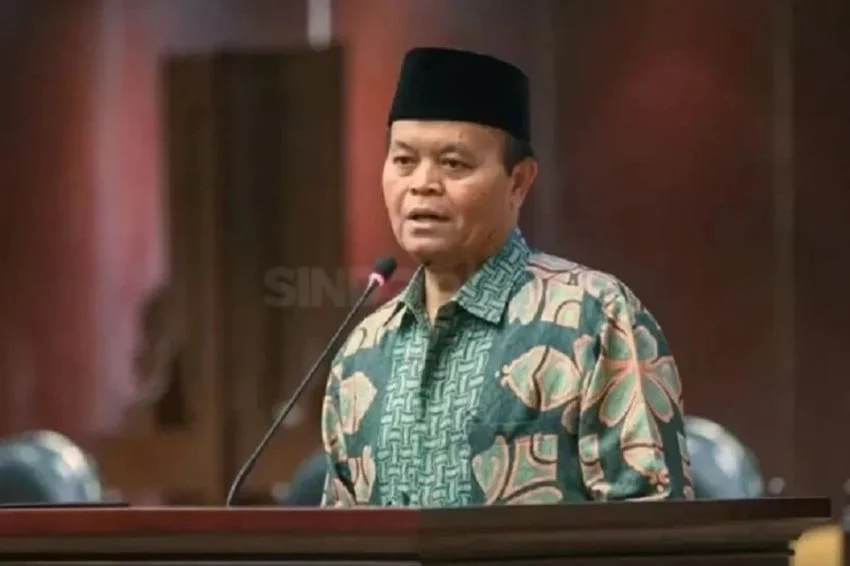
The landscape of Indonesian parliamentary leadership underwent a significant shift on Tuesday, October 11, 2026, following the formal resignation of Hidayat Nur Wahid (HNW) from his position as a Deputy Speaker of the People’s Consultative Assembly of the Republic of Indonesia (MPR RI). The announcement, which has sent ripples through the political circles of Jakarta, was confirmed by MPR Speaker Ahmad Muzani following a leadership meeting held earlier that day. This development marks a notable change in the composition of the nation’s highest deliberative body, raising questions regarding the future direction of the Prosperous Justice Party’s (PKS) involvement in the current legislative leadership structure.
Official Confirmation and Procedural Response
Ahmad Muzani, speaking to the press after the conclusion of the MPR leadership meeting, verified that the assembly had officially received the resignation letter submitted by Hidayat Nur Wahid. "The leadership meeting of the MPR RI today has officially accepted the resignation letter of Hidayat Nur Wahid from the position of Deputy Speaker of the MPR RI," Muzani stated.
While the resignation was accepted, the procedural transition is still in its infancy. Muzani emphasized that the MPR would adhere strictly to the established institutional mechanisms and the prevailing legislative regulations to address the vacancy. According to the internal rules of the MPR and the Law on the Composition of the People’s Consultative Assembly, the House of Representatives (DPR), and the Regional Representative Council (DPD)—collectively known as the MD3 Law—the process for replacing a member of the leadership requires formal consultation with the political party faction that originally nominated the individual.
As of this writing, there has been no immediate announcement regarding a successor. The MPR leadership is expected to deliberate on the timeline for the nomination of a new deputy speaker in the coming weeks, ensuring that the assembly’s operational continuity remains intact.
Profile of Hidayat Nur Wahid: A Legacy in Parliament
To understand the weight of this resignation, one must consider the extensive political tenure of Hidayat Nur Wahid. A senior figure in the Prosperous Justice Party (PKS), HNW has been a cornerstone of Indonesian politics for decades. His career is marked by his tenure as the Speaker of the MPR RI from 2004 to 2009, a period that saw significant democratic consolidation in Indonesia following the post-Reformasi era.
Throughout his career, HNW has been known for his intellectual approach to legislative affairs and his focus on the constitutional role of the MPR. His presence in the leadership has often served as a bridge between the opposition-leaning PKS and the broader government coalition. His departure from the executive leadership of the MPR, therefore, is not merely a change in personnel; it signifies a strategic pivot for both the individual and the party he represents. Throughout his recent term, HNW has remained active in addressing various national issues, including constitutional oversight, human rights, and the protection of citizens during environmental disasters, as evidenced by his recent public advocacy regarding the Constitutional Court’s (MK) rulings.
Contextualizing the Political Landscape
The resignation occurs in a climate of shifting political alliances in Indonesia. As of October 2026, the national political scene has been defined by complex negotiations between major political parties and the executive branch. While the official reason for the resignation has not been explicitly stated in the public communication from the MPR, political analysts suggest that such moves are often tied to internal party restructuring or shifts in the party’s strategic stance regarding their role within the legislative leadership.

PKS, a party that has traditionally maintained a critical stance toward the government, often navigates a delicate balance when holding high-level leadership positions in state institutions. Historically, the party has prioritized maintaining its ideological integrity while ensuring its voice is heard in the highest echelons of power. Observers are now looking closely at whether this resignation signals a broader shift in PKS’s relationship with the current administration or if it is a localized decision related to party internal dynamics and leadership renewal.
Implications for the MPR and Legislative Efficiency
The MPR plays a unique role in the Indonesian system of government, tasked with amending the Constitution, inaugurating the President and Vice President, and serving as a platform for national dialogue on major policy issues. With the departure of a high-profile member like HNW, the assembly faces the challenge of maintaining its focus on its legislative agenda, which includes ongoing discussions regarding constitutional amendments and the oversight of regional autonomy policies.
Legislative analysts point out that the departure of a senior leader can momentarily disrupt the consensus-building process, particularly in a body like the MPR, which relies heavily on the unanimity of its leadership council. However, because the MPR operates through a collective leadership model—consisting of a speaker and several deputy speakers representing different factions—the institutional impact is likely to be managed through internal reassignments and the appointment of a new representative from the PKS faction.
Chronology of Recent Events
The sequence of events leading to the current situation can be summarized as follows:
- Early October 2026: Preparations for the leadership meeting began, with discussions focusing on the legislative agenda for the final quarter of the year.
- October 11, 2026: The MPR leadership held a closed-door session where Hidayat Nur Wahid’s letter of resignation was formally presented and discussed.
- October 11, 2026 (Post-Meeting): Ahmad Muzani confirmed the acceptance of the resignation to the media, initiating the formal administrative process required for the vacancy.
- Immediate Future: The PKS faction is expected to consult with its party leadership to determine a replacement, followed by the formal submission of a new nominee to the MPR secretariat.
Public and Political Reaction
While the official statement was brief, the news has prompted a flurry of analysis among political observers. Within the halls of the Parliament, colleagues have expressed respect for HNW’s contributions. The move is seen by some as a dignified exit, allowing for a new generation of PKS leaders to step into national-level roles. Others suggest that the vacancy provides an opportunity for the MPR to recalibrate its leadership focus, particularly in light of the evolving challenges the country faces, such as economic recovery and infrastructure development.
The broader public remains curious about the implications for the opposition dynamic. In a democracy, the role of a political party in leadership positions is essential for maintaining checks and balances. The question now arises: Will the successor be a figure of similar stature, or will PKS choose a leader with a different profile suited to the political demands of the upcoming years?
Conclusion: A Transition in Progress
The resignation of Hidayat Nur Wahid is a significant event in the 2026 political calendar, representing a transition point for one of Indonesia’s most influential political figures and his party. As the MPR moves to fill the vacancy, the process will be closely watched by observers of Indonesian democracy. The assembly’s ability to navigate this transition smoothly will be a testament to the stability of its institutional mechanisms.
For the citizens of Indonesia, the focus remains on whether these changes in leadership will translate into effective governance and the continued representation of their interests within the halls of the MPR. As the administrative procedures continue, the public awaits the announcement of the next Deputy Speaker, an event that will provide further clarity on the evolving political architecture of the nation. In the coming days, more details regarding the rationale behind this decision and the subsequent steps taken by the Prosperous Justice Party are expected to emerge, offering a clearer picture of the path forward for the legislative leadership.