
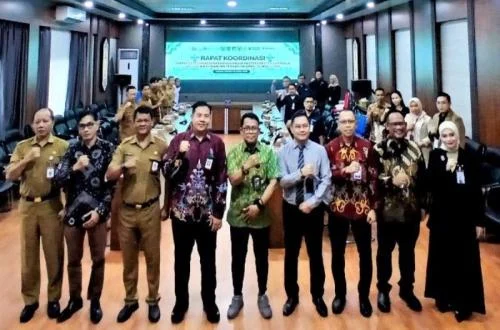
The Financial Services Authority (OJK) of Central Kalimantan Province has emphatically underscored the critical need for enhanced synergy among all stakeholders to significantly broaden regional financial access. This crucial assertion was made during a comprehensive coordination meeting of the Regional Financial Access Acceleration Team (TPAKD) for the Eastern Region, held on Tuesday in Muara Teweh, Barito Utara Regency. The gathering served as a pivotal platform for government officials, banking sector representatives, and strategic partners to consolidate their efforts towards fostering greater financial inclusion across the vast and diverse landscape of Central Kalimantan.
The Strategic Imperative of TPAKD
Andrianto Suhada, the Deputy Head of OJK Central Kalimantan, elucidated that the TPAKD forum represents a strategic crucible for strengthening collaborative endeavors between local governments, the banking sector, and other vital strategic partners. The overarching objective of this intensified cooperation is to catalyze and accelerate financial inclusion within the region. Suhada highlighted that financial literacy and inclusion are not merely localized initiatives but have ascended to the status of a global agenda, intricately linked with 13 of the 17 United Nations Sustainable Development Goals (SDGs). These encompass fundamental targets such as the eradication of poverty (SDG 1) and the promotion of sustained, inclusive, and sustainable economic growth, full and productive employment, and decent work for all (SDG 8).
The emphasis on financial inclusion resonates profoundly across major international forums, including the G20, Asia-Pacific Economic Cooperation (APEC), and the Association of Southeast Asian Nations (ASEAN), where it is consistently prioritized as a key driver for equitable development and economic stability. This global recognition underscores the universal understanding that broad-based access to financial services is indispensable for empowering individuals, fostering small and medium-sized enterprises (SMEs), and building resilient economies. In Indonesia, the TPAKD framework has been robustly established nationwide, encompassing all 38 provinces and extending to over 500 districts and cities. This extensive network positions TPAKD as a primary engine for expanding financial access at the grassroots level, tailoring solutions to meet specific local needs and challenges.
Background and Evolution of Financial Inclusion in Indonesia
Indonesia, an archipelago nation with a population exceeding 270 million, faces inherent challenges in ensuring equitable access to financial services across its myriad islands and diverse communities. The concept of financial inclusion gained significant traction in the country following the 2008 global financial crisis, which highlighted the vulnerabilities of populations excluded from formal financial systems. In response, the Indonesian government, through OJK and other relevant ministries, embarked on a concerted effort to enhance financial literacy and inclusion.
The establishment of TPAKD was a direct outcome of this national commitment. Launched officially in 2014, TPAKD was conceived as a multi-stakeholder platform designed to synergize various programs aimed at increasing financial access in regions. Its mandate includes identifying local needs, designing tailored financial products, improving financial literacy, and facilitating access to financing for micro, small, and medium enterprises (MSMEs) and low-income communities. Prior to TPAKD, efforts to promote financial inclusion were often fragmented, lacking a coordinated approach that could effectively leverage resources from different sectors. TPAKD’s strength lies in its ability to bring together local government bodies (provincial, district, city), OJK regional offices, Bank Indonesia regional offices, commercial banks, rural banks (BPRs), sharia financial institutions, insurance companies, fintech companies, and even academic institutions and community organizations. This holistic approach ensures that strategies are locally relevant and collectively implemented.
The national financial inclusion strategy, spearheaded by OJK, aims to achieve specific targets. For instance, the National Financial Inclusion Strategy (SNKI) launched in 2016 by President Joko Widodo set an ambitious target of reaching 75% financial inclusion by 2019, which was subsequently updated. OJK’s latest National Survey of Financial Literacy and Inclusion (SNLI) in 2022 revealed that the financial inclusion index had reached 85.10%, a significant increase from 76.19% in 2019. While this progress is commendable, it also highlights the persistent gap, with over 10% of the adult population still lacking access to formal financial services, primarily concentrated in remote and rural areas. This remaining gap is precisely where TPAKD’s intensified efforts are most crucial.
The Muara Teweh Meeting: Key Discussions and Objectives
The coordination meeting in Muara Teweh, situated in the Eastern Region of Central Kalimantan, was more than just a routine gathering; it was a strategic session aimed at refining and harmonizing regional financial inclusion programs. Andrianto Suhada emphasized the paramount importance of aligning TPAKD programs with both national and regional policies to ensure their focused and effective implementation. This alignment is critical to avoid duplication of efforts and to maximize the impact of available resources. Discussions likely revolved around reviewing the progress of existing programs, identifying bottlenecks, and strategizing new initiatives.
One of the central themes would have been the utilization of the Regional Financial Access Index (Indeks Akses Keuangan Daerah – IKAD) as a vital instrument. IKAD serves as a comprehensive metric to gauge the level of financial access based on three key dimensions: usage, availability, and depth of financial services.
- Usage refers to the proportion of the population actively utilizing various financial products and services.
- Availability assesses the physical and digital presence of financial service providers within a given area.
- Depth measures the range and sophistication of financial products and services offered.
By meticulously tracking these indicators, TPAKD can pinpoint specific areas where financial access is lacking and tailor interventions accordingly. For instance, a low score in "availability" might trigger initiatives to establish more agent-based banking services or promote digital payment platforms, while a low "usage" score could prompt more intensive financial literacy campaigns. The meeting in Muara Teweh undoubtedly involved detailed analysis of Barito Utara’s and other Eastern Kalimantan regions’ IKAD scores, informing subsequent action plans.
Tangible Outcomes: Successes in KUR and KPR
The article highlights that by 2025, TPAKD programs are projected to demonstrate continued positive results, particularly in augmenting access to financing through Kredit Usaha Rakyat (KUR) and Kredit Pemilikan Rumah (KPR). These two programs are cornerstones of Indonesia’s financial inclusion strategy, targeting distinct but equally vital segments of the population.
-
Kredit Usaha Rakyat (KUR): This government-backed microcredit program is designed to provide working capital and investment loans to MSMEs that typically face difficulties accessing credit from conventional banks due to a lack of collateral or insufficient financial records. KUR loans are characterized by subsidized interest rates, making them highly attractive and accessible. TPAKD plays a crucial role in facilitating KUR by:
- Financial Literacy and Business Training: Educating potential borrowers on financial management, business planning, and the loan application process.
- Facilitating Applications: Guiding MSMEs through the often-complex application procedures and connecting them with participating banks.
- Data Collection and Needs Assessment: Identifying eligible MSMEs and understanding their specific financing needs.
- Monitoring and Evaluation: Tracking the impact of KUR on business growth and employment generation.
Through TPAKD’s efforts, numerous small businesses, from agricultural ventures in rural areas to handicraft producers and street vendors, have gained access to the capital needed to start, expand, or sustain their operations. This directly contributes to local economic vitality and job creation.
-
Kredit Pemilikan Rumah (KPR): This program focuses on making homeownership more attainable, especially for low-income households. KPR schemes, often supported by government subsidies or preferential interest rates, address the significant challenge of housing affordability. TPAKD’s involvement in KPR includes:
- Information Dissemination: Raising awareness about available KPR programs and eligibility criteria.
- Bridging with Developers and Banks: Connecting prospective homebuyers with housing developers and financial institutions offering KPR.
- Assisting with Documentation: Helping applicants navigate the bureaucratic requirements for property purchase and loan approval.
- Financial Planning Advice: Providing guidance on budgeting and loan repayment responsibilities.
Increased access to KPR not only fulfills a basic human need for shelter but also stimulates the construction sector and related industries, creating a multiplier effect on the local economy.
The anticipated positive results by 2025 signify an ongoing commitment and a forward-looking perspective, indicating that the impact of these programs is continually being monitored and evaluated for long-term sustainability and effectiveness.
Statements from Related Parties (Inferred)
While the original article does not provide direct quotes from other stakeholders, based on the nature of TPAKD, it is logical to infer their perspectives:
A representative from the Barito Utara Regency Government, perhaps the Regent or a senior official, would likely express strong support for OJK’s initiative. They might state, "The collaboration fostered by TPAKD is indispensable for our region’s development. By empowering our citizens with financial knowledge and access to capital, we are directly investing in their future and the prosperity of Barito Utara. We are committed to working hand-in-hand with OJK and the banking sector to ensure these programs reach every corner of our regency."
A local bank manager participating in the TPAKD meeting might comment, "As financial institutions, we recognize our role beyond just providing services. Through TPAKD, we gain a clearer understanding of local needs and can tailor our products, especially KUR and KPR, to better serve the community. The synergy allows us to reach unbanked segments more effectively and responsibly, contributing to both our business growth and the region’s economic stability."
A representative from a local MSME association or community group might offer a grassroots perspective: "For small business owners like us, access to affordable credit through programs like KUR is a lifeline. Before TPAKD, many struggled to find financing. Now, with better information and support, more entrepreneurs can grow their businesses, create jobs, and improve their families’ livelihoods. We appreciate the efforts to make financial services less intimidating and more accessible."
Broader Impact and Implications for Central Kalimantan
The strengthening of TPAKD synergy in Central Kalimantan holds profound implications for the province’s socio-economic development. Central Kalimantan, known for its vast natural resources, including palm oil plantations, mining operations, and timber, possesses significant economic potential. However, a substantial portion of its population, particularly in remote indigenous communities and rural areas, still faces challenges in accessing formal financial services.
Enhanced financial inclusion through TPAKD can lead to:
- Poverty Reduction: By providing access to credit, savings, and insurance, individuals can build assets, manage risks, and invest in income-generating activities, lifting themselves out of poverty.
- Economic Diversification: Supporting MSMEs through KUR can foster the growth of diverse local industries, reducing over-reliance on primary commodities and making the economy more resilient to market fluctuations.
- Empowerment of Vulnerable Groups: Financial inclusion disproportionately benefits women, youth, and rural populations, who are often marginalized from mainstream financial systems. Access to finance can empower them to pursue education, entrepreneurship, and better healthcare.
- Improved Quality of Life: Access to KPR and other financial products can improve housing conditions, access to education financing, and healthcare services, directly enhancing the overall quality of life.
- Development of Digital Economy: TPAKD initiatives can also drive the adoption of digital financial services, which are particularly effective in bridging geographical distances in a province like Central Kalimantan, offering convenience and efficiency. This aligns with national efforts to build a robust digital economy.
- Regional Stability and Equity: By ensuring that economic opportunities and financial resources are distributed more equitably across the province, TPAKD contributes to greater social cohesion and reduces regional disparities.
Challenges and Future Outlook
Despite the significant progress and renewed commitment, TPAKD in Central Kalimantan still faces several challenges. These include:
- Geographical Constraints: The vast and often remote terrain of Central Kalimantan makes physical outreach for financial services challenging and costly.
- Low Financial Literacy: While improving, a segment of the population still lacks the basic knowledge to understand and utilize financial products effectively.
- Infrastructure Gaps: Limited internet connectivity and electricity in some remote areas hinder the adoption of digital financial services.
- Data Collection and Monitoring: Ensuring accurate and timely data collection for IKAD and program evaluation across all districts can be complex.
Looking ahead, the future outlook for TPAKD’s mission in Central Kalimantan is characterized by sustained efforts and adaptive strategies. OJK and its partners are expected to intensify financial literacy campaigns, potentially leveraging digital platforms and local community leaders to reach wider audiences. There will likely be a continued focus on innovation, exploring new financial products and delivery channels, including agent banking and mobile money solutions, to overcome geographical barriers. Furthermore, the emphasis on data-driven decision-making, guided by IKAD, will ensure that resources are allocated efficiently to areas with the greatest need.
The reinforced synergy within TPAKD, as advocated by OJK Central Kalimantan, is a testament to the ongoing national commitment to building a more inclusive and equitable financial ecosystem. By fostering robust collaboration, implementing targeted programs like KUR and KPR, and diligently measuring progress, Central Kalimantan is poised to achieve greater financial empowerment for its citizens, ultimately driving sustainable economic growth and enhanced societal well-being. The vision for 2025 and beyond is one where financial access is not a privilege but a fundamental right, enabling every individual and business to contribute fully to the province’s vibrant future.