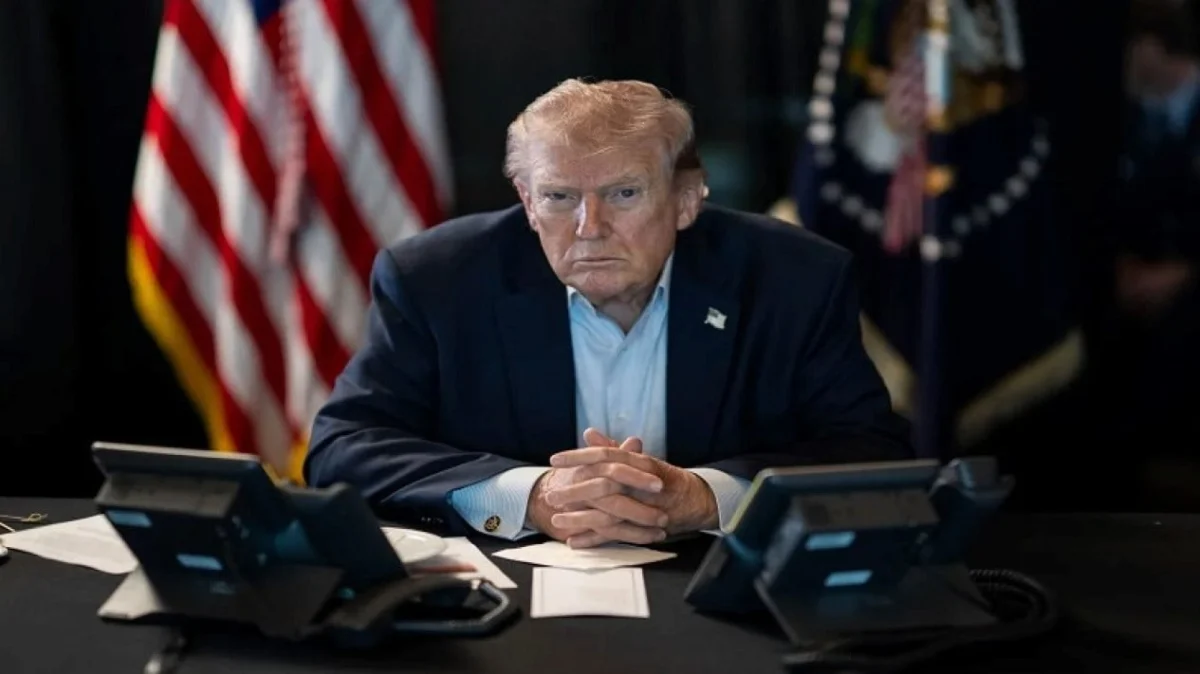
A significant diplomatic rift has dramatically opened between former U.S. President Donald Trump and Italian Prime Prime Minister Giorgia Meloni, marking a stark reversal from their previously warm relationship. The burgeoning conflict, which escalated publicly on Wednesday, April 15, 2026, stems from Trump’s sharp criticisms accusing Meloni of lacking courage and failing to adequately support Washington’s stance against Iran, along with her recent distancing from Israel and a contentious exchange regarding Pope Leo XIV. The public spat has sent ripples through transatlantic alliances and raised questions about the future of conservative political alignments globally.
The discord became unmistakably clear following a telephone interview Trump conducted with the Italian daily Corriere della Sera, where he lambasted Meloni’s foreign policy decisions. Trump expressed profound disappointment and surprise at Meloni’s perceived inaction, specifically citing her alleged failure to bolster Washington’s efforts concerning Iran. "She hasn’t given us any help whatsoever, I am truly surprised," Trump was quoted as saying, as reported by Fox News on Wednesday, April 15, 2026. He further accused Meloni of a parasitic dependence on American support without reciprocating with decisive action. "They rely on Donald Trump to keep that lane open," he asserted, referencing the crucial global energy routes through the Strait of Hormuz, implying Italy’s reliance on American naval power to secure vital trade pathways.
This harsh critique represents a dramatic shift from just weeks prior, when Trump had publicly lauded Meloni as a "great leader." Meloni herself had underscored their strong relationship by attending Trump’s inauguration in 2025, a gesture widely interpreted as a reaffirmation of the bond between the two conservative figures. The sudden downturn in their rapport has caught many observers off guard, highlighting the volatile nature of international political allegiances, particularly those shaped by individual personalities and geopolitical shifts. As of the time of reporting, neither the White House nor Meloni’s office has issued an official statement or direct response to Trump’s accusations, a silence that itself speaks volumes about the sensitivity and potential ramifications of the unfolding situation.
Chronology of a Widening Rift
The public unraveling of the Trump-Meloni relationship has been building amidst a complex backdrop of shifting geopolitical priorities and domestic pressures on the Italian Prime Minister.
-
Initial Alignment (2022-2025): Giorgia Meloni’s ascent to power in Italy in 2022 was widely celebrated by conservative figures globally, including Donald Trump. Her "Italy First" rhetoric and socially conservative stance drew parallels to Trump’s "America First" agenda. This ideological kinship fostered a seemingly strong alliance, culminating in Meloni’s attendance at Trump’s 2025 inauguration, signaling a shared vision for national sovereignty and a critique of globalist institutions. Throughout this period, Trump frequently praised Meloni, viewing her as a key European ally who shared his skepticism towards multilateral agreements and his emphasis on national interests.
-
Evolving Geopolitical Stance (Late 2025 – Early 2026): As 2025 drew to a close and into early 2026, Meloni’s foreign policy began to exhibit signs of greater independence, particularly concerning the escalating conflicts in the Middle East. Facing mounting domestic political pressure from both her left-wing opposition and a growing segment of the Italian populace concerned about humanitarian crises, Meloni started to recalibrate Italy’s traditional alignment with Washington and Israel. This shift was not a sudden rupture but a gradual, pragmatic adjustment to the evolving international landscape and internal political dynamics.
-
Defense Pact Suspension (Tuesday, April 14, 2026): A pivotal moment arrived on Tuesday, April 14, 2026, when Meloni publicly announced Italy’s decision to suspend the automatic renewal of a long-standing defense cooperation agreement with Israel. This move, reported by Reuters, marked a significant departure from previous Italian policy and was a clear signal of Italy’s intent to distance itself from unconditional support for Israel amid the widening regional conflict. Meloni stated, "Seeing the current situation, the government decided to suspend the automatic extension of the defense agreement with Israel," underscoring the gravity of the decision and its immediate link to the ongoing Middle East tensions. This decision, while strategically sound from Italy’s perspective, likely fueled Trump’s perception of Meloni’s wavering loyalty.
-
Trump’s Critical Interview (Wednesday, April 15, 2026): The culmination of these tensions erupted on Wednesday, April 15, 2026, with Trump’s scathing remarks in Corriere della Sera. His accusations of Meloni’s "lack of courage" and failure to support Washington against Iran were direct and public. He explicitly linked her perceived inaction to Italy’s reliance on American security guarantees, particularly concerning the Strait of Hormuz. This interview served as the official public declaration of the end of their previous political camaraderie.
-
Papal Controversy (Concurrent with Trump’s Interview): Adding another layer of complexity and controversy, the dispute between Trump and Meloni intensified over statements concerning Pope Leo XIV. Meloni reportedly criticized Trump’s comments regarding the Pope as "inappropriate," to which Trump retorted that "she was the one who was inappropriate." Trump further escalated this particular facet of the conflict by launching a sharp attack on the Vatican’s calls for de-escalation in the Middle East. Via his social media platform, Truth Social, Trump assailed Pope Leo XIV, labeling him "weak against evil" and "bad on foreign policy." He went on to caution the Pope to "focus on being a good religious leader, not a politician," in a post that quickly went viral. Trump’s social media tirade further accused the first American Pope of siding with "radical leftist groups" at the expense of global security, igniting a firestorm of debate among religious and political commentators alike. This particular skirmish not only highlights a personal animosity but also signifies a clash over the role of religious authority in global diplomacy.
Geopolitical Context and Underlying Dynamics
To fully grasp the implications of this escalating dispute, it is crucial to understand the broader geopolitical context, particularly concerning Iran, the Strait of Hormuz, and the Vatican’s role.
-
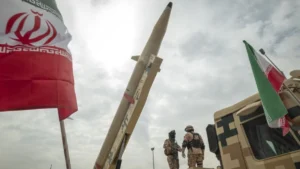
The Iran Conundrum: The United States, under various administrations, has maintained a robust policy of pressuring Iran over its nuclear program, regional influence, and human rights record. Trump’s administration, in particular, adopted a "maximum pressure" campaign, withdrawing from the Joint Comprehensive Plan of Action (JCPOA) and imposing stringent sanctions. For Trump, "support" from allies like Italy would entail a strong diplomatic front, adherence to sanctions, and potentially even military posturing to deter Iranian actions. Meloni’s perceived reluctance to fully align with this hardline stance, perhaps due to Italy’s economic ties with Iran or a preference for diplomatic solutions, would undoubtedly be viewed as a betrayal by Trump. Italy, like many European nations, has often sought a more nuanced approach to Iran, balancing security concerns with a desire to maintain diplomatic channels and avoid further regional destabilization.
-
The Strategic Importance of the Strait of Hormuz: Trump’s specific reference to the Strait of Hormuz is not accidental; it underscores a fundamental strategic concern. The Strait, a narrow waterway between the Persian Gulf and the Gulf of Oman, is one of the world’s most critical chokepoints for oil transit. Approximately 20% of global petroleum consumption, and roughly one-third of the world’s liquefied natural gas, passes through this strait. Any disruption to this flow, whether through military conflict, piracy, or political instability, could send shockwaves through global energy markets, leading to soaring prices and economic instability. The U.S. Navy maintains a significant presence in the region to ensure freedom of navigation, a role Trump believes allies should actively support. His assertion that "They rely on Donald Trump to keep that lane open" is a direct challenge to Italy’s perceived free-riding on American security guarantees.
-
Italy’s Evolving Foreign Policy: Giorgia Meloni’s rise to power was predicated on a nationalist platform, yet her premiership has seen a pragmatic shift towards maintaining Italy’s position within mainstream European and transatlantic alliances, albeit with a stronger emphasis on national interest. Her decision to suspend the defense pact with Israel reflects a calculated move to balance Italy’s traditional alliances with domestic political demands and a desire to project a more independent foreign policy on the international stage. This is particularly salient in the context of the Israel-Palestine conflict, where European public opinion is often more critical of Israeli actions than is typically the case in the United States. Meloni’s pivot can be seen as an attempt to safeguard Italy’s diplomatic standing in the broader Middle East and among developing nations, as well as to mitigate internal dissent.
-
The Papacy and Geopolitics: The inclusion of Pope Leo XIV in this dispute adds an extraordinary dimension. The Vatican, as the smallest sovereign state, wields immense moral and diplomatic influence globally, particularly through its advocacy for peace, human rights, and humanitarian aid. Popes have historically played crucial roles in international mediation and have often spoken out on geopolitical conflicts, urging de-escalation and humanitarian considerations. Trump’s public admonishment of Pope Leo XIV, criticizing his foreign policy stance and calling him "weak against evil," is a highly unusual and potentially incendiary move. It risks alienating Catholic voters and diplomatic circles who view the Papacy as a neutral moral authority. The Pope’s calls for de-escalation in the Middle East align with the Vatican’s long-standing tradition of advocating for peaceful resolutions and protecting civilian populations, a stance that evidently clashes with Trump’s more assertive and confrontational approach to international relations. The attack on the Pope, especially the accusation of siding with "radical leftist groups," could also resonate negatively with a significant portion of the global Catholic population and even with some conservative factions who respect the spiritual authority of the Papacy.
Official Responses and Lack Thereof
The silence from both the White House and Meloni’s office following Trump’s public criticisms is a significant element in this unfolding drama. The lack of an immediate official rebuttal or acknowledgment suggests several possibilities:
- Cautious Diplomacy: Both sides may be exercising extreme caution, opting not to fan the flames of a public dispute that could have wider diplomatic ramifications. Public condemnations can often escalate rather than resolve tensions.
- Internal Deliberation: It is likely that both the Biden administration (which would be affected by a rift between a former US President and a key European ally) and Meloni’s government are internally deliberating on the most effective strategy to respond, if at all. This involves weighing the political costs and benefits of engagement versus silence.
- Minimizing Impact: Meloni’s office might be hoping to downplay Trump’s remarks, perhaps viewing them as characteristic rhetoric from a former president that does not necessarily dictate current US foreign policy. However, given Trump’s continued influence and potential future political ambitions, such an approach carries risks.
- Strategic Silence: The White House might choose not to intervene directly in a dispute involving a former president, especially if it believes such intervention could inadvertently elevate Trump’s platform or complicate its own diplomatic efforts.
Broader Impact and Implications
The escalating tensions between Donald Trump and Giorgia Meloni carry significant implications across various geopolitical, transatlantic, and domestic political spheres.
-
Transatlantic Relations and NATO Cohesion: The most immediate impact could be on the cohesion of transatlantic alliances, particularly NATO. Italy is a founding member of NATO and a crucial ally. A public rift between a prominent American political figure (and potential future President) and a key European leader could undermine the perception of unity within the alliance. It might also embolden adversaries who seek to exploit divisions among Western nations. If Trump were to return to office, such pre-existing animosity could severely complicate U.S.-Italy relations and, by extension, U.S.-EU dynamics.
-
Italy’s Foreign Policy Autonomy: This dispute could further solidify Italy’s trajectory towards a more independent foreign policy, particularly within the European Union. Meloni’s government might feel compelled to demonstrate its autonomy from Washington, especially if Trump’s criticisms are perceived as overbearing or disrespectful. This could lead to Italy seeking closer ties with other European powers or adopting a more multilateral approach to global challenges, thereby potentially shifting the balance of power within the EU.
-
Global Energy Security: The focus on the Strait of Hormuz highlights the fragility of global energy security. Any perceived weakening of international cooperation in safeguarding these crucial waterways could create market instability and geopolitical anxieties, particularly for nations heavily reliant on energy imports. Trump’s rhetoric could be interpreted by some as a warning to allies that American protection is not unconditional.
-
Role of Religious Leaders in International Diplomacy: The direct attack on Pope Leo XIV raises profound questions about the role of religious leaders in international affairs and the boundaries of political criticism. Such a public denunciation of the Pontiff could lead to a backlash from religious communities worldwide and complicate diplomatic efforts that often rely on the moral authority and mediating influence of the Vatican. It also sets a dangerous precedent for future interactions between political and religious leaders on sensitive global issues.
-
Trump’s Influence and Future Political Landscape: The episode underscores Donald Trump’s continued influence on global politics, even out of office. His ability to publicly shape debates and criticize international leaders signals his ongoing relevance and potential impact on future foreign policy if he were to seek or win another term. This conflict also serves as a litmus test for the durability of conservative alliances, revealing potential fault lines when national interests diverge.
-
Domestic Italian Politics: For Meloni, navigating this dispute will be a delicate balancing act. While her pivot on Israel might win her points with a segment of the Italian electorate and consolidate Italy’s image as a more independent European player, an open feud with a figure as influential as Trump could also expose her to criticism from her own right-wing base, which often admires Trump. The challenge will be to project strength and autonomy without alienating crucial allies or undermining Italy’s standing within the transatlantic framework.
In conclusion, the public confrontation between Donald Trump and Giorgia Meloni marks a significant turning point in their relationship and in the broader landscape of conservative international alliances. Fuelled by disagreements over Iran, energy security, and even the role of the Papacy in global affairs, this escalating rift threatens to inject further instability into transatlantic relations at a time when global challenges demand greater unity and cooperation. The silence from official channels only underscores the gravity of the situation, leaving observers to ponder the long-term implications for Italy’s foreign policy, the cohesion of Western alliances, and the future of international diplomacy.