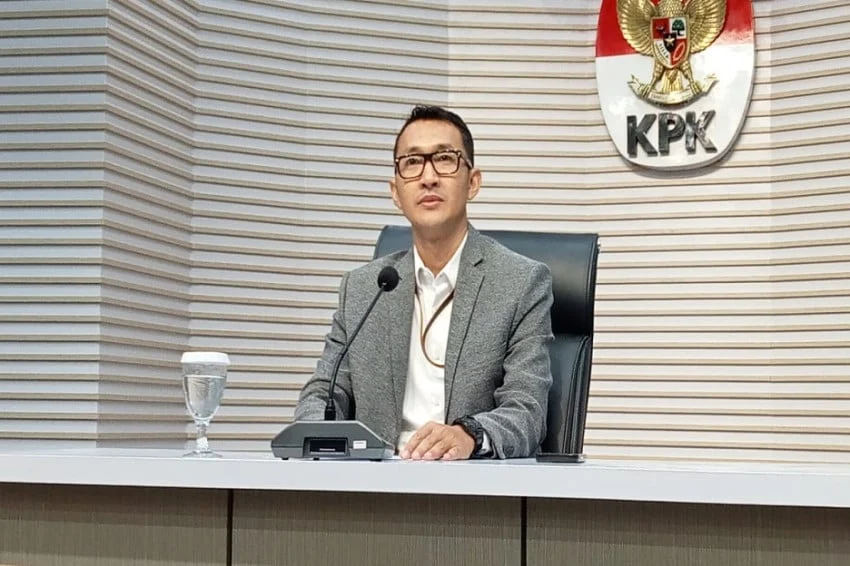
Komisi Pemberantasan Korupsi (KPK) Spokesperson Budi Prasetyo has found himself at the center of an integrity inquiry, having been formally reported to the anti-graft agency’s internal Supervisory Board (Dewas). The report, lodged by prominent 1998 activist and Director of PT Sinkos Multimedia Mandiri, Faizal Assegaf, on Wednesday, April 15, 2026, marks a significant development in the ongoing public oversight of Indonesia’s crucial anti-corruption institution. Prasetyo, in his initial reaction, downplayed the necessity of a detailed response, expressing confidence in the Dewas’s objective review process. This incident highlights the persistent scrutiny faced by the KPK, an institution pivotal to Indonesia’s fight against corruption, and underscores the active role of civil society in demanding accountability from public officials, even those within integrity-focused bodies.
The Genesis of the Complaint: A Call for Accountability
The report to the KPK Supervisory Board is not an isolated incident but rather a progression of Faizal Assegaf’s efforts to seek accountability from Budi Prasetyo. Prior to taking his concerns to Dewas, Assegaf had already filed a complaint with the Jakarta Metropolitan Police (Polda Metro Jaya). While the specific details of the initial complaint to the police were not immediately elaborated upon in public statements, the subsequent report to Dewas strongly suggests that Assegaf’s concerns pertain to alleged ethical breaches or professional misconduct that fall within the Supervisory Board’s mandate. The decision to pursue a complaint through both a law enforcement agency and an internal oversight body indicates a comprehensive approach by the activist to ensure thorough investigation and potential redress.
Faizal Assegaf, a figure widely recognized for his involvement in the 1998 reform movement that led to the downfall of the New Order regime, has a long history of advocating for good governance, transparency, and justice. His activism has often involved challenging powerful figures and institutions, making his involvement in this case particularly noteworthy. As the Director of PT Sinkos Multimedia Mandiri, his professional background also adds another layer to his public persona, demonstrating a blend of business acumen and civic engagement. For Assegaf to formally lodge a complaint against a high-profile spokesperson of the KPK, an institution he, like many Indonesians, likely holds in high regard for its anti-corruption mission, signals a belief that the alleged conduct warrants serious investigation to uphold the KPK’s integrity.
Budi Prasetyo’s Stance and the Dewas’s Mandate
In response to the report, Budi Prasetyo adopted a reserved approach, stating, "Regarding that report, I feel it is no longer necessary for us to respond." He further elaborated on his trust in the independent review process, asserting, "I am confident that the KPK Supervisory Board will objectively analyze the report. I fully hand over the matter to Dewas." Prasetyo’s brief comments reflect a strategy of deferring to the established internal oversight mechanism, implicitly suggesting that any concerns raised will be fairly evaluated by the appropriate body. This stance is typical of officials facing such allegations, aiming to prevent further public speculation while allowing the formal process to unfold.
The Dewan Pengawas (Dewas) or Supervisory Board of the KPK was established in 2019 following amendments to the KPK Law. Its creation was a significant and, at times, controversial reform aimed at providing an internal check-and-balance mechanism for the anti-corruption agency. Dewas is tasked with overseeing the ethical conduct of KPK employees and officials, ensuring adherence to the institution’s code of ethics, and maintaining its integrity. Its powers include investigating alleged ethical violations, issuing recommendations, and imposing administrative sanctions if wrongdoing is found. The establishment of Dewas was intended to enhance accountability and public trust in the KPK, addressing criticisms that the agency previously lacked adequate internal oversight. Reports such as the one filed by Faizal Assegaf fall squarely within Dewas’s jurisdiction, triggering a formal review process that typically begins with an initial assessment of the complaint’s merit before proceeding to a full investigation if deemed necessary.
Chronology of Events Leading to the Dewas Report
The timeline of events highlights the methodical approach taken by Faizal Assegaf in pursuing his allegations:
- Prior to April 15, 2026: Faizal Assegaf initiates his legal efforts by lodging a complaint against KPK Spokesperson Budi Prasetyo with the Jakarta Metropolitan Police (Polda Metro Jaya). The precise date of this initial report is not publicly disclosed but is confirmed to have occurred before the Dewas complaint. The nature of this initial police report likely involves allegations that could be considered criminal or civil in nature, separate from, but potentially overlapping with, ethical concerns.
- Wednesday, April 15, 2026: Faizal Assegaf formally submits a report against Budi Prasetyo to the KPK Supervisory Board (Dewas). This action signifies an escalation or broadening of his complaint, targeting the internal ethical framework of the anti-corruption body. This dual approach suggests Assegaf is seeking both external (police) and internal (Dewas) scrutiny of Prasetyo’s conduct.
- Immediately Following April 15, 2026: Budi Prasetyo issues a public statement acknowledging the report to Dewas. His response is characterized by a refusal to elaborate further on the specifics of the allegations, opting instead to place full confidence in the Dewas’s impartial investigation.
- Subsequent Period: The Dewas is expected to commence its standard procedure for handling complaints. This typically involves an initial review to determine if the complaint meets the criteria for a formal investigation, followed by the gathering of evidence, interviews with involved parties, and eventually, a decision on whether any ethical violations have occurred.
This chronology underscores the seriousness with which such complaints are treated, both by the complainant and the institution’s internal oversight body. The parallel reporting to both police and Dewas indicates a multi-pronged legal strategy by Assegaf to ensure comprehensive examination of the alleged issues.
Broader Context: The Role of KPK and Public Scrutiny
The Komisi Pemberantasan Korupsi (KPK) holds a unique and critical position in Indonesia’s governance landscape. Established in 2002, it was designed as an independent body with extraordinary powers to investigate and prosecute corruption, operating outside the traditional police and prosecutor’s offices. Its mandate includes prevention, investigation, prosecution, and monitoring of corruption offenses. Over the years, the KPK has earned a reputation for fearlessly pursuing high-profile corruption cases, often involving politicians, business leaders, and public officials, thereby becoming a symbol of hope for a cleaner Indonesia.
However, the KPK has also faced its share of challenges and controversies. Its independence and effectiveness have been subject to legislative changes, attempts at weakening its powers, and internal struggles. The very establishment of Dewas in 2019 was part of a larger legislative amendment that critics argued could compromise the KPK’s autonomy. Consequently, any report against a KPK official, particularly a spokesperson who represents the institution to the public, draws significant attention and can impact public trust in the agency’s own integrity.
The active role of civil society figures like Faizal Assegaf is vital in this ecosystem. Activists, non-governmental organizations, and the media serve as crucial watchdogs, holding state institutions accountable. When an anti-corruption body’s own officials face allegations, it is often civil society that steps forward to demand transparency and justice. This dynamic reinforces the principle that no institution, regardless of its noble mission, should be above scrutiny.
Potential Implications and Future Outlook
The report against Budi Prasetyo carries several potential implications, both for the individual involved and for the KPK as an institution.
- For Budi Prasetyo: A formal investigation by Dewas could range from a minor inquiry to a comprehensive probe. If found guilty of ethical violations, potential sanctions could include written warnings, temporary suspension, or even dismissal, depending on the severity of the offense. Even if cleared, the process itself can be taxing and may temporarily impact his public duties or image.
- For the KPK: This incident tests the efficacy and impartiality of the Dewas. A transparent and objective handling of the case by Dewas is crucial to reinforce public confidence in its role as an effective internal oversight body. Should the Dewas’s decision be perceived as biased or lacking rigor, it could further erode trust in the KPK and its internal accountability mechanisms. Furthermore, such reports, regardless of their outcome, can create internal pressure within the KPK, reminding all personnel of the high ethical standards expected of them.
- For Public Trust: The KPK’s credibility rests heavily on its perceived integrity. Any allegation against its officials, especially its spokesperson, can cause public concern. A swift, fair, and transparent resolution to this matter by Dewas is paramount to maintaining public confidence in the KPK’s commitment to clean governance, not just externally but also internally. It demonstrates that the institution is willing to police itself.
- Precedent and Future Accountability: This case could set a precedent for how future complaints against KPK officials are handled. It underscores the importance of a robust and independent Dewas, capable of effectively exercising its oversight functions without fear or favor. It also highlights the growing expectation from the Indonesian public and civil society for greater accountability from all public servants, especially those entrusted with safeguarding national integrity.
The resolution of Faizal Assegaf’s report against Budi Prasetyo will be closely watched by the public, media, and various stakeholders. It serves as a reminder that the fight against corruption is not only about prosecuting external perpetrators but also about ensuring the unimpeachable integrity of the institutions and individuals leading that charge. The ultimate outcome will reflect not just on Budi Prasetyo, but on the strength and resilience of Indonesia’s anti-corruption framework itself. The commitment of Dewas to an objective and thorough investigation will be key to upholding the principles of transparency and accountability that the KPK was founded upon.