

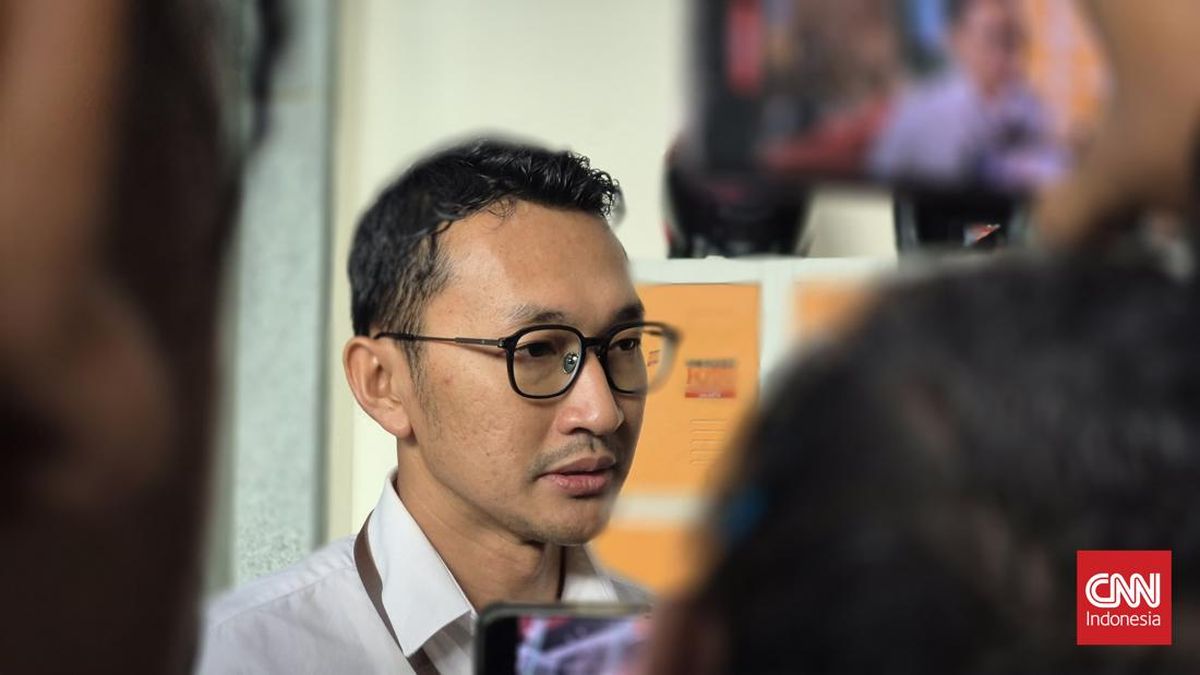
Jakarta, Indonesia – The spokesperson for Indonesia’s Corruption Eradication Commission (KPK), Budi Prasetyo, has publicly dismissed an ethics complaint filed against him by Faizal Assegaf, the Director of PT Sinkos Multimedia Mandiri, to the KPK Supervisory Board (Dewas KPK). Prasetyo expressed confidence in the Supervisory Board’s objectivity, stating that the commission’s investigators remain singularly focused on the ongoing high-profile corruption case within the Directorate General of Customs and Excise, where Assegaf is a key witness. This development highlights the complex and often contentious dynamics inherent in Indonesia’s anti-corruption efforts, particularly concerning interactions between investigators and individuals under scrutiny.
The ethical complaint against Prasetyo was formally lodged by Assegaf, accompanied by legal counsel from Djamaludin Koedoeboen & Partners, on April 15. The complaint invokes Article 37B of Law Number 19 of 2019, which delineates the authority of the Dewas KPK to investigate alleged ethical breaches by KPK personnel. Assegaf’s legal team specifically requested that Dewas KPK summon Prasetyo for an ethical review. This action marks a significant escalation in the tensions surrounding the Customs and Excise investigation, drawing attention to the procedural integrity and ethical conduct expected from the nation’s leading anti-corruption body.
Background: The KPK, Dewas, and Indonesia’s Anti-Corruption Landscape
To fully comprehend the gravity of this situation, it is crucial to understand the institutional framework of the KPK and its Supervisory Board. The Komisi Pemberantasan Korupsi (KPK) was established in 2002, following the fall of the New Order regime, as an independent state institution tasked with eradicating corruption in Indonesia. It was granted extraordinary powers, including the authority to investigate, prosecute, and oversee corruption cases, often bypassing traditional law enforcement agencies. Its early years were marked by significant successes, earning it widespread public trust and a reputation as a beacon of integrity in a country historically plagued by corruption.
However, the KPK’s independence and powers have been a subject of ongoing debate and legislative changes. A pivotal moment came with the enactment of Law Number 19 of 2019, which revised the 2002 KPK Law. This controversial amendment introduced the KPK Supervisory Board (Dewas KPK), an internal oversight body with the authority to issue investigation permits, approve wiretaps, and conduct ethical reviews of KPK employees. Critics argued that the establishment of Dewas KPK, whose members are appointed by the President, fundamentally undermined the KPK’s independence and investigative capabilities, transforming it from an autonomous agency into a state institution more susceptible to political influence.
Article 37B, cited in Faizal Assegaf’s report, specifically empowers Dewas KPK to "supervise the implementation of duties and authorities of the KPK leadership and employees, including receiving and investigating complaints regarding alleged ethical violations." This provision is now at the forefront of the dispute between Assegaf and Prasetyo, underscoring the new internal accountability mechanisms within the KPK post-2019 reforms. The outcome of Dewas’s review will not only affect the individuals involved but also serve as a test case for the effectiveness and impartiality of this oversight body.
The Customs and Excise Corruption Case: A Broader Context
The underlying corruption case that implicates Faizal Assegaf as a witness is centered on alleged bribery and gratification within the Directorate General of Customs and Excise. This institution is critical for Indonesia’s state revenue, collecting duties on imports and exports and regulating trade. Corruption within such a vital economic gatekeeper can have far-reaching consequences, including significant losses in state revenue, distortion of fair competition, and erosion of investor confidence.
KPK’s investigation into Customs and Excise typically targets complex networks involving officials and private entities, often related to the illicit management of excise, under-declaration of goods, or expedited customs clearance in exchange for bribes. Such schemes not only deprive the state of legitimate income but also facilitate the entry of illegal goods and create an uneven playing field for honest businesses. The current probe involves seven detained suspects, including high-ranking officials and private sector individuals, indicating the wide scope and severity of the alleged offenses.
The detained suspects include Rizal, identified as the former Director of Investigation & Enforcement at the Directorate General of Customs and Excise from 2024 to January 2026 (the year range suggesting a potential typo or a future-dated reference in the original source, assuming the events are current or very recent, e.g., 2024). Also implicated are Sisprian Subiaksono, Head of the Subdirectorate of Intelligence for Investigation and Enforcement (Kasubdit Intel P2 DJBC); Orlando, Head of the Intelligence Section (Kasi Intel DJBC); Andri, Team Leader for Importation Documents at PT Blueray; Budiman Bayu Prasojo, a Customs and Excise employee; John Field, Owner of PT Blueray; and Dedy Kurniawan, Operational Manager of PT Blueray. The involvement of both senior customs officials and private company executives underscores the collaborative nature of such corruption schemes.
Chronology of Events Leading to the Complaint
The timeline of events highlights the escalating conflict:
- April 7: Faizal Assegaf was summoned and examined by KPK investigators as a witness in the ongoing Customs and Excise corruption case. During this examination, KPK investigators delved into allegations that Assegaf had received goods from one of the suspects in the case. Faizal Assegaf reportedly admitted to these receipts during the interrogation. This examination was crucial for completing the dossiers for the seven already detained suspects in the alleged bribery and gratification scheme. The focus of the questioning, according to Budi Prasetyo, was specifically on matters related to excise management.
- Prior to April 15 (Exact Date Undisclosed): Faizal Assegaf had already taken legal action against Budi Prasetyo, filing a report with the Jakarta Metropolitan Police (Polda Metro Jaya) for alleged defamation. This report was officially registered under the number LP/B/2592/IV/2026/SPKT/POLDA METRO JAYA. The future-dated year "2026" in the police report number has been noted as an anomaly, potentially a typographical error in the original record, but signifies a formal complaint lodged with law enforcement. This pre-existing police report indicates a simmering dispute between Assegaf and Prasetyo even before the ethics complaint.
- April 15 (Wednesday): Faizal Assegaf, accompanied by his legal team, formally filed an ethics complaint against Budi Prasetyo with the KPK Supervisory Board (Dewas KPK). The complaint specifically requested Dewas to summon Prasetyo for an ethical review based on alleged violations of the code of ethics for KPK employees. This formal action, following his examination as a witness and his prior defamation report, signifies Assegaf’s determination to challenge Prasetyo’s conduct.
Official Responses and Legal Dynamics
Budi Prasetyo’s reaction to the ethics complaint has been one of calm assurance. He stated that he is "unconcerned" (tak ambil pusing) by Assegaf’s actions and expressed full confidence in the Dewas KPK, believing they will "objectively view and scrutinize the complaint from the public." Prasetyo emphasized that the KPK’s primary focus remains on completing the investigation into the Customs and Excise corruption case. This stance reflects a strategy to project unwavering commitment to their anti-corruption mandate, despite internal and external challenges to their personnel.
From Faizal Assegaf’s perspective, the ethics complaint to Dewas KPK and the prior defamation report to the police represent a multi-pronged legal offensive. While the exact details of the alleged ethical violations and defamation have not been fully disclosed in the original article, it can be inferred that Assegaf believes Prasetyo’s public statements or actions regarding his involvement as a witness have been inappropriate or damaging to his reputation. As a director of a private company, being publicly linked to a corruption investigation, even as a witness, can have severe professional and personal repercussions. His admission of receiving goods from a suspect further complicates his position, creating a delicate balance between cooperating with the investigation and protecting his own legal standing.
The Dewas KPK, upon receiving such a report, is mandated to conduct a preliminary review to determine if there are sufficient grounds for a full ethical investigation. Their process typically involves summoning the complainant, the reported party, and any relevant witnesses or evidence. The outcome could range from dismissing the complaint to issuing a warning, a reprimand, or even recommending more severe sanctions if a serious ethical breach is found. The Dewas KPK’s handling of this complaint will be closely watched, as it tests their impartiality and effectiveness in holding KPK officials accountable, a role that was central to the 2019 KPK Law revisions.
Similarly, the defamation report filed with Polda Metro Jaya will follow standard police procedures, involving an investigation into the merits of the complaint, potential interrogations, and eventual determination by prosecutors on whether to proceed with a formal charge. The parallel nature of these complaints—one internal (ethical) and one external (criminal)—against a KPK spokesperson adds layers of complexity to the unfolding situation.
Broader Implications and Analysis
This ongoing saga carries significant implications for Indonesia’s anti-corruption efforts and the public’s perception of the KPK.
- Public Trust and KPK’s Credibility: Incidents where KPK officials face ethical or criminal complaints, particularly from individuals involved in KPK investigations, can erode public trust. The KPK’s effectiveness relies heavily on its perceived impartiality and integrity. Any suggestion of misconduct by its spokespersons, who are the public face of the institution, can damage its credibility.
- The Role of Dewas KPK: This case serves as a crucial test for the Dewas KPK. Its ability to conduct an independent, objective, and transparent review of the complaint against Budi Prasetyo will either reinforce its legitimacy or further fuel criticisms regarding its independence and effectiveness as an oversight body. A perceived lack of action or a biased outcome could deepen skepticism about the 2019 KPK Law.
- Challenges for Witnesses and Whistleblowers: The incident highlights the precarious position of witnesses in corruption cases. While their cooperation is vital for investigations, they can also become targets of scrutiny or, as in Assegaf’s case, feel aggrieved by the actions or statements of investigators or spokespersons. This situation underscores the need for clear guidelines on witness protection and the conduct of public officials in handling sensitive information.
- Internal Dynamics of KPK: Such disputes can also reflect internal tensions or disagreements within the KPK, particularly concerning public communication strategies or the handling of high-profile cases. A spokesperson’s role is to represent the institution, and challenges to their conduct can ripple through the organization.
- Rule of Law and Due Process: The parallel legal avenues pursued by Faizal Assegaf—an ethical complaint and a criminal defamation report—demonstrate the layers of legal recourse available in Indonesia. It emphasizes that even powerful anti-corruption officials are subject to accountability mechanisms, both internal and external, reflecting the broader principle of the rule of law.
- The Fight Against Customs Corruption: Despite these internal challenges, the KPK’s continued focus on the Customs and Excise corruption case remains paramount. The success of this investigation, regardless of the outcome of the ethical complaint, is critical for demonstrating the KPK’s resolve in combating corruption in vital economic sectors and for recovering state assets.
In conclusion, Budi Prasetyo’s dismissive stance towards the ethics complaint, coupled with Faizal Assegaf’s multi-pronged legal actions, paints a picture of a complex and challenging environment for anti-corruption efforts in Indonesia. As the Dewas KPK prepares to scrutinize the ethical allegations and the police investigate the defamation claim, all eyes will be on how these parallel legal processes unfold and what implications they hold for the integrity and effectiveness of the nation’s premier anti-corruption agency. The outcome will undoubtedly contribute to the ongoing narrative surrounding the KPK’s post-2019 reforms and its enduring mission to eradicate corruption.