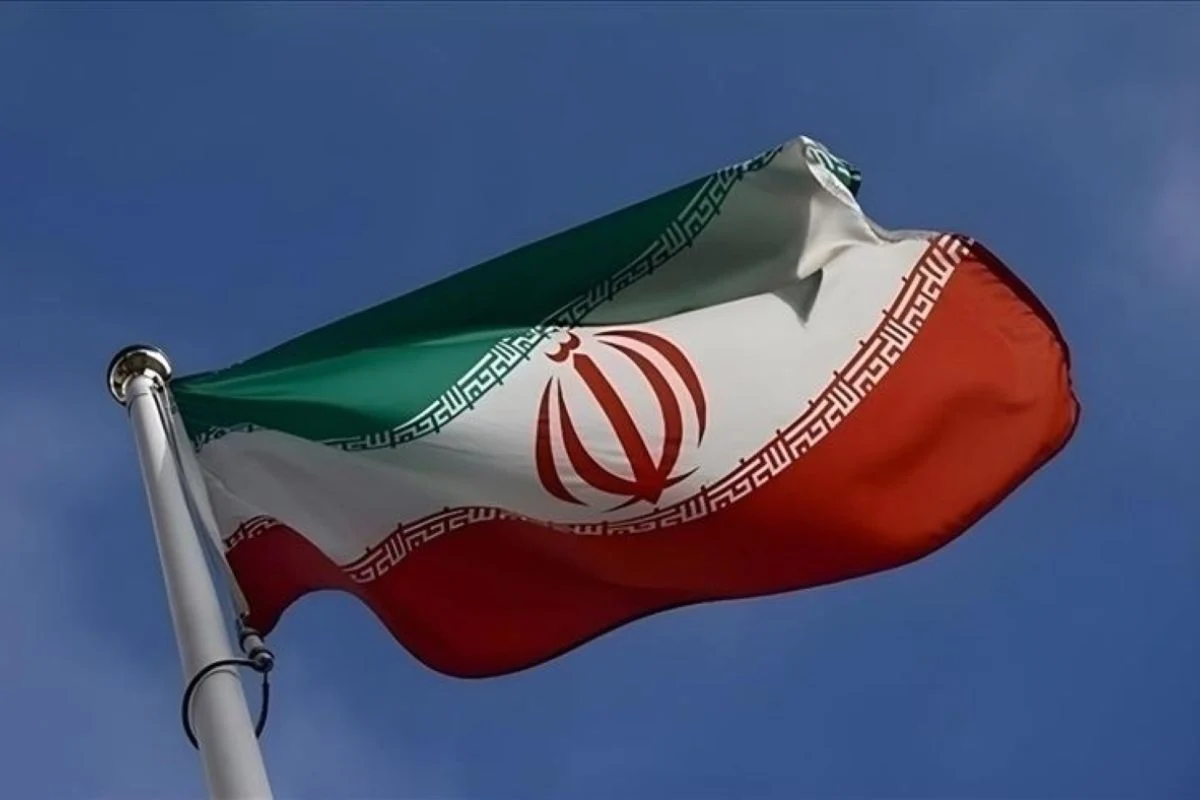
The Iranian currency has been under intense global scrutiny, largely due to escalating geopolitical tensions and punitive economic policies from major international players. A significant move by the former United States President, Donald Trump, involved the imposition of tariffs, reportedly up to 25 percent, on nations continuing business engagements with Iran. This aggressive stance has reverberated profoundly through Iran’s economy, leading to a precipitous decline in the value of its national currency. Recent reports highlighted that the Iranian Rial (IRR) had plunged to unprecedented lows when converted against the Euro, a stark indicator of the severe economic strain inflicted by prolonged sanctions and rampant inflation.
Paradoxically, a visit to Iran’s bustling traditional bazaars or modern shopping centers reveals a striking linguistic disconnect: the term "Rial" is conspicuously absent from everyday transactional dialogue. Instead, locals universally refer to prices in "Toman." This informal, yet deeply ingrained, practice has emerged as a coping mechanism against the backdrop of staggering inflation, where the sheer number of zeros required to express prices in Rial becomes impractical and cumbersome. The widespread adoption of "Toman" as a de facto unit of account simplifies daily commerce, allowing transactions to be articulated in more manageable figures.
This phenomenon raises crucial questions for international observers and visitors alike: What is Iran’s official currency? What is the fundamental difference between the Rial and the Toman that so frequently bewilders foreigners and economic analysts? And how is the Iranian government addressing this complex currency landscape? This article delves into the intricate details of Iran’s monetary system, its historical evolution, the impact of external pressures, and the country’s ambitious plans for currency reform.
A History of Economic Pressure and Sanctions
To fully comprehend the fragility of the Iranian Rial, it is essential to trace the history of international sanctions against Iran. The relationship between Iran and Western powers, particularly the United States, has been fraught with tension since the 1979 Islamic Revolution. Over the decades, a series of sanctions has been imposed, primarily targeting Iran’s nuclear program, alleged support for terrorism, and human rights record.
A pivotal moment occurred with the signing of the Joint Comprehensive Plan of Action (JCPOA), or the Iran nuclear deal, in 2015. This agreement saw Iran curb its nuclear activities in exchange for the lifting of many international sanctions, leading to a brief period of economic recovery and increased foreign investment. However, this respite was short-lived. In May 2018, the Trump administration controversially withdrew from the JCPOA, re-imposing and significantly expanding sanctions under a "maximum pressure" campaign. These new sanctions were designed to cripple Iran’s economy, particularly its vital oil exports, and isolate its financial sector from the global banking system.
The re-imposition of sanctions had immediate and devastating effects. Major international companies were forced to withdraw from Iran to avoid secondary sanctions from the U.S. Iran’s ability to sell oil, its primary source of foreign currency, was severely hampered, leading to a dramatic drop in revenue. Furthermore, restrictions on banking and financial transactions made it exceedingly difficult for Iran to import essential goods, manage international trade, and access global financial markets. This isolation has fueled a continuous cycle of currency depreciation and inflation, as the government struggles to maintain stability and meet the basic needs of its population.
The Economic Landscape: Inflation and Currency Depreciation
The primary consequence of these sanctions and internal economic mismanagement has been runaway inflation. With limited access to foreign exchange, the Iranian government has often resorted to printing money to cover budget deficits, a practice that invariably devalues the national currency. Shortages of imported goods due to trade restrictions also drive up prices, contributing to inflationary pressures.
According to data from the Statistical Centre of Iran and various international bodies, the country has experienced persistent double-digit inflation for many years, often spiking into triple digits during periods of intense pressure. For instance, in 2019, following the full re-imposition of U.S. sanctions, annual inflation soared past 40%, and has remained stubbornly high, hovering around 30-50% in subsequent years. This relentless erosion of purchasing power has made long-term financial planning nearly impossible for ordinary Iranians and has severely impacted their quality of life.
The official exchange rate of the Rial often differs significantly from the rate available in the unofficial, or "black," market. While the Central Bank of Iran might quote a certain rate, the actual rate at which individuals and businesses can exchange currency is typically much weaker. This disparity further complicates economic activities and fosters a shadow economy. The reported low against the Euro underscores the severity of the Rial’s depreciation, making imports prohibitively expensive and travel abroad a luxury for most Iranians. The continuous decline of the Rial’s value has directly led to the public’s practical abandonment of the Rial in daily transactions in favor of the Toman.
Rial vs. Toman: A Tale of Two Currencies
Understanding the relationship between the Rial and Toman is crucial for anyone engaging with Iran’s monetary system. Legally and administratively, the Rial (IRR) remains Iran’s official currency. All banking operations, government documents, and official price listings in modern commercial centers are denominated in Rial. Banknotes and coins are printed in Rial denominations, bearing the official insignia of the Islamic Republic of Iran.
However, in the vibrant tapestry of Iranian daily life, the Toman reigns supreme as the preferred unit of account. This informal adoption is not a recent phenomenon but has historical roots. Before the official introduction of the Rial in 1932, the Toman was the official currency of Persia. When the Rial replaced the Toman, the public maintained the Toman as an informal unit, traditionally valuing one Toman at ten Rial. This historical precedent established a mental shortcut for everyday transactions.
Due to decades of high inflation, this mental shortcut evolved. As prices soared, using Rial denominations often meant dealing with cumbersome strings of zeros. For example, an item costing 600,000 Rial would be colloquially referred to as "60,000 Toman" using the traditional 1:10 ratio (1 Toman = 10 Rial). This informal simplification became deeply entrenched in Iranian culture, making the official Rial feel alien and impractical for many. This discrepancy frequently confuses foreign visitors, who might be quoted a price in Toman and then expected to pay in Rial, leading to potential misunderstandings or even overpayment if unaware of the conversion.
The Official Redenomination: From Rial to New Toman
Recognizing the long-standing confusion and the practical inefficiencies caused by the Rial’s diminished value, the Iranian government, through the Central Bank of Iran (CBI), embarked on an ambitious redenominations policy. This initiative, first approved in 2020 and slated for broader, phased implementation between 2025 and 2026, aims to formally replace the Rial with a new version of the Toman.
The core of this policy involves a drastic simplification: the new Toman will be introduced by effectively removing four zeros from the old Rial. This means that 10,000 old Rial will be officially equated to 1 new Toman. This move is designed to bring the official currency denomination in line with the public’s informal usage of a more manageable unit, although the magnitude of the zero-stripping (four zeros) is much greater than the traditional informal Toman (one zero).
Under this new scheme, the currency will also introduce smaller fractional units. One new Toman will be divided into 100 Qiran. This introduction of Qiran aims to provide smaller denominations for low-value transactions, similar to cents or pence in other currency systems, and to restore some granularity to the monetary system.
The transition period is designed to be gradual to minimize disruption. During this phase, both the old Rial banknotes and the new Toman/Qiran currency will circulate concurrently. New banknotes issued by the CBI will feature lower numerical values, often accompanied by faint "ghost" zeros to indicate the change in denomination and to help the public adjust to the new system without immediate confusion. This dual circulation strategy is common in redenominations worldwide, allowing time for old currency to be naturally withdrawn from circulation and for the new currency to gain acceptance.
Rationale and Challenges of Redenomination
The primary rationale behind this monumental currency reform is multi-faceted. Firstly, it aims to simplify transactions and accounting. Reducing the number of zeros makes prices easier to read, write, and calculate, both for individuals and businesses. This can streamline financial processes, reduce errors, and improve overall economic efficiency.
Secondly, the redenomination seeks to align the official currency with public practice. By formally adopting the Toman and making its value more substantial, the government hopes to eliminate the long-standing Rial-Toman confusion and create a more coherent and user-friendly monetary system. This can boost public confidence in the national currency, as it reflects a more realistic purchasing power.
Thirdly, it is an attempt to combat "money illusion" and project an image of economic stability. A currency with fewer zeros can psychologically appear stronger and more stable, even if its underlying value relative to other currencies has not fundamentally changed. This can be a subtle but important factor in public perception and investor sentiment.
However, the redenomination is not without its challenges. The immediate costs associated with printing new banknotes and minting new coins are substantial. There is also the potential for initial confusion among the public, particularly among older generations or those in remote areas, despite the gradual transition. Businesses will need to update their accounting systems, cash registers, and pricing displays, incurring operational costs.
More fundamentally, a redenomination is largely a cosmetic change if the underlying economic issues persist. While it simplifies transactions, it does not, by itself, address the root causes of inflation or currency depreciation, such as sanctions, government fiscal deficits, or a lack of productivity. If inflation continues unabated, the new Toman’s value will also erode over time, potentially necessitating further redenominations in the future. Critics argue that without structural economic reforms and a resolution to international tensions, the benefits of the redenomination may be short-lived.
Broader Impact and Implications
The redenomination of Iran’s currency carries significant implications for various stakeholders:
- For Iranian Citizens: In the short term, there might be some adjustment difficulties, but the long-term benefit of simplified transactions is expected to improve daily life. However, if inflation continues, their purchasing power will remain vulnerable. The success of the Qiran as a fractional unit will determine its practical utility.
- For Businesses: Accounting and pricing systems will require updates. The simplification might ease bookkeeping, but the fundamental challenges of doing business in a sanctioned economy (e.g., access to foreign exchange, import restrictions) will remain.
- For International Trade and Investment: While the redenomination primarily affects domestic transactions, a more stable and understandable currency system could theoretically improve Iran’s image for potential foreign investors, should sanctions ever be eased. However, as long as major international sanctions are in place, large-scale foreign investment will remain constrained, regardless of the currency’s denomination.
- For the Iranian Government: The redenomination is a symbolic move to assert control over its monetary policy and modernize its financial system. It reflects a long-term vision to stabilize the economy, even amidst external pressures. Its success will be measured by public acceptance and whether it genuinely contributes to economic confidence.
Conclusion
Iran’s currency journey, marked by the Rial’s official status, the Toman’s informal dominance, and the impending official redenomination, is a microcosm of the nation’s broader economic and geopolitical struggles. The ongoing geopolitical tensions and the pervasive weight of international sanctions have severely impacted the Rial’s value, fueling rampant inflation and necessitating pragmatic adaptations in daily commerce. The government’s decision to formally shift to the Toman and implement a drastic zero-stripping through redenominations is an attempt to streamline the monetary system, align with public practice, and project an image of stability.
While this reform addresses the symptomatic issues of an unwieldy currency, its long-term effectiveness hinges on Iran’s ability to navigate the deeper structural economic challenges and the complex web of international relations. Without substantial easing of sanctions and robust domestic economic reforms, the new Toman, like its predecessor, may find itself vulnerable to the same inflationary pressures and depreciation that have plagued the Iranian economy for decades. The coming years, particularly the 2025-2026 implementation period, will be a critical test of this ambitious monetary overhaul and its capacity to genuinely improve the economic lives of ordinary Iranians.
Pewarta: Sean Anggiatheda Sitorus
Editor: Suryanto
Copyright © ANTARA 2026
Dilarang keras mengambil konten, melakukan crawling atau pengindeksan otomatis untuk AI di situs web ini tanpa izin tertulis dari Kantor Berita ANTARA.