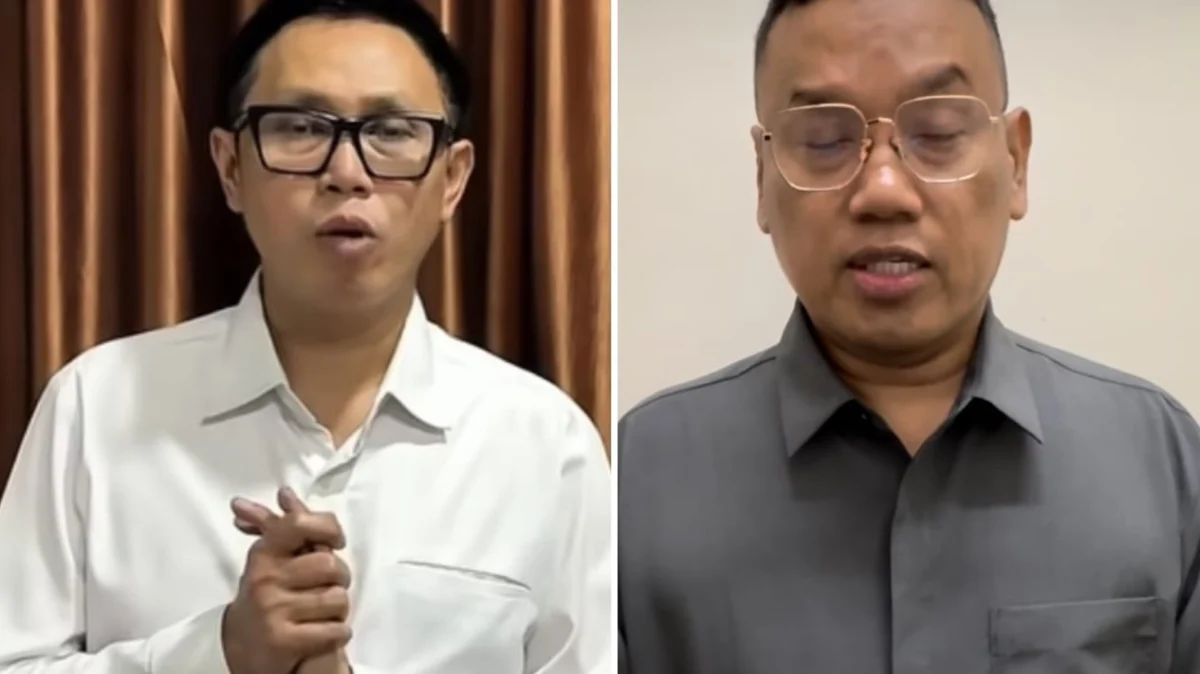
Jakarta, October 22, 2025 – The political landscape has kept a watchful eye on the status of prominent public figures Eko Hendro Purnomo, widely known as Eko Patrio, and Surya Utama, or Uya Kuya, following their non-activation from the House of Representatives (DPR RI). The National Mandate Party (PAN), under whose banner both celebrities served, has confirmed that their status as non-active members remains unchanged, with any future decisions resting firmly with the party’s top leadership. This announcement, made by Deputy Chairman of PAN, Eddy Soeparno, on Wednesday, October 22, 2025, reiterated the party’s position that has been in effect since early September.
The news comes as a clarification amidst lingering questions regarding the political futures of Eko Patrio and Uya Kuya, who transitioned from successful careers in entertainment to national politics. Their absence from active legislative duties has been noticeable, prompting inquiries into the reasons behind the party’s decision and the potential for their reinstatement or a more permanent change in status. Eddy Soeparno stated unequivocally, "As of now, the DPP PAN still maintains the status of non-activating our members," referring to the party’s central executive board. He further elaborated that the progression of this matter is now in the hands of PAN Chairman Zulkifli Hasan, who will communicate any subsequent directives to the leaders of the PAN faction within the DPR. This indicates a centralized decision-making process, highlighting the party’s hierarchical structure and the authority vested in its chairman.
Background: From Stardom to Senayan
Eko Hendro Purnomo, better known as Eko Patrio, carved a niche for himself as a comedian, television presenter, and actor before embarking on a political career. His charismatic personality and widespread popularity made him a recognizable figure even before his entry into legislative politics. He has served multiple terms in the DPR RI, representing various electoral districts under the PAN banner. Similarly, Surya Utama, or Uya Kuya, gained fame as a magician, hypnotist, and television personality, known for his unique style and engaging presence. His foray into politics, while more recent than Eko Patrio’s, also leveraged his public recognition to secure a seat in the national legislature. Both individuals represent a growing trend in Indonesian politics where celebrities leverage their widespread appeal to garner votes, often bringing a different dynamic to the traditional political arena.
The House of Representatives (DPR RI) is Indonesia’s national legislative body, comprising members elected from various political parties across different electoral districts. Its primary functions include legislating, budgeting, and overseeing the executive branch. Serving as a member of the DPR carries significant responsibility, requiring active participation in parliamentary committees, plenary sessions, and engagement with constituents. The decision to non-activate a member, therefore, is a serious one, impacting not only the individual’s political career but also the party’s representation and the overall functioning of the legislature. PAN, the National Mandate Party, is a moderate Islamic-based political party that has historically played a significant role in Indonesian politics, often forming part of ruling coalitions and contributing to national policy debates. Its stance on internal discipline and member accountability is often viewed as a reflection of its broader commitment to good governance.
Chronology of Events Leading to Non-Activation
The initial announcement of Eko Patrio and Uya Kuya’s non-activation came several weeks prior to the latest confirmation. On Sunday, August 31, 2025, the Central Executive Board (DPP) of PAN issued an official press release to various media outlets, including tvOnenews.com, detailing the decision. The statement was a significant development, signaling a notable shift in the party’s management of its legislative members.
The press release, which was formally signed by PAN Chairman Zulkifli Hasan and another Deputy Chairman, Viva Yoga Mauladi, explicitly stated the party’s decision. It announced that both Eko Hendro Purnomo and Surya Utama were officially rendered non-active as members of the DPR RI from the PAN Faction, effective from Monday, September 1, 2025. The phrasing "Mencermati dinamika dan perkembangan saat ini" (Observing current dynamics and developments) was used in the statement to explain the underlying rationale for the party’s move. While this phrase is somewhat broad, it typically alludes to a combination of factors, which could include internal party considerations, performance reviews, strategic adjustments in response to the political climate, or even external pressures related to public perception or specific events. It suggests a proactive measure by the party to address evolving circumstances, rather than a direct disciplinary action linked to a single, explicit transgression.
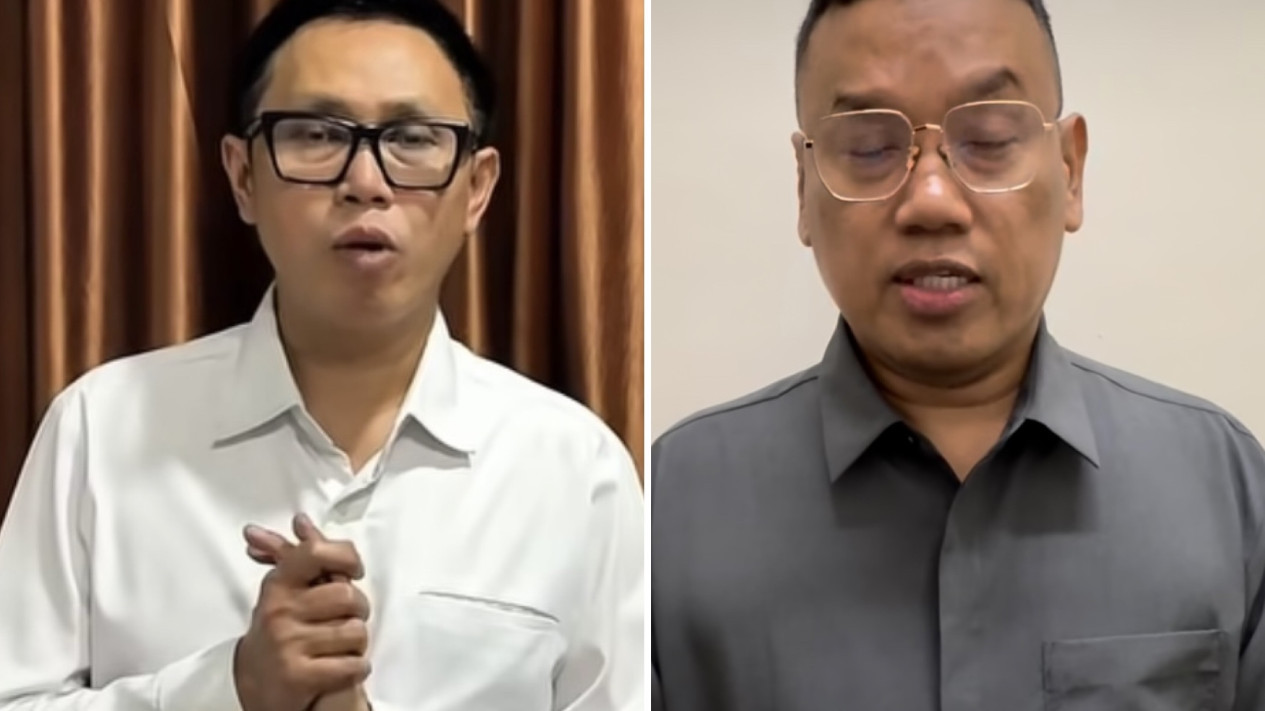
Following the effective date of September 1, 2025, both Eko Patrio and Uya Kuya ceased their active duties as DPR members, entering a period of political limbo. The subsequent confirmation by Eddy Soeparno on October 22, 2025, served to underscore that this non-active status was not a temporary formality but an ongoing condition, awaiting further definitive action or decision from the party’s highest echelons. This period of non-activation, while not a full dismissal, effectively removes the individuals from their legislative functions, including participation in committee meetings, plenary sessions, and other parliamentary duties. It also impacts their access to parliamentary resources and their ability to represent their constituents directly.
The initial press release from PAN also included a broader message to the public, urging calmness and patience, and expressing trust in the government of President Prabowo Subianto. This political endorsement, coupled with the assertion that PAN and the government would always side with the people, suggests that the party’s decision regarding its members might be subtly intertwined with its broader political strategy and its alignment with the current administration. In the context of a new presidential term, political parties often undertake internal reviews and adjustments to ensure alignment with national priorities and to optimize their representation within the legislative and executive branches.
Official Responses and Party Stance
The latest statement from Eddy Soeparno, Deputy Chairman of PAN and also a Vice Chairman of the People’s Consultative Assembly (MPR RI), provided crucial clarity regarding the party’s current position. His remarks confirmed that the decision to non-activate Eko Patrio and Uya Kuya was a deliberate and sustained one by the DPP PAN. "Sejauh ini DPP PAN masih tetap statusnya menonaktifkan para anggota kita," he stated, emphasizing the continuity of the decision. This indicates that the party is maintaining a firm stance and is not backtracking on its earlier announcement.
Soeparno further detailed the decision-making process for any future developments. He explained that "Perkembangannya tentu kami menunggu arahan selanjutnya dari ketua umum dan akan nanti dikomunikasikan kepada pimpinan fraksi PAN." This hierarchical approach places the ultimate authority with Chairman Zulkifli Hasan, a seasoned politician and former minister, who is known for his strategic leadership within the party. The communication of his directives to the faction leaders implies that any subsequent action will be coordinated through the party’s parliamentary wing, ensuring internal consistency and adherence to party lines.
While Eko Patrio and Uya Kuya themselves have not made extensive public statements regarding their non-active status, their implied position would be one of awaiting the party’s final decision. In such situations, party discipline often dictates that members refrain from public dissent or commentary that could be perceived as undermining party authority. Their silence, therefore, could be interpreted as adherence to party protocol while the internal deliberations unfold.
From the perspective of PAN’s leadership, this move likely serves multiple objectives. Firstly, it asserts party discipline and the authority of the central executive board over its legislative members. Secondly, by citing "current dynamics and developments," the party maintains a degree of flexibility and avoids specifying potentially sensitive internal or external reasons. Thirdly, it allows the party to re-evaluate its representation in the DPR and potentially allocate resources or responsibilities differently. The fact that the initial press release linked the decision to broader political stability and trust in President Prabowo’s government suggests a calculated move to align the party’s image with national governance priorities.
Broader Implications and Analysis
The non-activation of Eko Patrio and Uya Kuya has several layers of implications, both for the individuals involved, for PAN, and for the broader political landscape in Indonesia.

For Eko Patrio and Uya Kuya: This period of non-activation places their political careers in an uncertain state. While not a definitive recall, it effectively halts their legislative functions. They might face a choice between patiently awaiting a decision that could lead to reinstatement, or considering a return to their highly successful careers in the entertainment industry. Should the non-activation become permanent, it would mark a significant turning point in their political journeys. The experience highlights the inherent volatility of political life, even for popular figures, and the constant need to align with party directives.
For PAN: The party’s action underscores its commitment to internal discipline and the authority of its leadership. By taking such a step, PAN sends a clear message to its members about accountability and adherence to party strategy. This could strengthen the party’s internal cohesion and its image as a disciplined political entity. However, it also raises questions among the public and political observers about the specific reasons behind the non-activation. While "dynamics and developments" is a broad explanation, a lack of transparency could sometimes lead to speculation or questions about fairness and due process within the party. On the other hand, demonstrating the capacity to make tough decisions about high-profile members could enhance the party’s reputation for serious governance. The party’s strategic alignment with the Prabowo administration, as hinted in the initial press release, also plays a role. Decisions like this can be part of a larger strategy to optimize party strength and influence within the new political constellation.
For the DPR RI and Indonesian Politics: This incident contributes to the ongoing discourse about celebrity politicians and their role in legislative bodies. While celebrities bring name recognition and often a different connection with the electorate, their transition to politics sometimes comes with challenges related to political experience, policy engagement, and susceptibility to party directives. The non-activation serves as a reminder that political parties wield significant power over their members, and adherence to party lines is often paramount. It also highlights the mechanisms through which parties manage their legislative representation, whether through temporary suspensions or more permanent actions. Such events often spark discussions about the ideal qualities of a people’s representative and the balance between popular appeal and substantive legislative contribution.
Furthermore, in the context of President Prabowo Subianto’s administration, internal party dynamics and legislative representation are crucial for effective governance. Parties within the ruling coalition, such as PAN, are expected to align their actions with the broader government agenda. Any internal adjustments within these parties can therefore be seen through the lens of consolidating support for the government and ensuring smooth legislative processes. The emphasis on public trust in the government, as mentioned in PAN’s August 31 statement, further reinforces this notion of aligning party actions with national stability and governance priorities.
The situation surrounding Eko Patrio and Uya Kuya is a nuanced example of how political parties navigate internal discipline, public perception, and strategic positioning within a dynamic political environment. As the decision-making process continues under Chairman Zulkifli Hasan, the future trajectory of these two prominent figures will remain a subject of considerable interest, offering insights into the evolving nature of celebrity involvement in Indonesian politics and the robust mechanisms of party control.