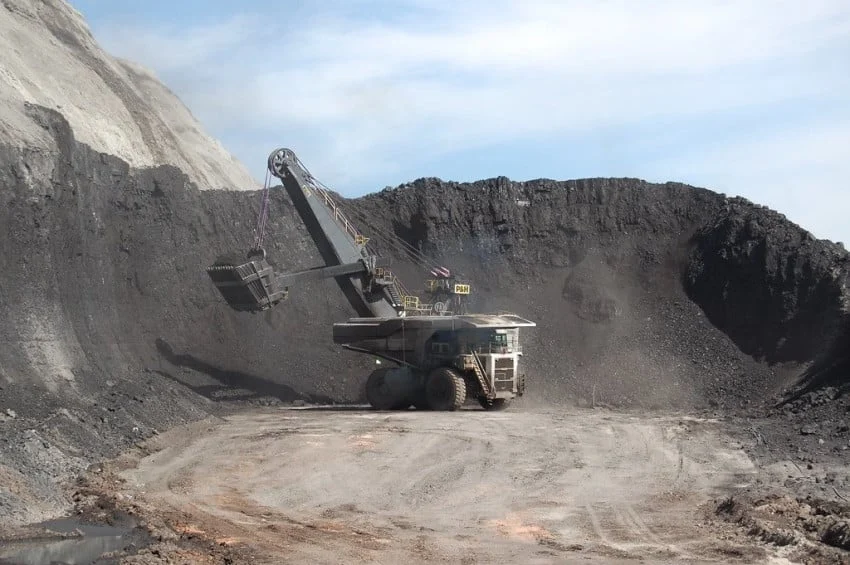
Coal, a fossil fuel often targeted for phase-out by the modern world, continues to maintain a tenacious grip on global energy supplies, proving stubbornly difficult to fully displace. This lustrous black or brownish-black sedimentary rock lies hidden in vast subterranean seams, some reaching thicknesses of 90 feet and extending for hundreds of miles. When ignited, coal boasts a superior heat retention compared to wood, a property that humanity has enthusiastically exploited for centuries, ultimately fueling the construction of the world we inhabit, for better or worse.
A Deep Dive into Coal’s Ancient History and Formation
The recognition of coal’s immense utility is not a recent phenomenon. Its journey from ancient rock to industrial powerhouse is a testament to its intrinsic energy value. Geologically, coal is formed from ancient plant matter that accumulated in swamps and peat bogs over millions of years, subjected to immense pressure and heat deep within the Earth’s crust. This process, known as coalification, transforms organic material into peat, then lignite, sub-bituminous coal, bituminous coal, and finally, anthracite, each stage representing increasing carbon content and energy density.
Early civilizations discovered and utilized coal long before the Industrial Revolution. The Romans, for instance, employed coal to heat their public baths, demonstrating an early understanding of its thermal properties. In the Americas, the Aztec civilization not only burned coal for fuel but also meticulously carved its gleaming, jet-like variety into intricate ornaments, showcasing its aesthetic as well as practical value. Archaeological evidence from Bronze Age communities in southern Wales indicates the use of coal for cremating their dead, highlighting its role in ritualistic practices. However, it was the Chinese who pioneered the systematic and large-scale exploitation of coal. A seminal study published in Science Advances traced organized coal mining in northwestern China back approximately 3,600 years, to around 1600 BCE, predating widespread coal use in other parts of the world by millennia, where most populations still primarily relied on wood for energy.
The Industrial Revolution: Coal’s Pivotal Role
The true turning point for coal, however, arrived with the dawn of the Industrial Revolution in the 18th century. Understanding this transformation requires clarifying a common historical misconception regarding the invention of the steam engine. While often attributed solely to James Watt, the first practical steam engine was actually constructed by Thomas Newcomen in 1712. Newcomen’s atmospheric engine, though groundbreaking, was remarkably inefficient, leading critics to jest that it required an iron mine to build and a coal mine to keep it running. Watt’s crucial contribution, made in 1765, was the invention of the separate condenser. This innovation drastically reduced fuel wastage, transforming the steam engine from a cumbersome novelty into a truly powerful and economical engine for industrial applications.
Coal fed the boilers, the boilers generated steam, and that steam, in turn, began to reshape the planet. From powering textile mills and pumping water out of mines to driving locomotives and steamships, coal became the lifeblood of industrial expansion. Its abundant availability, coupled with the enhanced efficiency of Watt’s steam engine, enabled unprecedented levels of production and transportation. By 1900, coal accounted for approximately half of the world’s total energy consumption, fundamentally altering global economies, demographics, and environmental landscapes. The cheap and readily available energy provided by coal fueled urbanization, facilitated the growth of new industries, and underpinned the rise of modern industrial nations.
The Modern Paradox: Enduring Demand Amidst Environmental Concerns
In the 21st century, coal presents a significant global paradox. Despite its indispensable role in historical development and its continued contribution to energy security in many parts of the world, it is also the single largest contributor to human-caused greenhouse gas emissions, driving climate change and contributing to air pollution. The international community, particularly developed nations, has committed to reducing coal reliance as part of broader decarbonization efforts. Yet, global coal consumption, especially in rapidly industrializing economies like China and India, remains robust, driven by the need for affordable and reliable electricity, as well as its use in industrial processes like steel and cement production.
The ongoing debate centers on balancing economic development and energy access with environmental sustainability. Technologies like Carbon Capture, Utilization, and Storage (CCUS) are being explored as potential avenues to mitigate emissions from coal-fired power plants, though their widespread commercial viability and environmental effectiveness remain subjects of intense discussion and investment.
The Giants of the Earth: World’s Largest Coal Mines
The scale of modern coal mining operations is immense, reflecting the persistent global demand. These colossal enterprises extract millions of tons of coal annually, supplying power plants, industries, and export markets across continents. While Indonesia, Australia, China, India, and the United States are among the leading coal-producing nations, several individual mines stand out for their sheer output.
1. Black Thunder Mine, United States
The undisputed champion in terms of recent production is the Black Thunder Mine, nestled in Wyoming’s vast Powder River Basin, approximately 54 miles south of Gillette. Owned and operated by Arch Resources, a St. Louis-based company, Black Thunder moved an astonishing 62.68 million tons of coal in 2023, making it the highest-producing mine on the planet for that year. The mine’s operations are characterized by an impressive fleet of draglines, including the colossal "Ursa Major," which ranks among the largest ever constructed, capable of moving immense volumes of overburden. At its peak, Black Thunder was capable of loading over 20 coal trains per day, each stretching more than a mile long, carrying its product to power plants across the United States.
Opened in 1977, the Black Thunder Mine achieved a significant milestone in 2004, becoming the first U.S. mine to ship a cumulative one billion short tons of coal. The coal extracted here is primarily low-sulfur sub-bituminous coal, a highly sought-after type by power generators due to its relatively clean burning properties and the minimal processing required before combustion. The Powder River Basin, where Black Thunder is located, is the largest coal-producing region in the United States, known for its thick, shallow, and extensive coal seams, making surface mining highly efficient and cost-effective.
2. Gevra Open Cast Mine, India
India’s colossal Gevra mine, situated in the Korba district of Chhattisgarh, is a formidable contender for the top spot. Managed by South Eastern Coalfields (SECL), a subsidiary of the state-owned giant Coal India Limited, Gevra produced approximately 60 million tons in 2023, just narrowly behind Black Thunder. Recognizing the burgeoning energy demands of India’s rapidly growing economy, the Gevra mine is actively pursuing expansion, having secured environmental clearance in 2024 to boost its annual capacity to an ambitious 70 million tons. This expansion underscores India’s strategic reliance on domestic coal production to ensure energy security and support its industrial growth, despite global pressures to transition away from fossil fuels. The mine plays a critical role in supplying coal to numerous thermal power plants across central India.
3. North Antelope Rochelle Mine, United States
Also located in Wyoming’s prolific Powder River Basin, the North Antelope Rochelle Mine (NARM) is another titan of the American coal industry. Operated by Peabody Energy, NARM consistently ranks among the world’s largest coal mines by output. In recent years, it has often rivaled or surpassed Black Thunder in production. The mine benefits from the same geological advantages as Black Thunder: massive, shallow, and easily accessible sub-bituminous coal seams. Its strategic location allows for efficient rail transportation to electricity generators across the western, midwestern, and southern United States. Like Black Thunder, NARM employs massive earth-moving equipment, including draglines and shovel-truck fleets, to extract coal on an industrial scale, contributing significantly to the U.S. energy supply.
4. Haerwusu Coal Mine, China
China, being the world’s largest coal producer and consumer, hosts several mega-mines, with the Haerwusu Coal Mine in Inner Mongolia being one of its most prominent. Owned by China Shenhua Energy Company, Haerwusu is an open-pit mine that has consistently produced over 30 million tons annually, sometimes exceeding 40 million tons. The mine is a critical component of China’s domestic energy strategy, providing essential fuel for its vast network of thermal power plants and industrial complexes. Its operations are characterized by advanced mining technologies and large-scale infrastructure designed to maximize efficiency and output, reflecting China’s commitment to leveraging its extensive coal reserves for national development.
5. Cerrejón Mine, Colombia
In Latin America, the Cerrejón mine in La Guajira, Colombia, stands out as one of the largest open-pit coal mines globally and a significant exporter of thermal coal. Jointly owned by BHP, Anglo American, and Glencore (though Anglo American and BHP have recently divested their stakes, with Glencore becoming the sole owner), Cerrejón has an annual production capacity often exceeding 30 million tons. The mine is crucial for Colombia’s economy, being one of the country’s largest private employers and a major source of foreign exchange. Its coal is primarily exported to European and Asian markets, highlighting the international trade dynamics of the coal industry. The mine’s operations involve extensive infrastructure, including a dedicated railway line and a port for shipping coal worldwide.
6. Kaltim Prima Coal (KPC) Mine, Indonesia
Indonesia, a leading global exporter of thermal coal, is home to several massive mining operations. Kaltim Prima Coal (KPC), located in Sangatta, East Kalimantan, is one of the largest. Operated by PT Kaltim Prima Coal, a subsidiary of PT Bumi Resources Tbk, KPC consistently produces tens of millions of tons of coal annually, often exceeding 50 million tons. The mine extracts various grades of thermal coal, which are highly sought after in Asian markets, particularly by China, India, Japan, and South Korea, for electricity generation. KPC’s operations are characterized by extensive open-pit mining, supported by vast logistics infrastructure for transportation to ports for export, underscoring Indonesia’s pivotal role in the global coal supply chain.
7. Adaro Indonesia (Tabalong Mine), Indonesia
Another Indonesian giant is the Tabalong mine, operated by PT Adaro Indonesia, a subsidiary of Adaro Energy. Located in South Kalimantan, this mine is renowned for producing "Envirocoal," a low-sulfur, low-ash sub-bituminous coal. Adaro’s operations are among the most efficient in Indonesia, with annual production often surpassing 50 million tons. The company integrates mining with logistics, including its own barges and ports, to ensure a smooth and cost-effective supply chain for its international customers, primarily in Asia. Adaro’s focus on lower-emission coal types highlights a market segment that seeks to mitigate the environmental impact of coal combustion, even as demand persists.
8. Peak Downs Mine, Australia
Australia is a global leader in both thermal and metallurgical coal exports, with the Peak Downs mine in Queensland being one of its most significant operations. Owned by BHP Mitsubishi Alliance (BMA), Peak Downs is an open-cut mine primarily producing metallurgical coal, a crucial ingredient in steel production. While its output figures might be lower than some thermal coal mines (typically in the 15-20 million tons range), its high-quality metallurgical coal commands premium prices and is essential for global industrial processes. Australia’s coal mines, like Peak Downs, are highly mechanized and technologically advanced, reflecting the country’s status as a major resource exporter.
Economic, Social, and Geopolitical Implications
The operations of these massive coal mines carry profound economic, social, and geopolitical implications. Economically, they are significant employers, supporting thousands of direct jobs in mining, logistics, and related industries, and many more indirectly. They contribute substantially to national GDPs, government revenues through taxes and royalties, and local economies through infrastructure development and community programs. For resource-rich nations, coal exports are often a critical source of foreign currency.
Socially, the presence of large mines can lead to both opportunities and challenges. While offering employment and development, they can also cause social disruption, displacement of communities, and environmental degradation that impacts local livelihoods and health. Labor rights and safety standards within the mining sector remain ongoing concerns globally.
Geopolitically, coal continues to be a factor in energy security strategies. Nations with abundant domestic coal reserves can reduce their reliance on imported energy, offering a degree of energy independence. However, the global trade in coal also creates intricate interdependencies, with major exporters like Australia and Indonesia supplying key consumers in Asia. Fluctuations in coal prices and supply can impact international relations and economic stability.
The Future Trajectory of Coal
The future of coal is complex and highly debated. While many developed nations are actively decommissioning coal-fired power plants and investing heavily in renewable energy sources, the trajectory in developing economies is often different. Countries like India, facing immense energy demands and a large population, continue to rely on coal as a foundational energy source due to its affordability and reliability.
The global energy transition dictates a long-term decline for coal, particularly thermal coal for electricity generation. However, the pace and specifics of this decline vary significantly by region. The development and deployment of carbon capture technologies could theoretically extend coal’s lifespan by mitigating its environmental impact, but these solutions face significant economic and technological hurdles. Furthermore, metallurgical coal, essential for steel production, is expected to maintain demand for longer, as viable, scalable alternatives for green steel production are still in early stages of development.
In conclusion, from its ancient origins as a basic fuel to its transformative role in the Industrial Revolution and its current status as a contested but enduring energy source, coal’s story is one of profound impact. The world’s largest coal mines stand as monuments to humanity’s ongoing quest for energy, simultaneously symbolizing both the progress achieved and the environmental challenges that define our modern era. The balancing act between energy security, economic development, and environmental sustainability will continue to shape the narrative of coal for decades to come.