On Tuesday, October 21, 2025, prominent political observer Agung Baskoro delivered a sharp critique of President Prabowo Subianto’s administration, asserting that its current operational paradigm remains excessively centered on the singular figure of the President. Speaking during the "Apa Kabar Indonesia Malam" program on tvOne, Baskoro articulated concerns that this "Prabowo-centric" leadership style inadvertently sidelines key governmental figures, leading to an underutilization of the Vice President, Coordinating Ministers, and other cabinet members, thereby hindering their capacity to perform optimally. This assessment, delivered almost one year into the Prabowo-Gibran presidential term, highlights growing anxieties among political analysts regarding the efficiency and collaborative nature of the nascent government.
Baskoro’s core argument revolves around a perceived "Superman management" approach, where the President is seen as the primary solver of all significant issues, rather than fostering a robust "super team" capable of collective problem-solving and proactive governance. "I believe the first issue is this: a shift from Superman management, which is Prabowo-centric, towards a super team. How can the cabinet manage numerous problems and respond to them effectively?" Baskoro questioned, emphasizing the need for a more distributed leadership model. He further elaborated that this concentrated leadership risks rendering other crucial government positions, particularly that of the Vice President, largely ineffective or merely symbolic.
The Underutilized Vice Presidency: "Between Present and Absent"
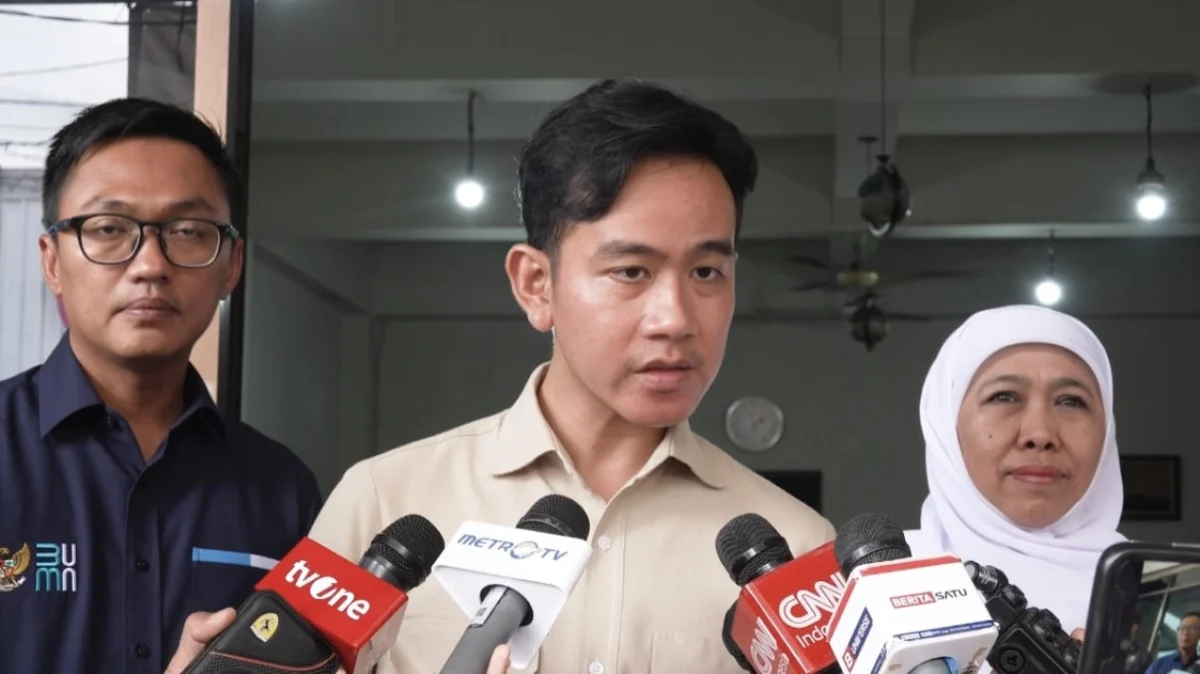
A focal point of Baskoro’s criticism was the perceived role of Vice President Gibran Rakabuming Raka, whom he described as being "between present and absent." This observation suggests a lack of visible, substantive engagement from the Vice President in critical policy formulations or public problem-solving initiatives. When the Prabowo-Gibran ticket secured a decisive victory in the 2024 general elections, ushering in a new era of leadership, expectations were high for a dynamic partnership. Gibran, with his background as Mayor of Surakarta and his youth, was anticipated to bring a fresh perspective and a focus on generational issues. However, nearly a year into their term, Baskoro’s remarks imply that the Vice President’s mandate or operational scope might be limited by the prevailing leadership style.
Historically, the role of an Indonesian Vice President varies significantly depending on the President’s leadership style and the political dynamics of the time. Some Vice Presidents have been given expansive portfolios, spearheading specific development programs or diplomatic missions, while others have remained more in the background, fulfilling ceremonial duties or providing counsel. Baskoro’s statement suggests Gibran’s current positioning leans towards the latter, potentially stifling initiatives that could benefit from a more empowered and visible Vice President. The implication is that without a clear, active role and public mandate, the Vice President’s office cannot fully contribute to the administration’s goals, potentially leading to a duplication of efforts or an inefficient allocation of leadership resources.
Coordinating Ministers: Symbolic vs. Substantive Roles
Beyond the Vice President, Baskoro extended his critique to the Coordinating Ministers, asserting that their positions have largely remained symbolic rather than substantive. Indonesia’s governmental structure features several Coordinating Ministries, each overseeing clusters of related ministries (e.g., Coordinating Minister for Economic Affairs, Coordinating Minister for Maritime Affairs and Investment, Coordinating Minister for Political, Legal, and Security Affairs, Coordinating Minister for Human Development and Culture). These roles are designed to ensure synergy, prevent sectoral egoism, and streamline policy implementation across diverse governmental departments. They are meant to be powerful figures, orchestrating complex policy frameworks and resolving inter-ministerial disputes.
"How can the cabinet manage numerous problems and respond to them effectively? So how do you optimize the Vice President? This Vice President seems to be between present and absent," Baskoro reiterated, then expanded, "Because oftentimes we see that it is Mr. Prabowo who extinguishes the problems. And for me, this cannot be continued because it will make, pardon me, the Vice President, the Coordinating Ministers, and other ministers useless if this pattern continues." This points to a systemic issue where the President’s direct intervention in resolving crises might inadvertently bypass the hierarchical structure and the intended functions of the Coordinating Ministers. If these senior ministers are not empowered to lead, coordinate, and troubleshoot within their respective domains, their strategic importance diminishes, and the burden of day-to-day governance disproportionately falls upon the President. This could lead to bottlenecks in decision-making and a slower, less agile governmental response to multifaceted challenges.
Background and Context of the Prabowo-Gibran Administration
The Prabowo-Gibran administration officially took office following their inauguration in October 2024, after a hard-fought election campaign that saw them emerge victorious with a significant mandate. Their platform emphasized continuity with the previous administration’s development agenda, particularly in infrastructure, economic growth, and social welfare programs, while also promising innovations in defense, food security, and human capital development. The cabinet, formed shortly after the inauguration, brought together a mix of experienced politicians, technocrats, and figures from various political parties, reflecting the broad coalition that supported their bid for power.
From the outset, the administration faced a complex array of challenges. Globally, geopolitical tensions, fluctuating commodity prices, and the lingering effects of global economic slowdowns continued to shape Indonesia’s external environment. Domestically, issues such as persistent inflation, the need for job creation, equitable distribution of development, and bureaucratic reform remained high on the agenda. The administration’s first year has been marked by efforts to stabilize the economy, attract foreign investment, and accelerate key national projects. However, the centralized leadership style highlighted by Baskoro could potentially impede the swift and adaptive policy responses required to navigate these intricate challenges effectively. The vision of a united and efficient government, where each component plays a crucial role, appears to be challenged by the practicalities of implementation and leadership delegation.
The Imperative for Unified Public Communication
Beyond the internal dynamics of governance, Agung Baskoro also underscored the critical need for an overhaul in the government’s public communication strategy. He acknowledged that some progress had been made through institutions like the Presidential Staff Office (KSP), the Communication Agency (Bakom), and the Public Information Body (BKP). However, he stressed the necessity for clearer communication guidelines to ensure that all government officials speak with a unified voice. "So that there are no frequent ‘slips of the tongue,’ so that their communication isn’t haphazard," he stated, warning that unchecked, inconsistent public statements could erode public trust and damage the country’s standing with international stakeholders.
Effective public communication is paramount for any government, particularly in an era of rapid information dissemination and heightened public scrutiny. Inconsistent messages, contradictory statements from different officials, or an inability to articulate government policies clearly can lead to confusion, misinformation, and a decline in public confidence. It can also create an impression of disunity within the administration, undermining its credibility both domestically and internationally. For a country like Indonesia, which relies on foreign investment and maintains complex diplomatic relations, projecting an image of stable, coherent governance is essential. The lack of a cohesive communication strategy could deter investors, complicate international negotiations, and foster domestic skepticism regarding the government’s competence and direction.
Economic Headwinds and the Call for a Solid Team
Baskoro’s analysis extended to the economic sphere, identifying persistent economic contraction as a significant challenge that necessitates a more focused and cohesive economic team. He pointed to two stimulus packages introduced by the government within the year as evidence that the President’s economic team needed to be more "concerned and, again, not dependent on the Purbaya Effect." This reference, likely pertaining to Dr. Purbaya Yudhi Sadewa, a prominent economist often associated with key macroeconomic policies and strategic state-owned enterprises, suggests an over-reliance on a single figure’s influence or a narrow set of economic ideas within the presidential advisory circle.
Indonesia’s economy in 2025, like many others globally, continues to grapple with post-pandemic recovery complexities, inflationary pressures, and the impacts of global supply chain disruptions. While the government has implemented various measures to stimulate growth and support vulnerable sectors, including fiscal incentives and social safety nets, Baskoro’s comments imply that these efforts might not be yielding the desired broad-based impact. A persistent "economic contraction" suggests that despite stimulus measures, real economic activity might still be struggling to rebound robustly, particularly at the grassroots level. This calls for a diversified approach, drawing on a wider range of economic expertise and ensuring that policy implementation reaches all segments of society, not just specific sectors or large corporations. The "Purbaya Effect" critique, therefore, serves as a call for a more collaborative, multi-faceted economic strategy that transcends individual influence and fosters collective responsibility within the economic cabinet.
Bridging the Gap: Program Implementation at the Grassroots
A crucial aspect highlighted by Baskoro is the imperative for major government programs to genuinely reach and benefit the wider community, especially those at the grassroots level. He implied that current economic interventions might not be effectively trickling down, leaving many ordinary citizens unaffected by the intended positive impacts. This gap between policy formulation and on-the-ground execution is a perennial challenge for large developing nations. For the Prabowo administration, whose campaign promises resonated deeply with ordinary citizens through pledges of job creation, affordable goods, and improved social services, ensuring tangible benefits is critical for maintaining public legitimacy and trust.
The implementation of large-scale infrastructure projects, social assistance programs, or agricultural initiatives requires meticulous planning, robust oversight, and effective coordination across various government levels—from central ministries to local administrations. If the "super team" approach advocated by Baskoro is not adopted, and ministers are not fully empowered to drive their respective programs, the risk of bureaucratic inefficiencies, delays, and a disconnect between policy intent and public outcome increases significantly. Therefore, transforming major government initiatives from mere policy statements into impactful realities for the populace stands as a significant test for the administration’s ability to decentralize responsibility and empower its cabinet.
Implications for Governance and Public Trust
The implications of a centralized, "Superman management" style extend far beyond mere efficiency; they touch upon the fundamental principles of good governance, accountability, and public trust. A government where decisions are concentrated at the very top can become less agile, less responsive to diverse needs, and potentially more prone to errors due to an overload of responsibilities on a single individual. It can also foster an environment where accountability is blurred, as ministers might feel less ownership over policies if they perceive their roles as limited or symbolic. This can lead to a less vibrant and innovative public service, as talented individuals in ministerial positions may feel their contributions are not fully valued or utilized.
Furthermore, public trust, a cornerstone of democratic governance, is intrinsically linked to the perceived effectiveness and transparency of an administration. If the public observes a government that appears overly dependent on one figure, or where key officials seem to lack substantive roles, it can erode confidence in the collective competence of the cabinet. In the long run, this could lead to increased public cynicism, disengagement, and a potential for political instability if citizens feel their concerns are not being adequately addressed by a well-functioning, collaborative government. Internationally, investors and partners look for stable, predictable governance with clear lines of authority and a robust institutional framework. A perceived over-centralization of power could raise questions about institutional strength and long-term policy consistency.
The Path Forward: Cultivating a Super Team
Agung Baskoro’s critique, while pointed, serves as a constructive call for the Prabowo-Gibran administration to evolve its leadership paradigm. The push to transition from a "Superman" to a "super team" model is not merely about delegating tasks; it’s about empowering the entire cabinet, fostering a culture of collective responsibility, and leveraging the diverse expertise within the government. This would involve clearly defining the roles and authorities of the Vice President and Coordinating Ministers, granting them the autonomy and resources necessary to lead their respective domains effectively. It also entails strengthening inter-ministerial coordination mechanisms, ensuring that policy implementation is a collaborative effort rather than a series of individual initiatives.
The Presidential Palace and government spokespersons have often reiterated their commitment to collective leadership and a strong, unified cabinet. However, Baskoro’s observations suggest that the practical application of this principle might still be a work in progress. For the administration to successfully navigate the complex domestic and international landscapes, it will need to demonstrate a tangible shift towards greater collaboration, enhanced communication, and a more equitable distribution of leadership responsibilities. By embracing a genuine "super team" approach, the Prabowo-Gibran government can not only maximize the potential of its cabinet members but also reinforce public confidence, improve policy efficacy, and solidify its trajectory towards achieving its ambitious national development goals. The coming months will be crucial in observing whether the administration takes heed of such critiques and actively works to empower its entire governmental apparatus.