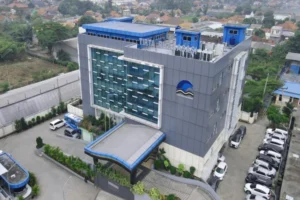
The Otoritas Jasa Keuangan (OJK), working in close coordination with the Task Force for the Eradication of Illegal Financial Activities (Satgas PASTI), has significantly intensified its regulatory offensive against unauthorized financial operations across Indonesia. Between August and September 2026, the joint task force successfully dismantled 330 entities engaged in illicit financial activities, representing a decisive move to protect consumers from the growing prevalence of digital-era financial fraud. This enforcement action highlights a broader, sustained effort to clean up the financial ecosystem as the nation grapples with the sophisticated evolution of cyber-enabled scams and predatory lending.
The crackdown focused on a wide spectrum of illicit operations, ranging from unregistered pawnshops to complex online lending schemes. Specifically, authorities terminated the operations of 11 pawnshops found to be operating without the requisite licenses. These actions are part of a comprehensive strategy to enforce compliance with national financial regulations and safeguard the public from deceptive practices that have increasingly migrated to digital platforms.
The Anatomy of Illegal Financial Operations
The 330 cases addressed during this two-month window provide a stark overview of the current threat landscape in the Indonesian financial sector. The data reveals a clear hierarchy of illicit activities:
- Illegal Online Lending (Pinjol): Accounting for the lion’s share of the enforcement actions, 241 entities were identified as illegal online lending platforms. These operations frequently lure victims with promises of instantaneous disbursement while trapping them in cycles of exorbitant interest rates and opaque "hidden" administrative fees.
- Impersonation Scams: Satgas PASTI identified 74 instances where malicious actors utilized identity theft to deceive the public. These entities often mimicked the branding, logos, and digital identities of reputable, licensed financial institutions to establish a facade of legitimacy.
- Illegal Investment Schemes: Eight entities were shut down for operating unauthorized investment platforms, which typically promise high, guaranteed returns with minimal risk—a classic hallmark of Ponzi-like structures.
- Unauthorized Personal Lending: Seven activities involving informal, unregulated personal lending were curtailed, as these operations lack the consumer protection mechanisms mandated by the OJK.
These figures represent a significant surge in regulatory vigilance. On a cumulative basis, from January 1 to September 30, 2026, the task force has neutralized a total of 1,199 illegal online lending entities, 250 investment fraud schemes, 38 illegal pawnshops, and two other types of unauthorized financial services. This relentless pace of enforcement underscores the magnitude of the challenge facing regulators in a rapidly digitizing economy.
Strengthening Response: The Role of the Indonesia Anti-Scam Centre (IASC)
A pivotal component of the current enforcement strategy is the operationalization of the Indonesia Anti-Scam Centre (IASC). Launched on November 22, 2024, the IASC serves as a centralized hub for intelligence sharing and rapid response regarding financial fraud. Since its inception through September 30, 2026, the center has become a critical firewall for the public.
The IASC’s impact is evidenced by its impressive operational metrics. By leveraging cross-institutional cooperation, the center has successfully facilitated the freezing of 702,833 suspicious bank accounts linked to fraudulent activities. The total value of assets protected by these interventions is estimated at IDR 825.2 billion. Perhaps most significantly, the IASC has been instrumental in the recovery process, facilitating the return of approximately IDR 207.16 billion to victims of financial crimes.
The center’s ability to act swiftly is essential in an era where illicit funds can be laundered through multiple accounts in a matter of seconds. By bridging the gap between banking institutions, law enforcement, and regulatory bodies, the IASC has transformed the national approach to combatting financial fraud from a reactive posture to a more proactive, data-driven defense.
Modus Operandi and the Digital Threat Landscape
The methods employed by illegal financial entities have become increasingly sophisticated. Satgas PASTI’s investigations reveal that these operators predominantly utilize digital marketing channels to reach potential victims. By disseminating promotional content through unauthorized websites, mobile applications, social media platforms, and encrypted messaging services, these entities can rapidly scale their operations.
A common tactic involves the predatory collection of personal data. Once a victim signs up for an illegal loan, the entity gains access to the user’s contact lists, photo galleries, and other sensitive information stored on their smartphones. This data is subsequently used as a tool for psychological warfare—employing aggressive and intimidatory debt collection tactics to pressure victims into paying, often far beyond the initial borrowed amount.
The prevalence of "impersonation" scams adds another layer of complexity. By leveraging the trust that consumers place in established financial brands, scammers create a sense of security that lowers the victim’s natural defenses. The OJK has repeatedly warned the public to verify the legality of any entity via the official OJK website or consumer contact center (157) before engaging in any financial transaction.
Broader Economic Implications and Consumer Vulnerability
The rise of illegal financial activities has significant macroeconomic implications. While the formal fintech lending industry in Indonesia continues to grow—with reports indicating that domestic citizens have borrowed over IDR 105 trillion through authorized digital channels—the parallel growth of the shadow financial sector creates a dangerous imbalance.
The influx of foreign capital into the Indonesian digital lending market, which reached IDR 17.28 trillion by mid-2026, highlights the sector’s attractiveness. However, the presence of unregulated entities undermines trust in the legitimate fintech ecosystem. When consumers fall victim to scams, the resulting financial distress often leads to a broader erosion of confidence in digital financial services, which is counterproductive to the national goal of financial inclusion.
Furthermore, the "social cost" of these scams is profound. Many victims of illegal online loans are individuals in urgent need of liquidity who are excluded from traditional banking. When these individuals are targeted by predatory lenders, the cycle of debt often leads to long-term economic instability, personal trauma, and, in extreme cases, severe social consequences.
The Path Forward: Regulatory Future and Public Education
The OJK’s strategy for the remainder of 2026 and into 2027 emphasizes a multi-pronged approach: enforcement, prevention, and education. While the closure of 330 entities in two months is a victory, the regulators acknowledge that the battle against financial crime is continuous.
The task force is expected to continue utilizing artificial intelligence and data analytics to monitor suspicious digital footprints, allowing for earlier detection of fraudulent activity. Moreover, there is an ongoing push for tighter inter-agency collaboration with the Ministry of Communication and Digital Affairs to block the domains of illegal applications and websites more efficiently.
Ultimately, the most effective defense remains a financially literate public. The OJK’s "2L" campaign—Legal (check if the entity is licensed) and Logis (check if the financial offer makes sense)—is being intensified. Authorities are urging the public to be skeptical of any offer that promises "easy money" or requires access to private mobile data.
As the regulatory framework matures, the synergy between the OJK, Satgas PASTI, and the IASC will remain the cornerstone of Indonesia’s financial security. While the criminals behind these scams are evolving, the increased pace of discovery and the success in asset recovery suggest that the regulatory net is tightening, providing a safer environment for consumers to participate in the nation’s burgeoning digital economy. The commitment to eradicating these predatory practices is not merely a matter of compliance, but a fundamental necessity for maintaining the integrity and stability of the Indonesian financial landscape.