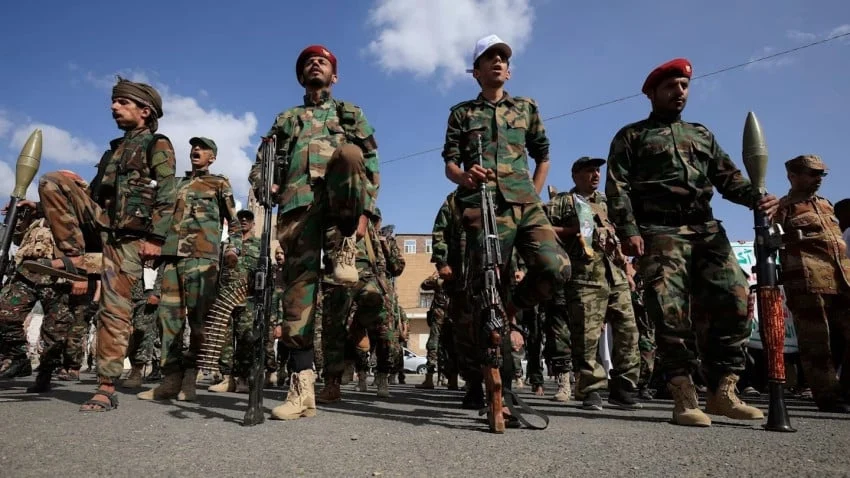
The rapid territorial advances achieved by the Iran-backed Houthi movement in Yemen, including the seizure of a strategically vital island in the Red Sea, have delivered a severe blow to a region already reeling from persistent geopolitical friction between the United States and Iran. This escalation has further disrupted global energy markets and strained long-standing security alliances across the Middle East. Despite the mounting threats to international maritime trade and regional stability, neither Washington nor its primary security partner in the Gulf, Saudi Arabia, has articulated a cohesive, actionable military strategy to roll back the insurgent group’s advances. This absence of leadership has ignited widespread anxiety and frustration among regional governments, prompting critical questions regarding the future architecture of deterrence and who will ultimately bear the responsibility of confronting the escalating Houthi threat.
Geopolitical Context and the Strategic Importance of the Red Sea
The Bab al-Mandab Strait, a crucial maritime chokepoint connecting the Red Sea to the Gulf of Aden and the Suez Canal, handles a substantial share of global container shipping and energy supplies daily. The strategic ambitions of the Houthi movement to secure absolute dominance over this corridor pose an unacceptable risk to international commerce. For months, intelligence assessments circulated within Washington have warned that the insurgent group intends to systematically restrict or close vital maritime lanes, mirroring aggressive tactics previously employed by Iran earlier in the year.
Despite these clear warnings, the current U.S. administration has signaled an extreme reluctance to commit American military forces directly to defensive or offensive operations aimed at neutralizing the Houthi leadership on the ground. Instead, Washington continues to delegate the heavy lifting of direct combat operations to Saudi Arabia and its regional coalition partners. However, structural deficiencies, logistical hurdles, and historical limitations within the Saudi-backed Yemeni government forces have repeatedly prevented them from mounting a sustained and effective counteroffensive. Intelligence analysts and former diplomats note that this operational vulnerability comes as no surprise, given that the military forces aligned with Riyadh have struggled for years to contain the resilient and well-trained insurgent factions.
The Limitations of U.S. Military Support and Riyadh’s Operational Deficits
From the perspective of Washington, substantial resources have already been funneled to Riyadh to ensure operational success on the ground. Senior American officials maintain that the United States is providing robust intelligence-sharing, advanced surveillance data, and precise targeting assistance to the Saudi military. Following approximately a decade of joint training initiatives and capacity-building programs alongside Yemeni government forces, Saudi military leadership had previously assured American counterparts of their readiness and capability to independently manage the southern theater of operations.
The roots of the current conflict extend deep into the brutal Yemeni civil war, which escalated dramatically over a decade ago when a coalition led by Saudi Arabia intervened to restore the internationally recognized government after Houthi forces seized the capital, Sanaa. The Houthis, who receive critical tactical training, financial backing, and sophisticated weaponry from Iran’s Islamic Revolutionary Guard Corps (IRGC), have proven to be a formidable adversary. Although a United Nations-brokered nationwide truce in 2022 provided a temporary respite and significantly lowered the intensity of hostilities, the fragile peace has steadily unraveled. Recent weeks have witnessed a sharp escalation in violence, characterized by fierce ground clashes, cross-border projectile fire, and mutual accusations of civilian infrastructure targeting. Saudi officials have repeatedly condemned Houthi attempts to target holy sites, while the insurgent group has claimed responsibility for downing advanced coalition aircraft.
Washington’s Red Lines and Diplomatic Signals to Tehran
President Donald Trump has firmly established that direct U.S. kinetic strikes against Houthi positions represent a crossing of his administration’s strategic red lines. U.S. military involvement in the theater remains strictly bounded by non-combat support roles, primarily restricted to intelligence coordination and advisory functions. "There is no offensive posture," a senior U.S. defense official confirmed, emphasizing the administration’s policy of strategic detachment from direct ground or air combat engagements in Yemen.
This calculated reluctance has been interpreted by analysts across the Middle East and Washington as a concerning signal to Tehran. Regional stakeholders fear that the administration’s stated aversion to conflict emboldens Iran and its regional proxies, signaling a potential weakening of the American security umbrella that has protected Gulf monarchies for decades. Recent public remarks by the U.S. president have further complicated diplomatic dynamics. Addressing reporters during a European trip, the president remarked that Houthi representatives had communicated a desire to avoid direct conflict with American forces, noting that the group preferred a policy of non-engagement and had largely permitted international commercial vessels to pass unhindered. "There is only one country that makes them not very happy," the president stated, directly referencing Saudi Arabia, before adding that the situation would be managed accordingly.
Regional Reactions and Accusations of Strategic Abandonment
The public commentary regarding the evolving dynamics in Yemen has elicited sharp criticism from experienced foreign policy experts and former diplomats who spent decades managing Middle Eastern security portfolios. Barbara Leaf, a distinguished former senior American diplomat with extensive experience in the region, publicly characterized the administration’s messaging regarding the Houthi movement as deeply alarming and unsettling for traditional allies who rely on credible American deterrence.
The widening perception among Gulf officials that Washington is disengaging from core security commitments has triggered a profound strategic reassessment in capitals such as Riyadh and Abu Dhabi. As the Houthi movement consolidates its territorial gains along the Red Sea coast, regional leaders find themselves caught in a perilous security vacuum. The failure of the Saudi-led coalition to decisively halt the insurgent advance, compounded by the explicit refusal of the United States to engage in direct combat operations, highlights a dangerous paralysis in the coalition’s deterrence strategy.
Broader Global Implications and Future Outlook
The inability or unwillingness of major international and regional powers to confront the Houthi expansion carries severe long-term implications for global economic stability. A permanent Houthi presence along the Bab al-Mandab Strait threatens to institutionalize a permanent security risk for global maritime shipping lines, forcing vessels to reroute around the African continent, thereby driving up fuel costs, inflating consumer prices, and exacerbating global supply chain vulnerabilities.
Furthermore, the diplomatic fallout threatens to fracture the security architecture of the Gulf. If regional states conclude that traditional security guarantees from Western partners are no longer reliable, they may pursue unilateral, unpredictable strategies or seek alternative diplomatic and security arrangements with competing global powers. Ultimately, unless a renewed and concerted diplomatic framework or a viable military balance is established, the ongoing crisis in the Red Sea and Yemen will continue to fester, undermining regional peace and posing an enduring threat to international commerce and global energy security.