The Indonesian Navy (TNI Angkatan Laut) has officially confirmed the mass mobilization and deployment of naval troops and military hardware into the Special Capital Region of Jakarta. The strategic movement of personnel has drawn significant public attention, prompting official clarifications from high-ranking military officials regarding the dual objectives of safeguarding national security stability and conducting advanced military readiness drills.
As the nation’s political and economic epicenter, Jakarta frequently witnesses high-profile security operations. However, the recent visibility of naval forces moving into the capital has amplified discussions surrounding defense readiness, inter-service coordination, and metropolitan security protocols.
Official Confirmation from the Indonesian Navy
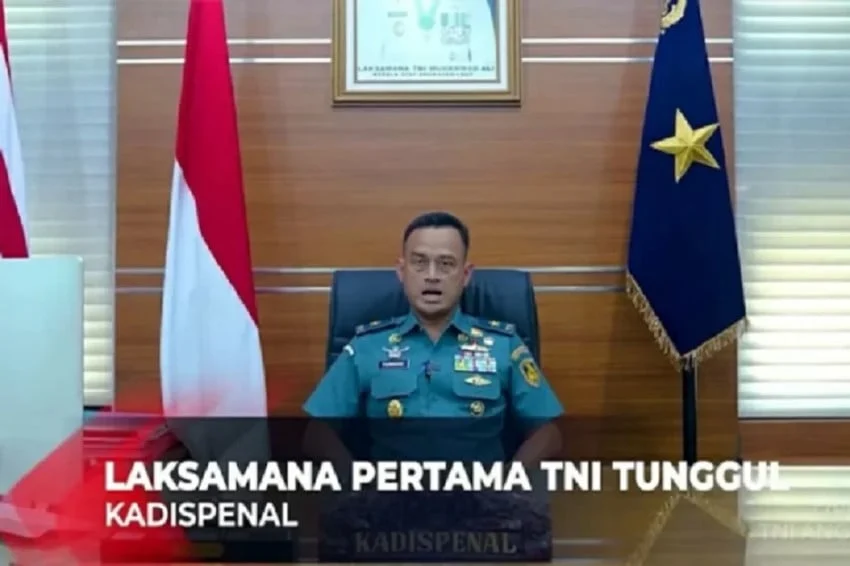
Addressing growing public curiosity and media inquiries, the Head of the Indonesian Navy Information Service (Kadispenal), First Admiral Tunggul, formally verified the ongoing troop mobilization. Speaking on Wednesday, November 4, 2026, he emphasized that the deployment is a routine yet vital measure aligned with institutional mandates.
"We confirm that the information regarding the deployment of TNI AL personnel to Jakarta is entirely accurate," First Admiral Tunggul stated in an official press release.
He elaborated that the presence of naval personnel in the capital serves a dual purpose. Primarily, the troops are tasked with reinforcing structural security stability within the greater metropolitan area. Concurrently, the deployment forms an integral phase of comprehensive preparations for upcoming large-scale military exercises, specifically focusing on amphibious operations, urban warfare scenarios, and joint tactical drills.
Strategic Context and Background of Metropolitan Deployments
The mobilization of military assets into urban centers such as Jakarta is governed by strict statutory guidelines under Indonesian defense laws. The Indonesian National Armed Forces (TNI), encompassing the Army (TNI AD), Navy (TNI AL), and Air Force (TNI AU), maintain strategic reserve units capable of rapid deployment upon command from the TNI Headquarters or the Ministry of Defense.
Jakarta houses critical national infrastructure, foreign embassies, government ministries, and the Presidential Palace. Consequently, maintaining absolute security stability is paramount. While internal security and public order are primarily the responsibility of the Indonesian National Police (Polri), military forces routinely provide backup support under specific legal frameworks, particularly during high-threat environments, national political events, or coordinated multi-service readiness exercises.
Furthermore, the Indonesian Navy maintains specialized units such as the Marine Corps (Korps Marinir), renowned for their rapid deployment capabilities, amphibious assault expertise, and counter-terrorism proficiency. The inclusion of naval elements in land-based capital security highlights the integrated nature of modern national defense strategies, where maritime and land domains increasingly overlap within strategic urban environments.
Broadening Inter-Service Readiness: The Indonesian Army Response
The mobilization of TNI AL personnel does not occur in a vacuum. It coincides with broader readiness initiatives across all branches of the armed forces. Earlier in the operational cycle, parallel statements emerged from the Indonesian Army (TNI AD), reiterating that ground forces stationed in and around Jakarta remain in a perpetual state of high operational readiness.

Military analysts note that synchronized readiness across the TNI branches—Army, Navy, and Air Force—is essential for joint-force operations. The capability to project power swiftly into the capital region demonstrates logistics efficiency, command-and-control resilience, and tactical adaptability.
While specific details regarding the exact number of deployed troops remain classified for security reasons, defense observers have identified increased logistical movements, tactical vehicle convoys, and communications drills across designated staging areas in and around Jakarta.
Preparation for Upcoming Tactical and Strategic Exercises
A primary catalyst for the current deployment is the intensive preparation phase for upcoming military drills, including specialized exercises such as the Operational Readiness Training (Latihan OVT) and joint amphibious operations. These exercises are designed to test the responsiveness, interoperability, and logistical stamina of military units operating in complex, high-density urban and coastal environments.
Military training schedules are meticulously planned years in advance. They serve as a crucial benchmark for evaluating defense capabilities against asymmetric threats, cyber warfare intersections, and rapid-response requirements. By staging these preparation phases in Jakarta and its surrounding coastal corridors, TNI AL can rigorously test command lines between headquarters and field units under realistic metropolitan conditions.
Moreover, conducting exercises that involve naval infantry and support elements near the capital allows the military to refine civil-military coordination, ensuring that routine training activities minimize disruption to civilian populations while maximizing tactical efficacy.
Implications for National Security and Public Reassurance
The visible presence of military personnel and tactical assets in a major civilian metropolis often sparks diverse public reactions. To mitigate potential anxiety, defense leadership has underscored that the deployment is defensive, preparatory, and entirely routine in nature.
From a strategic perspective, the deployment carries several key implications:
- Deterrence and Stability: A visible, well-prepared military posture acts as an effective deterrent against potential security threats, transnational crimes, or civil disruptions within the national capital.
- Interoperability Enhancement: Joint staging tests the communication, supply chain, and deployment speeds of naval units slated to work alongside army and air force counterparts.
- Preparedness for Contingencies: Maintaining combat-ready forces in strategic hubs ensures the state can respond instantaneously to unforeseen national emergencies, natural disasters, or heightened security alerts.
As the training preparations progress, the Indonesian Navy has urged the public to remain calm and not be swayed by unverified rumors or sensationalized interpretations circulating on social media regarding the troop movements. The military remains transparent regarding authorized deployments while withholding sensitive tactical data to protect operational security.
Conclusion
The confirmation by First Admiral Tunggul regarding the deployment of TNI AL forces to Jakarta highlights the continuous, dynamic nature of Indonesia’s national defense architecture. By balancing security stability mandates with rigorous preparation for advanced military exercises like OVT, the Indonesian Navy demonstrates its ongoing commitment to protecting national sovereignty, securing vital state assets, and maintaining institutional readiness in an increasingly complex geopolitical and security landscape.